
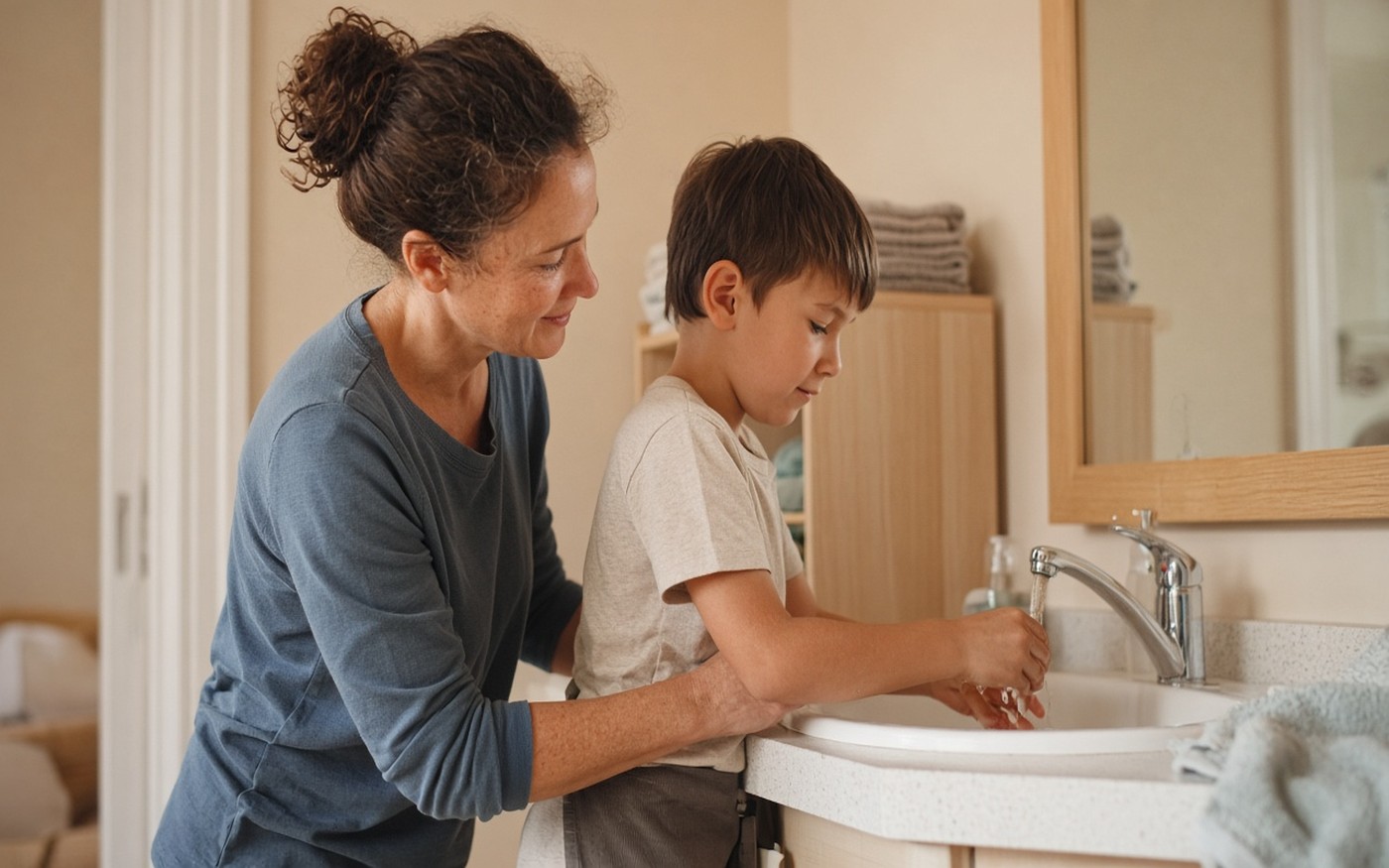
Life skills are the jobs kids can slowly take over: getting dressed, washing hands, chores, crossing a street, answering a phone, and handling a little money. This hub gathers every BabyMumbo guide about self-care, home jobs, safety, and the practical skills that make a family day run.
Teach one skill at a time, in a calm moment, with a visible “done.” For feelings, sleep, and school-day rhythm, use our routines and behavior guides. Grocery lists and table jobs also appear in the mealtime guides.
Everyday health, emergencies, and safety out in the world are also listed in our health and safety guides.
Self-care
- Teaching Kids to Wash Hands (A Winter Germ Habit That Sticks) — A winter germ habit with steps they can actually use.
- Teaching Kids to Brush Their Teeth (Without a Bathroom Standoff) — A short bathroom habit without a nightly standoff.
- Teaching Kids to Blow Their Nose (On a Well Day) — Practice on a well day, not only when they are sick.
- Teaching Kids to Take a Shower (A Short Checklist) — A short checklist, a temperature you still check, privacy in stages.
- Teaching Kids to Get Dressed (Without a Morning Standoff) — Clothes they can reach, without a morning fight.
- Teaching Kids to Tie Their Shoes (Without a Morning Fight) — A skill for later, practiced when you are not already late.
- Teaching Kids to Put On Sunscreen (Not Only at the Beach) — A habit for ordinary outdoor days, not only the beach.
- Teaching Kids to Make Their Bed (Good Enough Counts) — Good enough counts.
- Beyond Potty Training: Public Restrooms, Travel & Handoffs — Public restrooms, travel, and handoffs after the training charts end.
Jobs around the house
- Age-Appropriate Kids Chores That Actually Stick — Start small, make the standard visible, skip perfection.
- Teaching Kids to Clean Up Toys (Without a Nightly Fight) — A cleanup habit that is not a nightly fight.
- Teaching Kids to Do Laundry (One Step at a Time) — One step at a time, not a whole laundry personality.
- Teaching Kids to Help with the Dishes After a Meal — A dish job that is actually helpful after a meal.
- Teaching Kids to Set the Table on an Ordinary Night — A short table habit on an ordinary night.
- Yard Work with Kids: One Short Job You Can Finish — One short outdoor job you can actually finish.
- Teaching Kids to Write a Grocery List (A Short Home Habit) — Write or draw the list at home, then use it at the store.
Safety, money, and useful skills
- Teaching Kids to Cross the Street (Stop, Look, Hold a Hand) — Stop, look, and hold a hand.
- Teaching Kids to Call 911 (Without Placing a Practice Call) — The emergency skill, taught without placing a practice call.
- Teaching Kids to Answer the Phone (A Short Script) — A short script for ordinary calls, and what not to share.
- If You Get Separated in Public: A Short Plan Kids Can Use — Stay put, find a worker, keep private information private.
- A Family Emergency Plan Kids Can Actually Remember — A plan kids can actually remember.
- Fire-Station Visits with Kids: Call Ahead, Stay Short — A short, planned visit to a workplace, not a tour you are owed.
- Kids First-Aid Kit: Home Basics Parents Actually Use — A small home kit parents will actually restock.
- Playground Safety for Kids: Watch, Coach, and Let Them Climb — Watch, coach, and let them climb.
- Kids Water Safety and Swim Lessons: Layers That Actually Help — Layers of water safety, not one lesson as a cure-all.
- Teaching Kids to Ride a Bike Without the Tears — Short sessions, a helmet that fits, balance before speed.
- Kids Allowance: How Much and When to Start — A boring, reliable amount, started when they can use it.
- Teaching Kids to Save Money: From Piggy Bank to Bank Account — A visible jar or split, then later a bank trip.
- A Lemonade Stand with Kids: Real Jobs, Short Shift — Real jobs, a short shift, and a defined end.
- College Savings Basics for New Parents (529 Plans & Habits) — A 529 and a habit, after the money basics are in order.
- Teaching Kids to Write Their Name (Without a Handwriting War) — A useful writing skill, without a handwriting war.
- Teaching Kids to Write Thank-You Notes (Without the Guilt Pile) — A doable note, not a guilt pile.
- Teaching Kids to Tell Time (Hour Hand First, Then Fives) — Routines and the hour hand first, then minutes by fives.
The bottom line
A life skill sticks when the job is small, the limit is clear, and they can tell when they have finished. Use this hub to find the next skill worth practicing, and ignore the rest until you need it.