
Supervision is the main safety tool
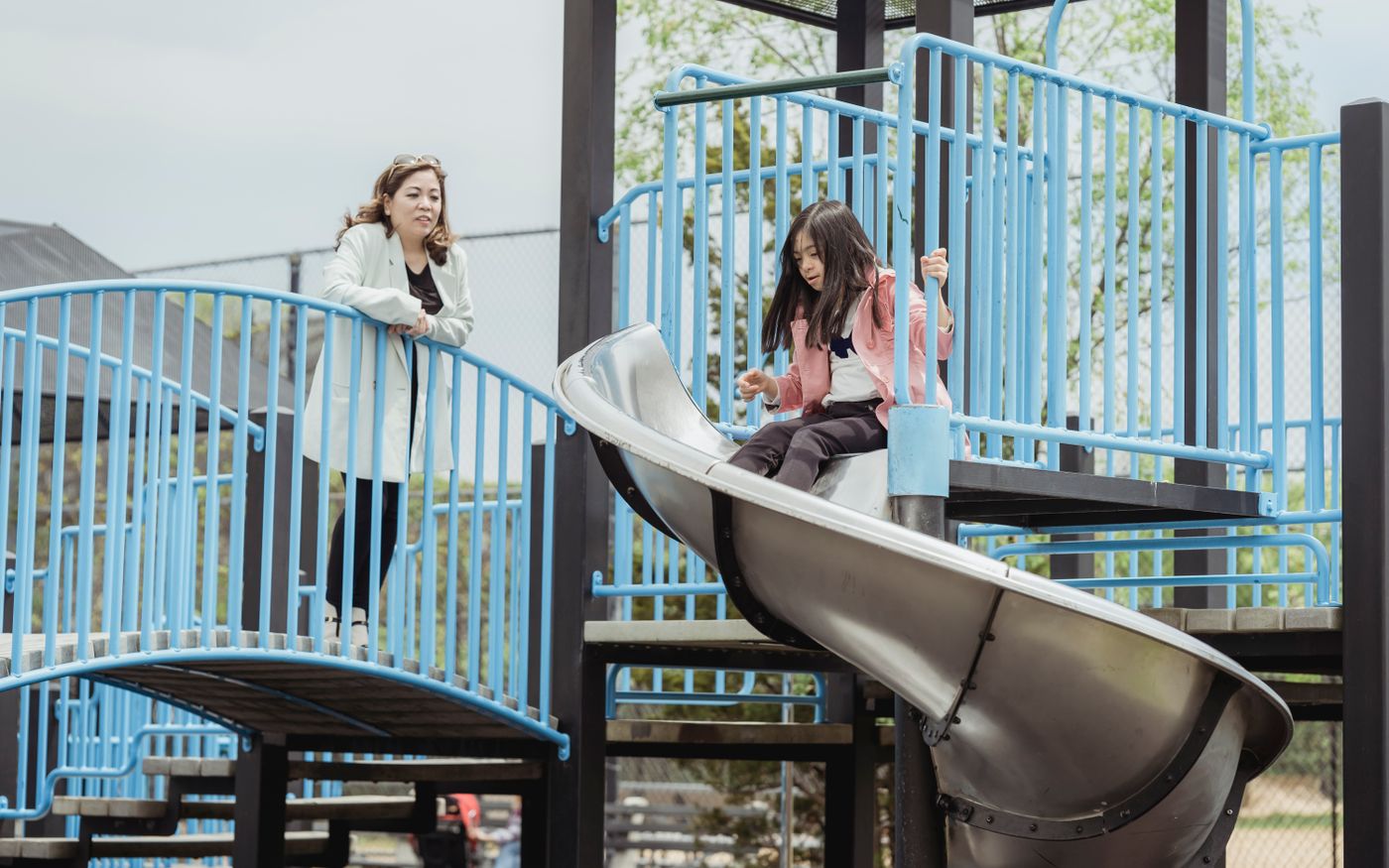
A playground is one of the best places for kids to climb, wait a turn, and take a reasonable risk. It is also a place where a grown-up still has a job. You don’t have to hover on every rung. You do have to watch, stay close enough to help, and know which equipment fits the child in front of you.
This sits next to our 20-minute outdoor play guide: a short, regular visit is better than a rare, exhausted two-hour stretch. Bring water, a snack for after, and a plan for leaving while it’s still okay.
Pick equipment that matches their age
Toddler areas exist for a reason: lower decks, smaller slides, and softer landings. A preschooler who is ready for a bigger structure can use it if you stay nearby and they can get down as well as up. If they freeze at the top, you go up and help them down; don’t talk them into a jump they’ll remember as a scare.
Scan the ground quickly when you arrive: broken glass, loose hardware, a scalding metal slide in July, ice in January. In hot weather, test the slide with your hand. In cold weather, watch for slick steps. Closed-toe shoes beat flip-flops on climbing equipment. Teach “hands on, feet on” for climbing, and “one person on the slide, sitting, feet first.”
Turns, space, and what to say
- “We wait at the bottom until the other child is off the slide.”
- “You can say, ‘I need a turn,’ then wait. You may not push.”
- “If you want help, call me. I’ll come to the ladder.”
- “Swings need space. We walk around, not in front.”
Turns are a playground version of teaching kids to share and teaching kids to wait. You can’t referee every stranger’s child, so coach your own: the ask, the wait, and moving to another piece of equipment if the wait is long. If a turn explodes, the short language in our public tantrum scripts is enough. Then go somewhere else on the playground rather than staging a trial at the slide.
Your spot, phones, and when to step in
Stand or sit where you can see the structure they’re on, not from a bench around a corner. A phone call or a long scroll makes you a late helper. You can look at a message; you can’t disappear into one. For toddlers, stay within a few steps of the equipment. For older kids, you can give a little more range and a check-in rule: “I need to be able to see you.”
Step in for safety—a climb they can’t reverse, a push, a stranger’s behavior that feels off, a child who is clearly stuck. Don’t step in for every wobble. Reasonable risk (a slightly high rung, a first try on a bigger slide with you at the bottom) is how they learn. If you’re unsure, go closer, not farther.
Injuries, leaving, and visiting a new playground
Scrapes happen. A small first-aid kit or at least wipes and a bandage in the bag is enough for most of them. For a bump to the head, a fall from a high deck, or a child who isn’t acting like themselves, stop the play and get medical advice. Don’t shake off a head injury because they want to go back up the ladder.
Leave before the playground is only tears. A five-minute warning, then a consistent exit, teaches them the visit ends. At a new park, walk the layout with them first and point out the meeting spot: “If you can’t see me, come to this bench.” That same meeting-place idea shows up in our family emergency plan, just in a smaller, everyday form.
Teach “stranger” in a practical way: we don’t leave the playground with anyone, even someone who seems kind, without you. If they need a bathroom, they come and tell you first. A meeting bench plus that one rule covers most of the social safety side without a scary lecture.
If two age groups are playing at once, you may need to split your attention or skip the big structure until the toddler is done. It’s okay to say, “We’ll come back for the tall slide when your brother is in the stroller or at home.”
Sun and ticks are part of playground safety too: a hat, sunscreen before you arrive, and a quick check for ticks after a playground that sits in tall grass or at the edge of a park. Water after play, then you go. The visit can stay short and still be enough.
Getting to the park is part of playground safety. For the crossing itself, see teaching kids to cross the street.
Look at a sled run-out the way you’d look at a playground: no street at the bottom, a grown-up watching. See snow days with kids.
A playground has no service desk; agree on a meeting place and stay closer. See if you get separated in public.
This guide is also listed in our life skills guides.
Quick FAQ
What is the most important playground safety tool?
Supervision. Age-appropriate equipment helps, but a nearby adult who is actually watching matters more than a perfect surface.
How do we handle turns and pushing?
Short scripts, stepping in when bodies are unsafe, and leaving if the play stays rough. You do not have to referee every disagreement from a bench.
What do we do if someone gets hurt?
Help first, then decide whether to stay or go. A small scrape can be cleaned and closed; a bigger injury means you leave. A simple home kit helps; see a kids first-aid kit.
This guide is also listed in our health and safety guides.
The bottom line
Choose equipment that fits, watch from a spot where you can actually help, coach turns without running a courtroom, and leave while it’s still a good visit. Playground safety is mostly a present adult and a few repeatable rules—not a ban on climbing.