
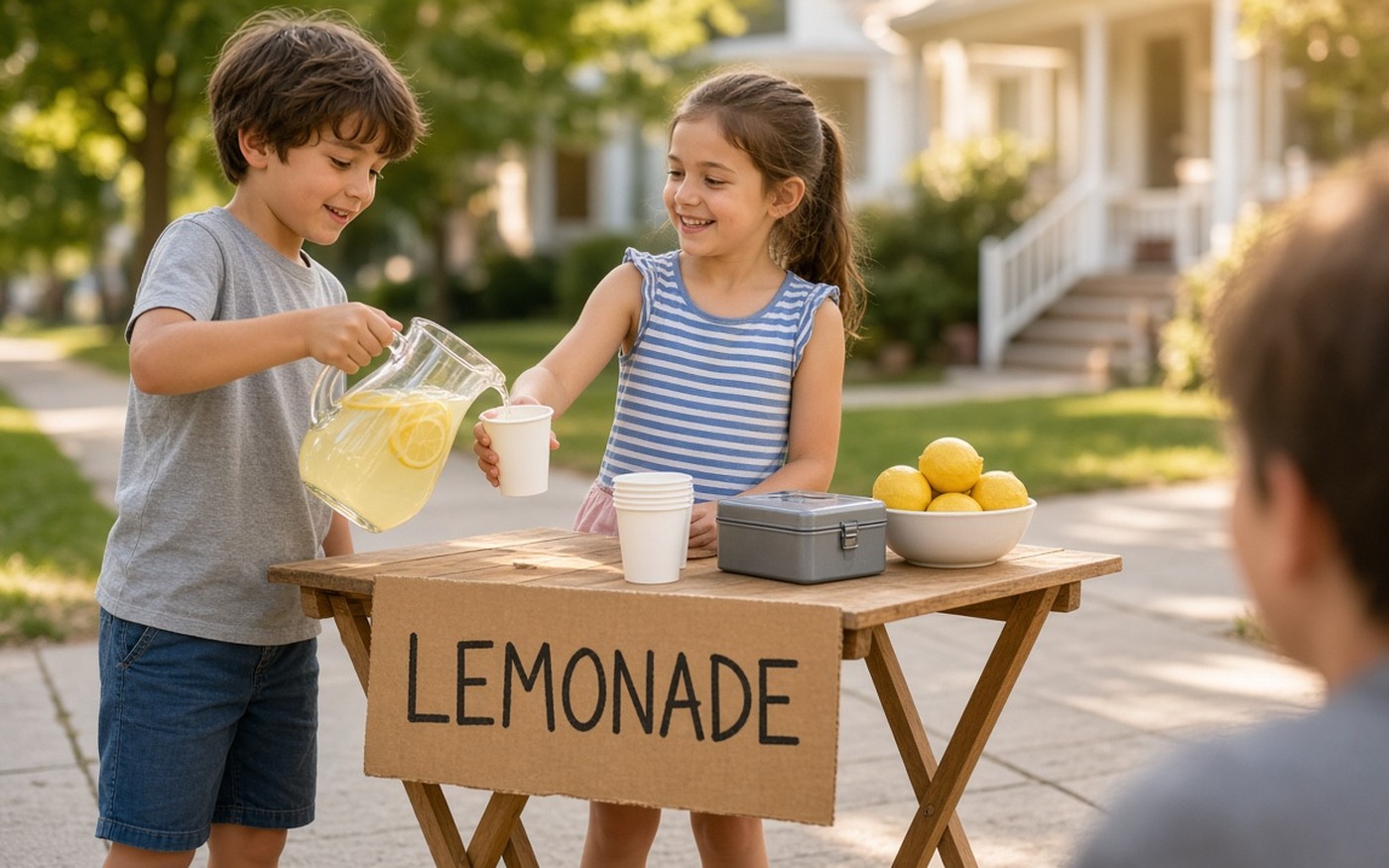
A lemonade stand is a short business, not a cute prop
A lemonade stand works when kids do real jobs: make the drink, write the sign, take the money, make change, say thank you, and decide what happens to the cash at the end. It is not a photo shoot with a grown-up running the whole thing from behind the table. It is also not a lesson in how much allowance to give or a full course in saving money. Those habits can use the earnings later. The stand itself is practice in planning, talking to people, and finishing a small project.
Keep it short. A Saturday morning on a sidewalk you can see from the house, or a spot at a neighborhood sale, is enough. Two hours will teach more than an all-day shift that ends in melted ice and cranky cashiers. An adult stays responsible for safety, food handling, and any money questions that get too big. The kids stay the face of the stand.
Plan the costs, the price, and the jobs
Before anyone paints a sign, list what you’ll spend: lemons or mix, sugar, cups, ice, a pitcher, markers, maybe a table you already own. Let them help you add it up. Then choose a simple price—often a dollar, or two, depending on your neighborhood—and talk about why a price that’s too low can mean they don’t cover cups. They don’t need a business plan. They do need to see that supplies aren’t free.
Give jobs by age. Younger kids can stir, put cups in a stack, and hand over a cup with a “thank you.” Older kids can pour, take money, make change from a small cash box you stocked with coins and ones, and keep a simple tally. You handle the sharp knife, the heavy ice, and any conversation with a stranger that feels off. If you have more than one child, split the jobs so the oldest doesn’t take all the fun or all the work.
The sign should be readable from a bike: the word lemonade, the price, and maybe an arrow. Neat is less important than big. A small table, a pitcher that won’t tip easily, a trash bag for used cups, and a chair so they aren’t standing in the street is a complete shop. You don’t need a branded tent. If a HOA or local rule limits sales, pick a different date or a friend’s driveway rather than turning the first stand into a dispute.
Safety, food, and talking to customers
Stay with them. A sidewalk stand is not unsupervised independence, even if they’re “old enough to pour.” Set the table where drivers can see them, not around a blind corner, and keep the pitcher and kids back from the curb. Wash hands before they start and after they handle money if they’re going back to pouring. Use clean pitchers, keep the drink cold, and don’t let a pitcher sit warm in the sun for hours. If someone in your house is sick, pick another weekend.
Practice a two-line script: “Would you like lemonade? It’s a dollar.” And “Thank you.” That’s enough. Some customers will chat; some will keep walking. A kind “okay, have a good day” is the whole rejection lesson. If a customer is rude or too interested, you step in. If a friend wants a free cup, decide the family rule in advance: one neighbor sample, or everyone pays, including you. Consistency saves an argument mid-shift.
Making change is the math most kids remember. Stock the box with small bills and coins before the first customer. If they get stuck, you can coach from the side without taking the cash out of their hands every time. A small notepad for “cups sold” keeps the end-of-day count honest and gives a quiet job to a child who doesn’t want to talk yet.
What to do with the money, and when to stop
When you pack up, sit down and count together. Subtract the supply cost if you agreed they would repay the kitchen, or treat supplies as your contribution and let the sales be theirs—just say which it is before you start. Then use a simple split they already know, or are learning: some to spend, some to save, some to give. The wants-versus-needs conversation is useful if they immediately want to spend all of it on the first toy they think of. You can also let a small spend happen the same day so the work feels real.
End while it’s still going reasonably well. Melted ice, an empty pitcher, or a bored cashier is a reason to close, not a reason to beg the last three neighbors. Clean the table, recycle what you can, and put the cash in the jars or envelopes you named. If they want to do it again next month, they’ll remember the ending as much as the first sale.
If no one comes, that is still a complete lesson if you keep it kind: they made something, they tried, they can try a busier time or a different corner, or they can serve lemonade to family on the porch and call it practice. Don’t pad the till so they “win.” Do praise the work you actually saw: the sign, the pouring, the thank-yous.
A stand can also be a one-time project for a cause they care about, as long as the sign is honest about where the money goes. Either way, the skills are the same: plan, make, serve, count, and stop. That’s a better money lesson than a lecture, and it leaves the weekly allowance as a separate habit, which it should stay.
A spending cap at the fair is a short, real-world money limit. See county fair with kids.
This guide is also listed in our life skills guides.
Quick FAQ
How long should a kids’ lemonade stand last?
A short shift with a start and an end, not an all-day sidewalk camp. Real jobs, a simple price, and a close when you are done are enough.
What should they do with the money?
Count it, cover the costs you named, and decide together what to save, spend, or share. The stand is a first business, not only a cute photo. See teaching kids to save for the saving habit.
Do we need a permit or special food gear?
Check your local rules, keep the food simple and clean, and stay with them the whole time. Safety and courtesy matter more than a fancy setup.
The bottom line
A lemonade stand works as a short, supervised project with real jobs, a simple price, and a clear plan for the money. Keep it safe and cold, let them talk to customers, count together at the end, and close before it turns into a slog. The stand they can run again is more useful than a perfect first day.