
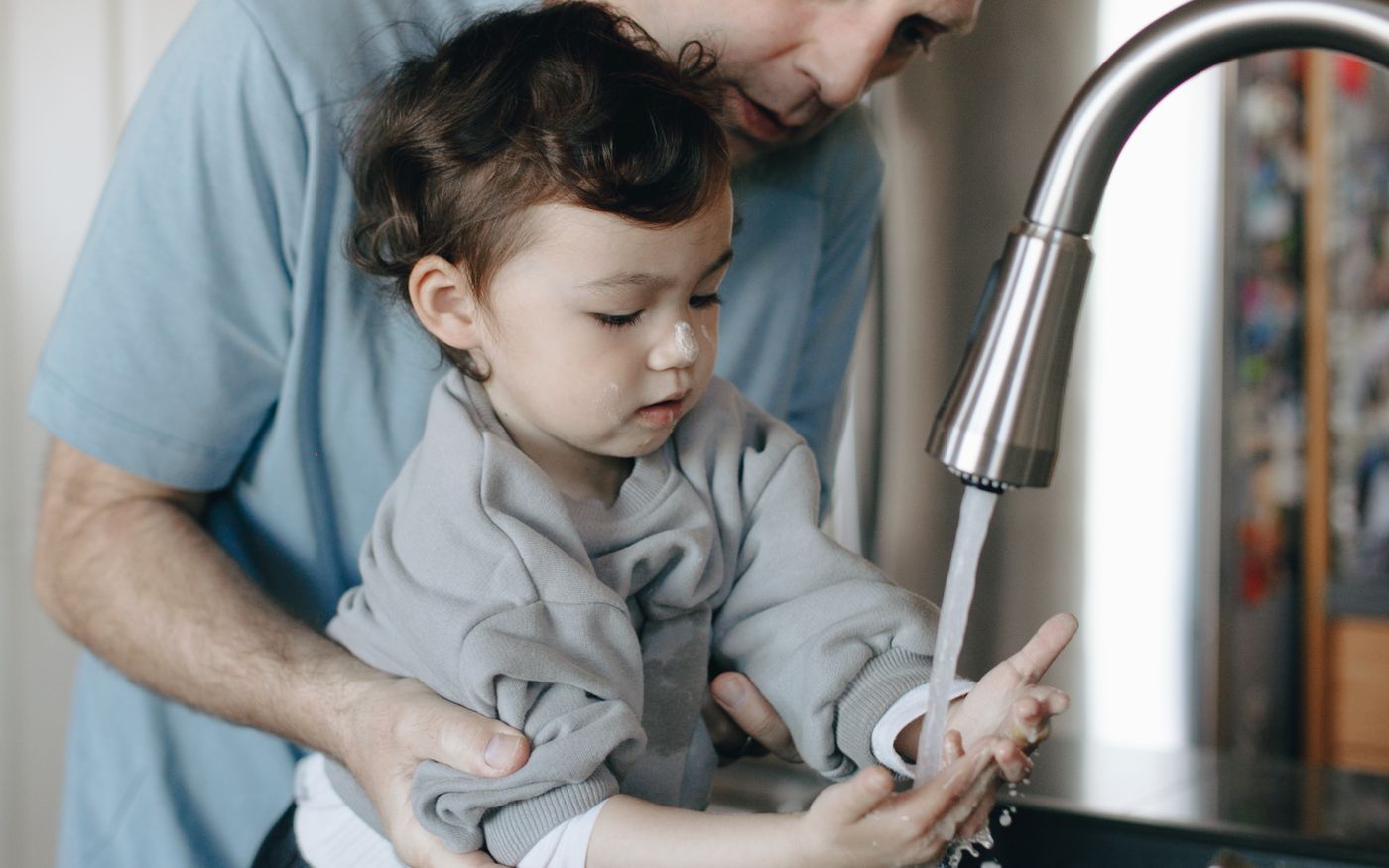
Make it a habit, not a scare story
Winter is when everyone suddenly cares about hand washing: colds, school, holiday visits, and the fifth runny nose of the month. Kids don’t need a lecture about germs in abstract. They need a short, repeatable routine they can do at a sink they can reach, at the moments that actually matter—after the bathroom, after coming inside, after blowing a nose, and before eating.
The habit matters more than perfect technique on day one. You’re aiming for soap, water, a little time, and a towel, done often enough that you don’t have to narrate every step forever. If someone at home is sick, the same routine in our sick-day guide pairs well with this one.
The steps, in language a child can use
Keep it to a few words you can say the same way every time:
- Wet hands with clean, running water.
- Soap on the palms, backs, between fingers, and around thumbs.
- Scrub long enough to sing a short song (about 20 seconds).
- Rinse and dry on a towel.
A stool at the sink and soap they can pump themselves turn this from a wrestling match into a job they can own. If the faucet is tricky, stay to help with the water and let them do the soap and scrub. Hand sanitizer is a backup when you don’t have a sink—after a cart at the store, for example—not a full replacement for washing when soap and water are right there.
A song, a timer, and a sink they can actually use
Twenty seconds feels long to a toddler. A song they already know (or two rounds of a very short one) is a better timer than a parent saying “keep going” in a rising voice. Some families use a small sand timer by the sink. Either works if you use it every time for a while, then fade your reminders.
Practice when you’re not rushing out the door: after art, after a snack you made together, or as the first step when you come in from the park. Cooking with toddlers is a natural lab—wash first, then help. The more the sink is part of ordinary life, the less it feels like a punishment that starts when you mention germs.
When to wash, without turning the day into a sink tour
Pick the high-value moments and be consistent there: after the toilet or a diaper change, before meals and snacks, after coming inside from play, and after wiping a nose. That’s already a lot. You don’t need to march everyone to the bathroom after every toy they touch at home.
In public bathrooms, do the same short routine and avoid making the room a playground. If the sink is too high, you can wash their hands at a family restroom or with a pumped bit of soap and a water bottle in a pinch, then do a proper wash at the next real sink. Before a meal out, the same pre-food wash is useful; our Thanksgiving dinner with kids guide starts from the same idea—arrive with a plan, including a wash before anyone sits down.
What to do when they refuse
Don’t turn soap into a power struggle you have to win with a speech. Offer a choice that still ends at the sink: “You can pump the soap, or I can. Then we sing, then we’re done.” Make the wash boring and brief. If they hate cold water, use warm. If they hate the soap smell, pick a milder one and stick with it.
For older kids, a simple house rule works: hands washed before we eat, no debate about the “why” at the table. You can explain germs once in a small, unscary way—“soap and water help wash off the stuff that can make us feel sick”—and then go back to the routine. If skin gets dry and cracked in winter, use a little moisturizer after drying so washing doesn’t start to hurt, which is a fast way to get refusal.
Coughs, sneezes, and tissues belong in the same winter package: sneeze into an elbow, toss the tissue, then wash if you can. A small home first-aid kit with tissues, soap, and moisturizer by a bathroom sink makes the habit easier to keep.
Model it. If you come in from the store and walk straight to a snack, they will too. Wash with them for a while, then stand nearby, then just remind: “Sink first, then we eat.” The reminder should get shorter, not longer, as the habit sticks.
Wash first and last when you’re experimenting at the table. For the experiments themselves, see easy science experiments at home.
Wash first, and again when hands are icing-sticky. Then get back to the tray with the plan in holiday baking with kids.
Brushing uses the same “I do it too, then we’re done” energy as handwashing. For the bathroom routine at the sink, see teaching kids to brush their teeth.
After a tissue, hands still need a wash. For the blow itself, see teaching kids to blow their nose.
Hands at the sink are an earlier skill; the shower is the later, wetter one. See teaching kids to take a shower.
This guide is also listed in our life skills guides.
Quick FAQ
When do kids actually need to wash hands?
Before eating, after the bathroom, after blowing a nose or being outside, and when hands are visibly dirty. You do not need a sink tour after every small touch.
How do we make the habit stick?
The same short steps, a sink they can reach, and a song or timer so they wash long enough. A scare story about germs is less useful than a routine.
What if they refuse?
Stay calm, do it together, and keep the standard. You can help with the soap and rinse without dropping the request.
This guide is also listed in our health and safety guides.
The bottom line
Use the same short steps, a song that lasts about 20 seconds, a sink they can reach, and a few consistent moments in the day. Hand washing sticks when it’s ordinary—not when it’s a scare story you only tell in November.