
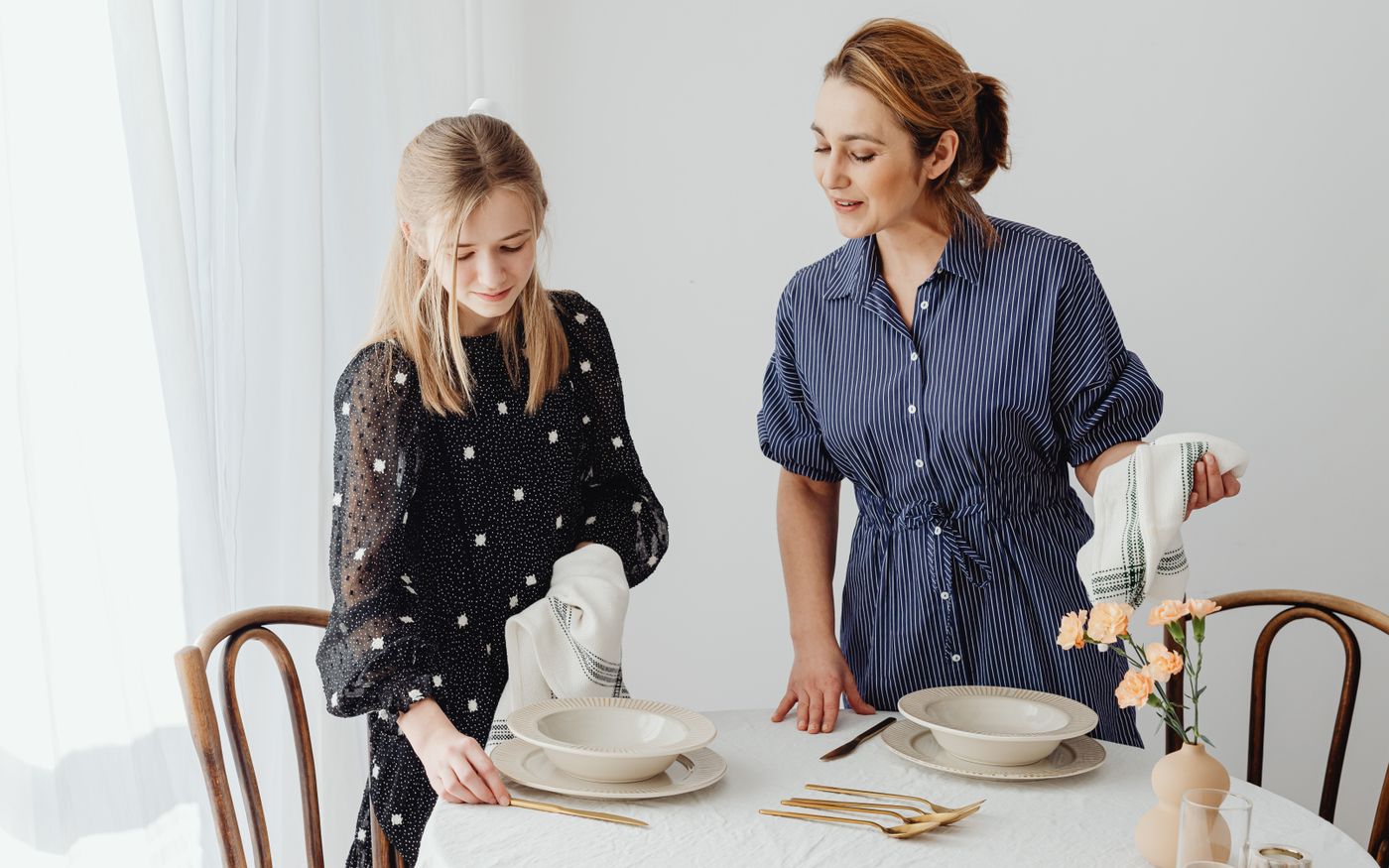
Setting the table is the start of the meal, not a formal class
Kids can set a table long before they can host a dinner. The job is simple: a plate or a bowl, a fork, a cup, and a napkin at each seat, including their own. This is different from table manners during the meal and different from helping with dishes after it. One child can own the start; you still cook.
It also belongs in age-appropriate chores. A toddler can carry napkins and a plastic cup. A preschooler can put a plate and a fork at each seat you already named. A school-age kid can set the whole everyday table, including a serving spoon you hand them, and can skip the good glasses you don’t want dropped.
Show a simple map, then let them do it every dinner
Use the same everyday dishes, not the holiday china. Fork on the left, knife and spoon on the right if you use them, napkin under or beside the fork, cup at the top. That’s enough. You don’t need a ruler or a formal place setting. If you eat family-style, add a spoon for the bowl in the middle. If you use a silicone placemat or a cloth, they can put that down first.
Walk the table with them once, then stand back. Don’t re-space every fork. A slightly crooked plate that they set is the point. If a knife is involved, you can set those yourself until they’re ready, the same way you keep sharp tools in cooking with toddlers.
Build it into the same short window as dinner: hands washed, table set, then food. Our weekly meal plan is easier when the table isn’t a scavenger hunt at 6:20. After pizza, pasta, or taco night, the same simple set still works. They don’t need a new layout for every menu.
Keep it everyday so it actually happens
A weeknight table with unbreakable dishes is the training ground, not a holiday. If you only set the table when guests come, the job stays special and stressful. On a tired night, shrink it: plates and forks only, you do cups. Name it as a shorter version, not a canceled chore.
If two kids share the job, split seats or rotate nights so one person isn’t always the setter. After they set, they can call people to the table or sit down. A question from dinner conversation starters can wait until food is down. The set is the start, not the whole evening.
Guests and holidays can use the same basic map with maybe a nicer napkin. Don’t turn Thanksgiving into the first time they learn it—see Thanksgiving dinner with kids for the rest of that day. Practice on a Tuesday.
When they refuse, or the table is already a mess
If the table is still covered in mail and homework, clearing a space is an adult job you can share: “Mail in the bin, then you set.” Don’t assign them a buried table as punishment. If they stall, start the first plate with them and hand over the next one. Don’t bargain with a show for a three-minute job.
Breakable things stay yours until you decide otherwise. A dropped cup is a cleanup, not a character test, unless they threw it. For a child who can’t reach, a stable stool and a stack of plates on the table (not a high shelf) make the job possible.
When dinner is in front of a screen or on the sofa, you can still set a coffee table with a plate and a napkin, or you can keep real table nights most of the week so the skill has a place to live. The point is a repeatable start to the meal, not a perfect tablescape.
After a meal they set, thank them once and let the job be done. The dishes come later. If you use placemats, they can wipe theirs as a bridge into the clear-up, but don’t stack both jobs into a lecture at 6:40. One start, then you eat.
A visual reminder helps some younger kids: a simple drawing of a plate, fork, and cup on the inside of a cabinet, or one place you set as a model and they copy the rest. Take the model away once they know it, so the skill isn’t only “copy Mom’s setting.”
Helping with leftover night is mostly inventory and setting plates, not a new cooking project. See leftover night.
This guide is part of our mealtime guides, where related pieces are grouped in one place.
This guide is also listed in our life skills guides.
Quick FAQ
What does a simple table-setting map look like?
Plate, fork, spoon or knife if you use one, cup, and napkin—shown once, then repeated every dinner. Formal place settings can wait.
Should they set the table even on tired nights?
Yes, if the job stays small. A napkin and a fork still counts. The habit works because it is everyday, not because it is fancy.
What if they refuse or the table is already messy?
Clear a space, give one specific job, and start dinner anyway. You can finish the setting yourself without dropping the request tomorrow.
The bottom line
Kids learn to set the table when the map is simple, the dishes are everyday, and an adult doesn’t silently fix every fork. Plate, fork, cup, napkin, then sit down. The Tuesday night version, even when it is a little crooked, is the one that counts.