
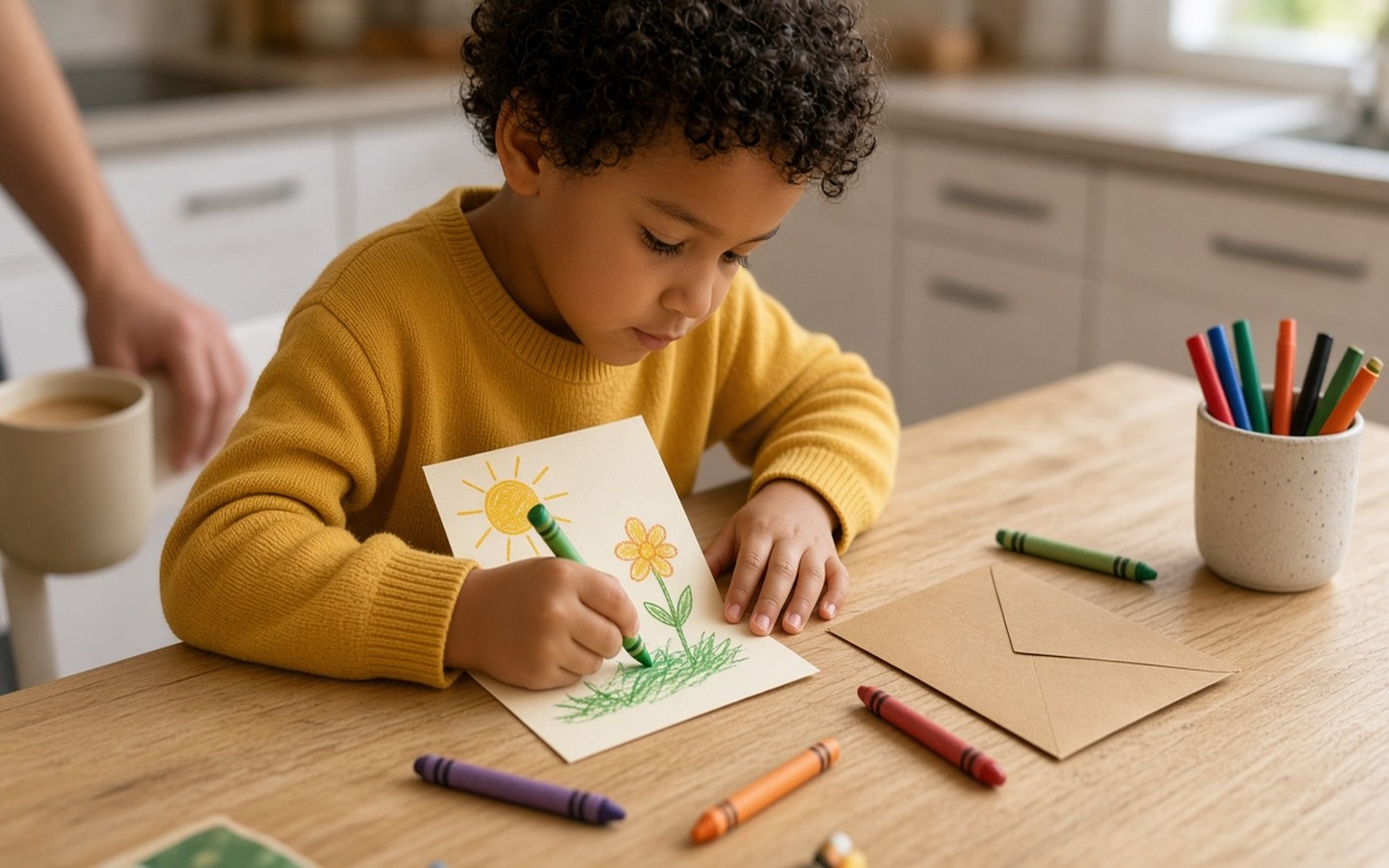
A thank-you note is a habit, not a handwriting test
After a birthday or a pile of holiday gifts, a thank-you doesn’t have to be a perfect paragraph on nice cardstock. For a toddler, a scribble and a dictated sentence is a real note. For a preschooler, a drawing plus “thank you for the truck” is enough. For a school-age child, two or three sentences they mostly write themselves is plenty. The point is to notice the giver and the gift, the same everyday practice in our guide to teaching kids gratitude.
Do it soon, while the gift is still in the room. A 15-minute session the next morning beats a guilt pile in January. Our holiday gifts, wants, and needs guide covers the opening; this is the follow-through.
A simple formula they can remember
Keep it to three parts, said out loud first:
- Hello: “Dear Aunt Maya,” or just her name.
- The gift, specifically: “Thank you for the yellow truck” beats “thank you for the present.”
- One true detail: “I drove it down the hallway” or “I wore it on Monday.”
Then “Love,” or “From,” and their name. If they can’t write yet, they draw and you write the words they said. If they can write a little, they write what they can and you fill in the rest, rather than taking over the whole card. A short voice note or video is a fine substitute for faraway relatives, as long as it still names the gift and includes a thank you.
Make the setup easy
Keep a small “thank-you kit” in a drawer: a stack of folded paper or cheap cards, envelopes, stamps, crayons, and a pen. Sit together at the table. You address the envelope; they work on the card. Play quiet music if it helps, and set a timer so it doesn’t sprawl. One card at a time is better than five half-finished ones.
If the list is long, do two or three a day until it’s done. A child who just opened twelve gifts will not write twelve thoughtful notes in one sitting, and you shouldn’t pretend they will. A drawing for the closest people and a short message you send together for the rest is an honest plan.
What to do when they refuse
Don’t turn the card into a punishment for having received a gift. You can still require the habit: “We say thank you for gifts. You can draw, or you can tell me the words and I’ll write them.” Offer a choice about the card, not about whether thanks happens. If they’re exhausted from the party, wait until the next morning.
If a gift was a miss—wrong size, duplicate, not their taste—they can still thank the person for thinking of them and mention using it or trading it later if that’s your family’s honest line. You don’t have to make them fake delight. You do have to help them be kind.
Beyond holidays: notes for ordinary kindness
The habit sticks when it isn’t only seasonal. A drawing for a neighbor who watered the plants, a note for a teacher at the end of a week, or a thank you to a grandparent after a visit all count. A birthday party they attend as a guest is another natural moment; our birthday party planning guide is for hosting, and a short thank-you after they go is the guest version.
Model it. Let them see you write a thank-you text or a card, and say why: “I’m thanking Sam for bringing dinner.” Kids copy the habits they watch more than the speeches they hear. If you use a simple allowance later, thank-you notes still shouldn’t be paid work—they’re part of how your family responds to gifts.
If handwriting is a struggle, don’t let that sink the habit. They can decorate the front while you write their words inside, or they can “sign” with a letter they know. Take a photo of the card before it goes in the mail so they can remember what they sent. The note is the practice; the stamp is just how it arrives.
For gifts that arrived in the mail, include a photo of the child using the gift if you send a message digitally. For a note in an envelope, let them put the stamp on and walk it to the mailbox. That last step makes the thank-you feel finished, not like homework that vanished into a pile.
A thank-you at the door is enough in the moment; a note can follow later. For the visit itself, see teaching kids to be good guests.
A name on a card is useful practice that isn’t a worksheet. See teaching kids to write their name.
This guide is also listed in our life skills guides.
Quick FAQ
Do thank-you notes have to be handwritten?
A short handwritten note is nice, but a drawn picture, a dictated sentence you write, or a simple message you help them send can count. The habit is the thanks, not a handwriting test.
How soon should they send one?
Within a week or two is plenty. A pile of overdue notes from a holiday will never happen if the stack looks impossible.
What if they refuse to write one?
Sit with them, shrink the job to one sentence or a drawing, and finish it together if you need to. You can still be grateful out loud while the skill is forming.
Wrapping and thank-you notes are two halves of the same habit. See teaching kids to wrap gifts.
The bottom line
Use a three-part formula, sit down while the gift is still out, and let a drawing plus a true sentence count. A thank-you note is a short habit of noticing people—not a performance in perfect handwriting.