
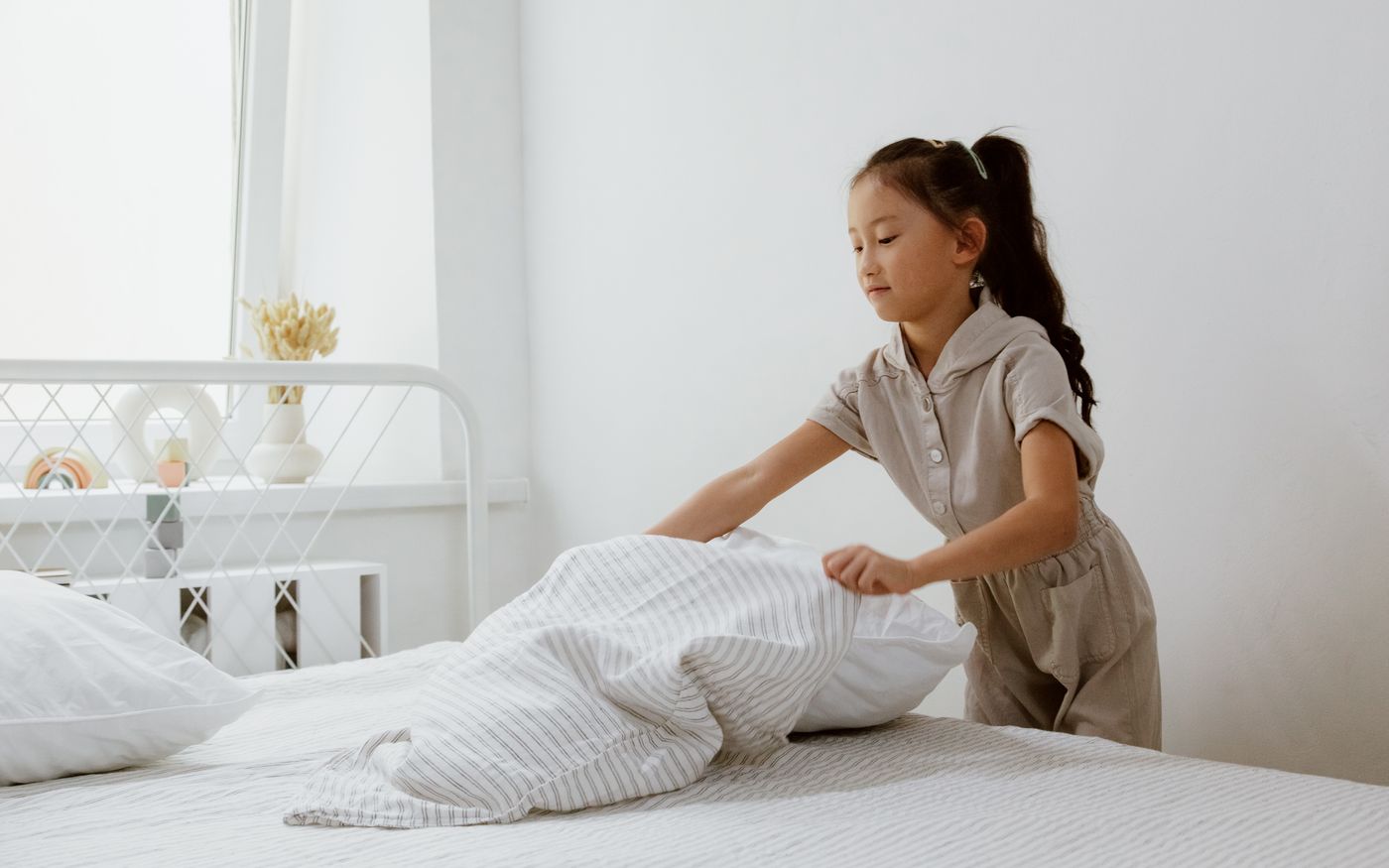
A made bed is a small, finishable chore
Making a bed is one of the few chores with a clear start and a clear end, which is why it belongs in our guide to age-appropriate chores. It doesn’t have to look like a hotel. Pulling the covers up, putting the pillow at the head, and putting a stuffed animal in one place is enough for a long time.
Do it at the same point in the morning, after they get dressed and before they leave the room, so it isn’t a random request at 7:40. Our school morning routine and getting dressed guides work better when the bed is a 60-second step, not a new project.
Make the bed easier to succeed at
A comforter they can lift beats a tight fitted sheet plus a flat sheet plus a duvet they have to stuff. If you love a tucked hospital corner, keep that standard for yourself and give them a simpler version. A lightweight quilt, one pillow, and a single “this goes here” stuffed animal is a finishable job for a preschooler.
Show the steps in order, then stand there while they try: pillow off, covers pulled up, pillow back, done. For a toddler, they can put the pillow on and you do the rest together. For a school-age kid, they run the whole short sequence and you glance in from the door. Don’t remake it silently after they leave, or the job stays yours.
If the bed is against a wall, teach them to stand on the open side and toss the far edge, then smooth. If a top bunk is in the room, keep that as a grown-up or older-child job until they can do it safely. Pair this with laundry: when clean sheets go on, you still handle the fitted sheet, and they put on the pillowcase.
Scripts that work better than “make your bed”
“Make your bed” is vague. Name the first move: “Covers up, then the pillow.” If they stall, start the first corner with them and hand the next part over. A “good enough” bed that they made is worth more than a perfect one you redid. If you’re tempted to fix it, wait until they’re at school unless it’s a safety issue (a dangling cord, a bunk rail left down).
Build it into the same tidy as cleaning up toys: floor first or bed first, then the room can be left. After a sleepover or a night at grandparents’, reset the bed when you get home so the habit doesn’t vanish on weekends. See bedtime routines if a pile of books and clothes on the bed is what makes the morning job feel impossible—clear a landing spot at night.
When they refuse, or the bed is never done
If every morning is a fight, shrink the job again: only the pillow and the stuffed animal, or only pulling the comforter to the headboard. Get a win, then add a step. Don’t bargain with screens or treats for a 60-second chore, or it only happens when you have a prize.
Some days you’ll be late and you’ll do it yourself. Say so: “I’m doing it today because we’re late. Tomorrow it’s yours again.” A skipped day is not a new policy. If they share a room, give each child their own bed job so one person isn’t responsible for both bunks.
Weekend mornings can keep the same short habit so it doesn’t become a school-day-only job. If they want to stay in bed later, they can make it when they get up, not at noon. A timer is rarely needed; the job should be short enough that a timer would be theatrics.
When you change the sheets, let them help with the easy pieces and see the bed start from zero. That’s a good teaching day. Then the ordinary morning version feels small again. If they share bunk beds, the child on the bottom can still make a simple comforter, and the top bunk can wait until they can do it without leaning out unsafely.
If they have a lot of stuffed animals, pick one or two that “live” on the bed and keep the rest in a bin. A bed that has to be cleared of twenty animals every morning is a cleanup job pretending to be a bed job. The bin makes both chores smaller.
Making a bunk once at home is useful practice, not a test. See first sleepaway camp.
A visible “done,” like a made bed, also works for a bag of leaves. See yard work with kids.
This guide is also listed in our life skills guides.
Quick FAQ
Does a made bed have to look hotel-perfect?
No. A pulled-up blanket and a pillow in place is a finishable standard. A fussy style they cannot repeat will not stick.
When should they do it?
As part of the morning, before they leave the room, not as a later nag. Make the bed easy: fewer throw pillows, a simple covering.
What if they refuse?
Shrink the job, do it beside them once, and avoid a long lecture. A bed they almost made is still a chore in progress, not a character flaw.
The bottom line
Kids learn to make a bed when the bedding is simple, the steps are the same every morning, and an adult doesn’t quietly redo the work. Aim for covers up and a pillow in place, not a hotel fold. A finishable bed today beats a perfect system they never use.