
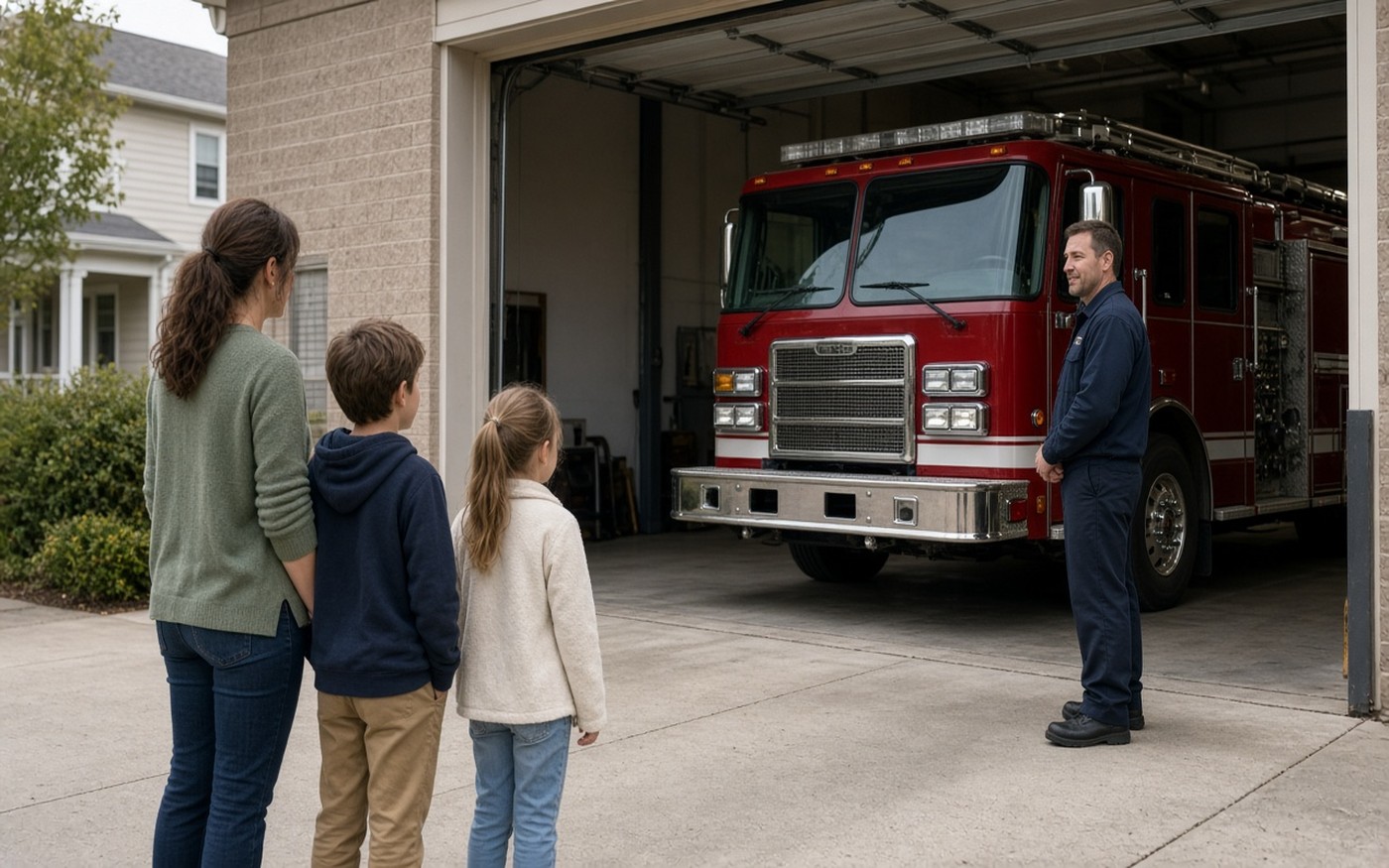
A fire-station visit is a short, planned stop, not a tour of every truck
Visiting a fire station with kids works when you treat it like a short outing with a beginning, a few things to look at, and a clear leave time. It is not teaching kids to call 911, which is an emergency skill you practice at home, without placing a real practice call. It is also not a museum visit, even if the engines are interesting in the same way exhibits are. Here the project is a respectful drop-in or a scheduled open house, not a private tour you are owed.
Call or check the station’s website before you go. Many stations welcome short visits; some need an appointment, and some will say today is not a good day. That answer is part of the outing. If they are out on a call, you leave and try another time. Do not wait in the driveway hoping a truck comes back, and do not treat a real emergency as a show.
What to say before you go, and what to pack
Tell kids, in plain language, what you will do: say hello, look at a truck if you are invited to, ask one question, and go home. Remind them that the station is a workplace. Equipment is not a playground unless a firefighter invites a close look, and even then you follow their instructions. If a tone sounds or a crew has to leave, you step aside immediately and you may have to end the visit in a hurry. That is a successful visit, not a ruined one.
Pack light: water, a small snack for after, and a plan for bathrooms. You do not need gifts for the crew, though a simple thank-you is kind. If your child is nervous around loud sounds or large vehicles, say so when you arrive, and stand farther back. A short stay-put plan still applies in a public building: stay with you, and if you get split up, find a person in uniform or at a desk rather than walking out alone.
While you are there
Follow the host. If they offer to show a truck, let the child look, maybe sit only if invited, and keep hands off hoses, tools, and buttons. One or two questions are plenty: “What do you do first when you get a call?” is better than a quiz. You can connect the visit to home rules in one sentence: firefighters help when there is a fire or a serious emergency, and 911 is how grown-ups and older kids get that help. Do not rehearse a 911 call on their equipment.
Photos are fine if the crew says so, and not if they are busy. Skip climbing, running in the bay, or opening doors. If other families are there, keep your group small and your stay shorter, not longer. A firefighter’s time is the limiting factor, not your child’s curiosity. Thank them, and leave while the visit is still going well.
If your child wants to “be a firefighter” afterward, you can talk about helpers in the community without promising a career or buying a lot of gear. A library book or a later home first-aid kit conversation is enough. The visit is a look at real work, not a theme park.
When to leave, and how to try again
Leave after the short look you planned, or sooner if a call comes in, if the child is overwhelmed, or if the crew needs the space. You can wave from the sidewalk and go to the car. A ten-minute visit you would repeat is better than an hour that gets in the way. If you could not go inside, looking at the building from outside and talking about what happens there can still count as a first try, then you schedule a better time.
Afterward, a short debrief is enough: what they liked, what was loud, and one rule they noticed. You can practice “stop, drop, and roll” or a home fire plan another day, at home, not in the bay. Smoke-alarm tests and a meeting place belong in your family emergency plan, not as a lecture on the ride home.
Some stations host open houses or school visits; those can be easier than an unscheduled drop-in because the time is already set. Go early, keep your own plan short, and still be ready to leave if it is crowded or loud. The same short-loop habit you would use at a museum or a zoo applies: you do not have to see every engine to have gone.
This guide is also listed in our life skills guides and travel and outings guides.
Quick FAQ
Do we need an appointment to visit a fire station?
Often yes. Call ahead, ask if a short visit is possible, and go when they say it works. A surprise drop-in can interrupt real work.
What should we tell kids before we go?
That it is a short visit, the firefighters may have to leave if a call comes in, and they may not climb on every truck. Curiosity is welcome; a demand for a full tour is not.
What if a call comes in while we are there?
Step aside immediately, thank them, and leave. You can try again another day. That is part of the lesson, not a ruined outing.
The bottom line
A fire-station visit works when you ask first, stay short, follow the crew’s lead, and leave as soon as you need to—including if a real call comes in. Keep 911 as its own home skill, treat the station as a workplace, and count a brief, polite look as a success. The visit you would happily make again is the one worth doing.