
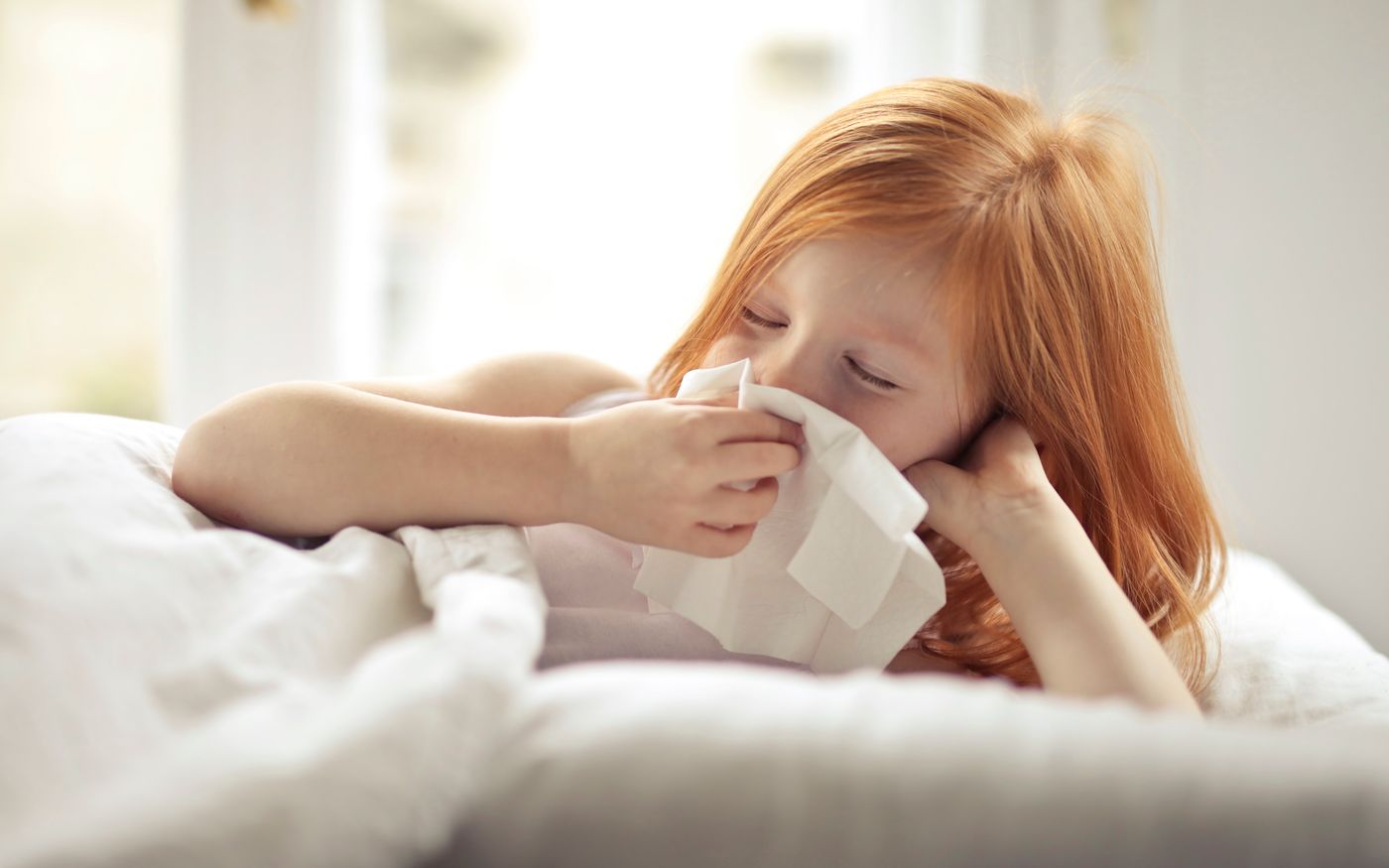
Blowing a nose is a skill, not a reflex
Kids do not automatically know how to blow their nose. Many smear, sniff, or wait for a grown-up to wipe. The skill is: tissue up, close one side, a short blow, switch sides, throw the tissue away, then wash or sanitize hands. It belongs next to teaching kids to wash hands, not only in a sick week.
Practice on a well day, when no one is already miserable. A tissue in the bathroom and a pack in the backpack or car makes the habit possible. If they’re sick, you can still coach, but keep the lesson shorter and kinder—see when to keep kids home if they’re too unwell for school or play.
Show the steps, then let them try the blow
Hold a tissue to your own nose and let them hear a short blow, not a huge one that hurts. Then hold a tissue for them and say “close this side, a little blow, now the other side.” If nothing comes out, that’s all right. The move is what you’re teaching. A mirror helps some kids; others just need your hands off sooner than you think.
Don’t suck the air back in as a joke, and don’t make them blow until they’re in tears. Two tries, a new tissue, hands washed, done. If they smear instead of blow, wipe once with them and hand them the next tissue. A wastebasket they can reach matters as much as the blow. Used tissues do not belong in a pocket or on the table.
For a toddler who can’t blow yet, you can still teach “tissue, wipe, trash, hands.” A saline drop or a soft nasal bulb, if you use one, is a different tool, and you should use it the way your pediatrician prefers. This article is about the blow and the tissue habit, not about treating an illness.
Coughs, sneezes, and public places
The same week you teach a blow, teach a sneeze or cough into the elbow if a tissue isn’t there, then a tissue when one is. Don’t shame a public sneeze. Hand them a tissue, then wash. In the car, a pack in the door beats a hunt through a bag. At school, show them where tissues are in the classroom if you can at drop-off, and pack a small pack in the backpack.
If they have allergies more than a cold, the same steps apply, and you may need tissues in more rooms. If a nose is raw, use a little ointment on the skin (the kind your clinician is fine with) and softer tissues. A bloody nose is a different first-aid moment—see a basic first-aid kit—and not a time to force a hard blow.
Keep the language plain: “Blow, then trash, then hands.” If they refuse because they don’t like the feeling, practice with a tiny blow on a well day, and praise the try. A sticker chart is optional and often unnecessary; a tissue they can reach is the real system.
When it isn’t working, or they’re too stuffed
A completely blocked nose will not blow well. Don’t keep pushing. Offer a tissue after a warm bath or a sit in a steamy bathroom, or after whatever simple comfort you already use, then try one short blow. If breathing is hard, they’re pulling at their ears, or you’re worried, call the pediatrician rather than inventing a stronger blow.
At night, a child who can’t blow may still need a parent wipe, and that’s ordinary. Teach again in the morning. After they blow, wash hands before they go back to food or toys—the same finish as after the bathroom. If a preschool or school has a “use a tissue” rule, practice it at home so the rule isn’t new when they’re already sniffly.
Siblings can copy both the good habit and the smearing. Give each child their own pack when you can, and keep the wastebasket empty enough to use. You don’t need a lecture about germs that scares a preschooler. You need a tissue, a short blow, and hands that get washed.
Put a pack of tissues in the bathroom, the car, and the bag you actually take out, and restock before it’s empty. A skill with no tissue in reach becomes a sleeve again. That’s the whole system, more than a poster about germs.
This guide is also listed in our life skills guides.
Quick FAQ
How do we actually teach a nose blow?
Show the steps, hold the tissue, and let them try the blow even if it is weak at first. It is a skill, not a reflex. Practice when they are only a little stuffy, not in a full melt-down.
What if they are too stuffed to blow?
A saline rinse or a wipe, then try again later. You can help gently. A long battle in a public restroom is usually not the moment.
Should they cover a sneeze or cough the same way?
Teach a sleeve or a tissue, then wash hands. Public places are good, low-stakes practice once they have the motion at home.
This guide is also listed in our health and safety guides.
The bottom line
Kids learn to blow their nose when you teach the steps on a well day, keep tissues where they can reach, and finish with trash and washed hands. Short blows, one side at a time, and no forcing a blocked nose will do more than a long speech. The habit they can do in the car and at school is the one that counts.