
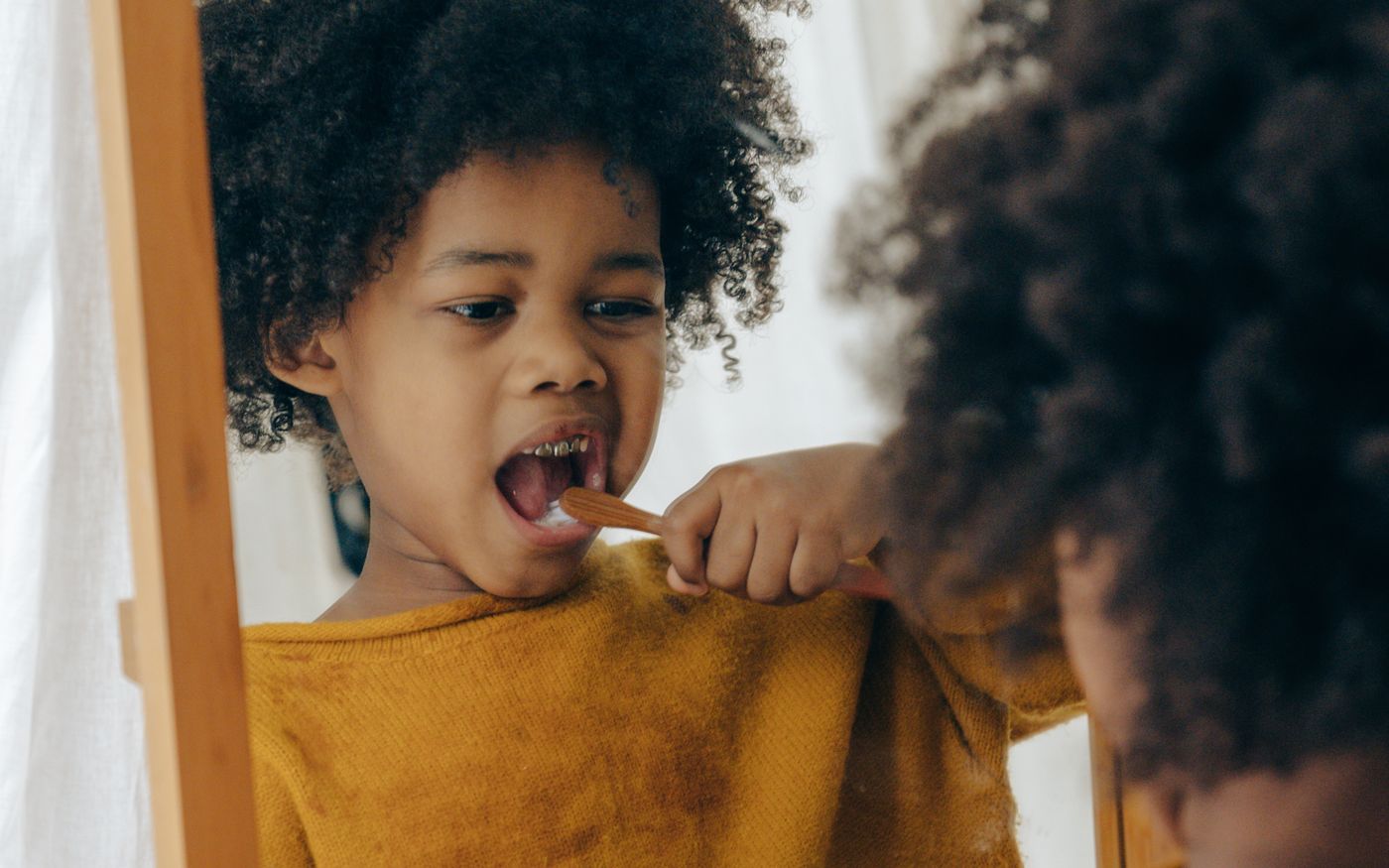
Brushing is a twice-a-day skill, not a debate
Kids don’t start out knowing how to brush, and they don’t stay consistent because you explained enamel. They stay consistent when the routine is the same every morning and night, the tools fit their mouth, and a grown-up still checks the job for a long time—longer than most parents expect.
Dentists generally want a smear of fluoride toothpaste for very young children and a pea-size amount as they get older, and they want you to help or at least finish the brushing until children have the coordination to do a thorough job, often well into the elementary years. Use the advice from your own dentist, and treat our guide to preparing for a first dentist visit as the checkup side of the same habit.
Make the setup easy to repeat
Same bathroom, same time, same order. After breakfast and after the bedtime book, or after pajamas and before the book—pick one evening slot and keep it. Brushing that only happens “when we remember” is the habit that disappears on busy nights. Tie it to something already solid, like the last step of bedtime routines for toddlers and preschoolers or the bathroom stop in a school morning routine.
A soft, small-head brush they can hold, a stool so they can see the mirror, and toothpaste they won’t fight every night are enough. If mint is a war, ask your dentist about a milder fluoride option rather than skipping fluoride. Let them pick the brush color. Two minutes is the target; a song, a timer, or a simple “we stay until the song is done” works better than counting in your head while they clamp their mouth shut.
Teach the motions, then you still finish
Show them on your own teeth, then on theirs: outer surfaces, inner surfaces, chewing surfaces, and a gentle pass along the gumline. “Tiny circles, not a scrub.” Spit, don’t rinse hard if that’s what your dentist prefers. Floss comes when teeth touch; you will do that part for a while.
A useful split is: they go first, you “check and catch the spots we missed.” For a toddler, you may do most of the brushing while they hold the brush for the last few seconds so they stay in the routine. For a preschooler, they do a pass, you do a thorough pass. Praise the standing there and the opening their mouth, not a perfect technique they don’t have yet.
If they gag, use less toothpaste, a smaller brush, and slower movements toward the back. If they bite the brush, pause, then try again. If it’s a natural refusal night, stay calm, keep it short, and don’t turn the bathroom into a 20-minute standoff. You can try the other bathroom, sit on the floor, or brush with them at the same time so it’s a together job, the same “I do it too” energy as teaching kids to wash hands.
When they refuse, or when a tooth is loose
Name the feeling and keep the rule: “You don’t have to like it. We still brush, then we’re done.” Offer one choice that isn’t “whether”: which brush, or whether they stand on the stool or sit on the counter with you right there. Don’t bargain with dessert or a show for brushing, or the habit only exists when you have a prize.
A loose tooth needs a lighter hand and a little warning: “We’ll go gently around this one.” When it comes out, our guide to losing a first tooth and the Tooth Fairy can take the celebration; the brushing routine should stay the same the next night.
If brushing hurts, if gums bleed often, or if they suddenly refuse every time, call the dentist. Pain is information. Stains, frequent cavities in the family, or a nighttime bottle or sippy that still has milk at lights-out are also worth a professional conversation, not just a firmer speech at the sink.
Morning brushing is easier if it happens after breakfast, not before the first bite, so they aren’t washing off toothpaste and then sipping milk. If you have to leave the house very early, brush after a small first breakfast and pack a water bottle. Night brushing should be the last food, not a snack on the way to bed, especially milk or sticky fruit.
Travel and weekends break the habit if the brush stays in the other bathroom. Pack the brushes the night before a trip, and keep a cheap spare in the overnight bag. A new place still gets the same two minutes; you may need to stand closer because the stool and mirror are different.
A shower and then teeth can be one evening close, if you keep both short. See teaching kids to take a shower.
This guide is also listed in our life skills guides.
Quick FAQ
How long should a child brush before I stop helping?
You still finish or check for years, even after they can do the motions. Independence is gradual. Twice a day is the habit; a perfect two-minute solo brush can wait.
What if they refuse every night?
Make the setup easy, keep the routine the same, and avoid a long debate. A smaller, calmer pass you finish is better than a nightly standoff.
Does a loose tooth change the plan?
Be gentler around that spot, but keep brushing. See losing a first tooth if you are also managing a fairy plan.
The bottom line
Twice a day, same order, a brush that fits, and a grown-up who still finishes the job will do more than a lecture about teeth. Keep it short, stay with them, and treat refusal as a moment to get through, not a negotiation about whether brushing happens. The habit is the win; the perfect technique comes later.