
A shower is a short checklist, not a new personality
Teaching kids to take a shower is a later hygiene skill than a bath, and it has its own snags: water in the eyes, a slippery floor, a temperature they can’t yet judge, and the question of who is still in the room. It sits next to washing hands and brushing teeth, not instead of them. You do not need a spa. You need a routine they can eventually run with you just outside the door, then farther away as they show they can do it safely.
Start while you’re still nearby. A shower-over-the-tub with a hand sprayer is easier for many kids than a hidden stall. Show them how to turn the water on and, more important, how to turn it off. Set the temperature yourself at first, and teach “warm, not hot” with your hand, not theirs, until they consistently check. A non-slip mat, a towel they can reach, and soap already in the shower will prevent half the stalling.
The body map, the hair, and the time limit
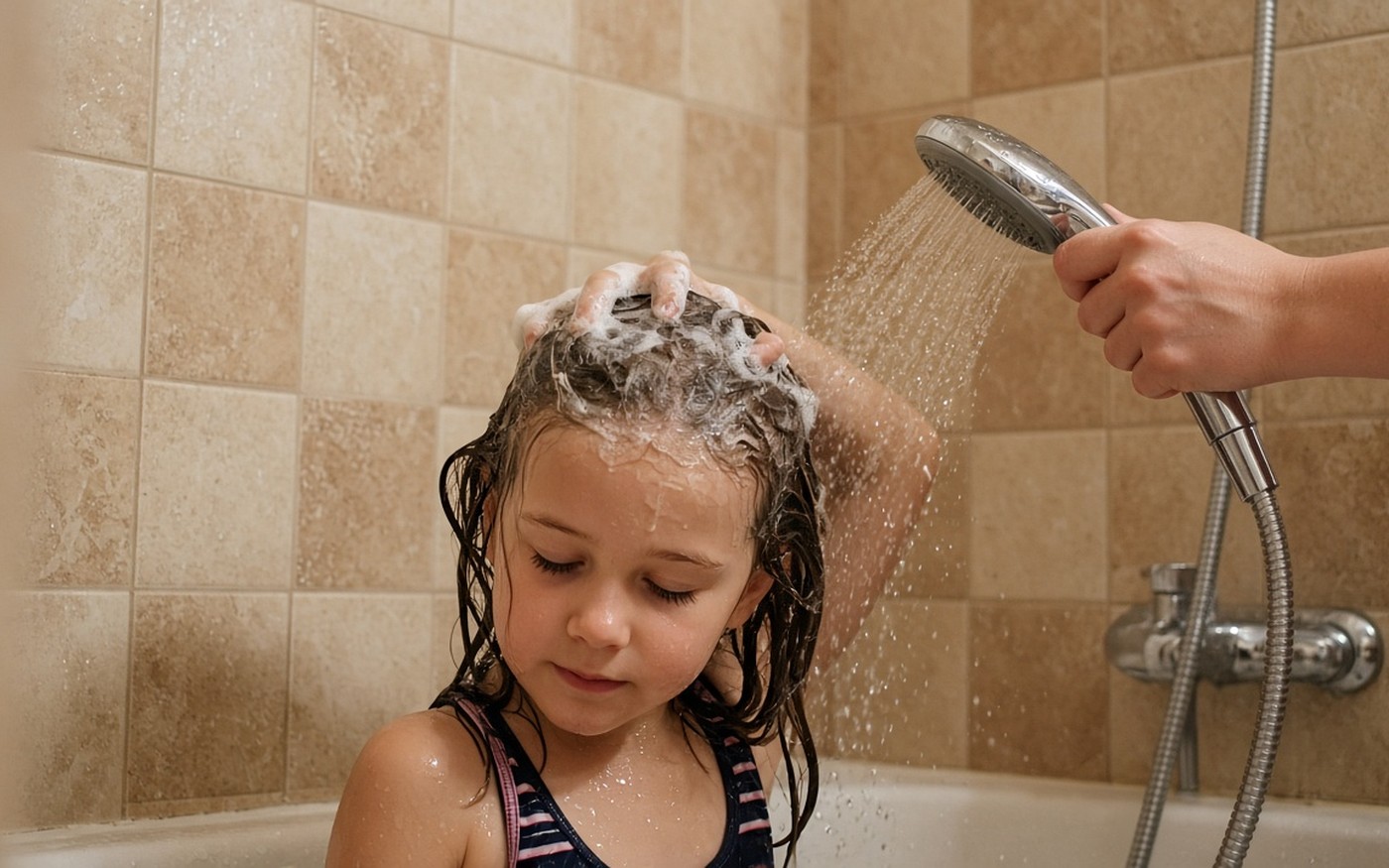
Give a simple order: water on, wet down, soap the body, rinse, shampoo if it’s a hair day, rinse, water off, towel. Same order most days so they aren’t inventing it. A picture list on the wall, outside the splash zone, helps younger kids. Hair is usually the hard part. Let them practice on a hair day when you’re not already late, and rinse with your hand as a visor if water on the face is the fight. A small amount of shampoo is enough. You can still help with the back of the head for a long time without doing the whole shower for them.
Keep it short. A song or a five-minute window is better than a wandering twenty-minute experiment that empties the tank. If they play, you can allow a little play at the end, or none on a school morning. The skill is getting clean and getting out, not a second bath-time party in a standing position.
Privacy comes in stages. A toddler or preschooler usually still needs you in the room. A grade-schooler may want the door mostly closed with you in the hall, talking, or checking in. Stay close until you’re sure they can manage temperature, slipping, and actually rinsing the soap. If your house has different comfort rules, agree on them so one parent isn’t a surprise audience.
Safety, mess, and the refusals
Water can be hotter than they expect, floors can be slick, and shower doors can pinch. A mat, a checked temperature, and a clear “call me if it’s too hot” are the basics. Teach them not to lock a door you can’t open. Keep medicines and razors out of reach, the same as any bathroom. If they have long hair, show them how to rinse it without a face full of water, and how to not jam the drain with a huge pile of hair in one go—just a simple scoop into the trash.
If they refuse the shower, stay with a bath a little longer, or do a shower on a low-stakes weekend first. Don’t turn a school morning into the first lesson. If the fight is water in the face, change the rinse, not the whole hygiene plan. If the fight is independence, give the parts they can already do and keep the parts that are still unsafe. A child who soaps their own belly and still needs help with hair is doing the skill.
Afterward, a towel, clean clothes, and a place for the wet things will close the loop. Dripping through the house is not a personality trait you have to accept; a mat and a hook by the bathroom door are enough. Then teeth, if that’s the order in your house, so the evening doesn’t grow a new negotiating session in the hall.
When they can do it mostly alone
You’ll know they’re ready for more privacy when the water temperature is consistently okay, they rinse the soap, they get out in a reasonable time, and they can call you if something’s wrong. Even then, check in. A weekly “did you wash your hair?” is ordinary, not nagging, until the habit is real. If skin is dry or a scalp looks irritated, adjust products with common sense, and ask a clinician if it isn’t settling.
Travel showers are a new lesson: a different handle, a different temperature, a smaller stall. Use the same order, and stay closer the first time, the same way a hotel stay gets a shorter bedtime, not a brand-new one. The home shower they can finish without a fight is the one that counts.
A short home shower practice makes the camp shower less of a first. See first sleepaway camp.
This guide is also listed in our life skills guides.
Quick FAQ
What should a first shower checklist include?
A short body map, how to wash hair if they do that in the shower, and a time limit. A shower is a skill with steps, not a new personality.
How do we keep it safe and not a flood?
A mat, a managed temperature, supervision until they are truly ready, and a towel within reach. Mess is expected while they learn.
When can they shower mostly alone?
When they can run the checklist, get clean enough, and get out safely—still with a grown-up nearby at first. Independence is gradual.
The bottom line
Teach a shower as a short, repeatable checklist: temperature you still check, a simple body-and-hair order, a mat, a towel they can reach, and privacy that comes in stages. Keep first lessons off the school-morning clock, and stay close until they can do it safely. The five-minute shower they can repeat is the skill.