
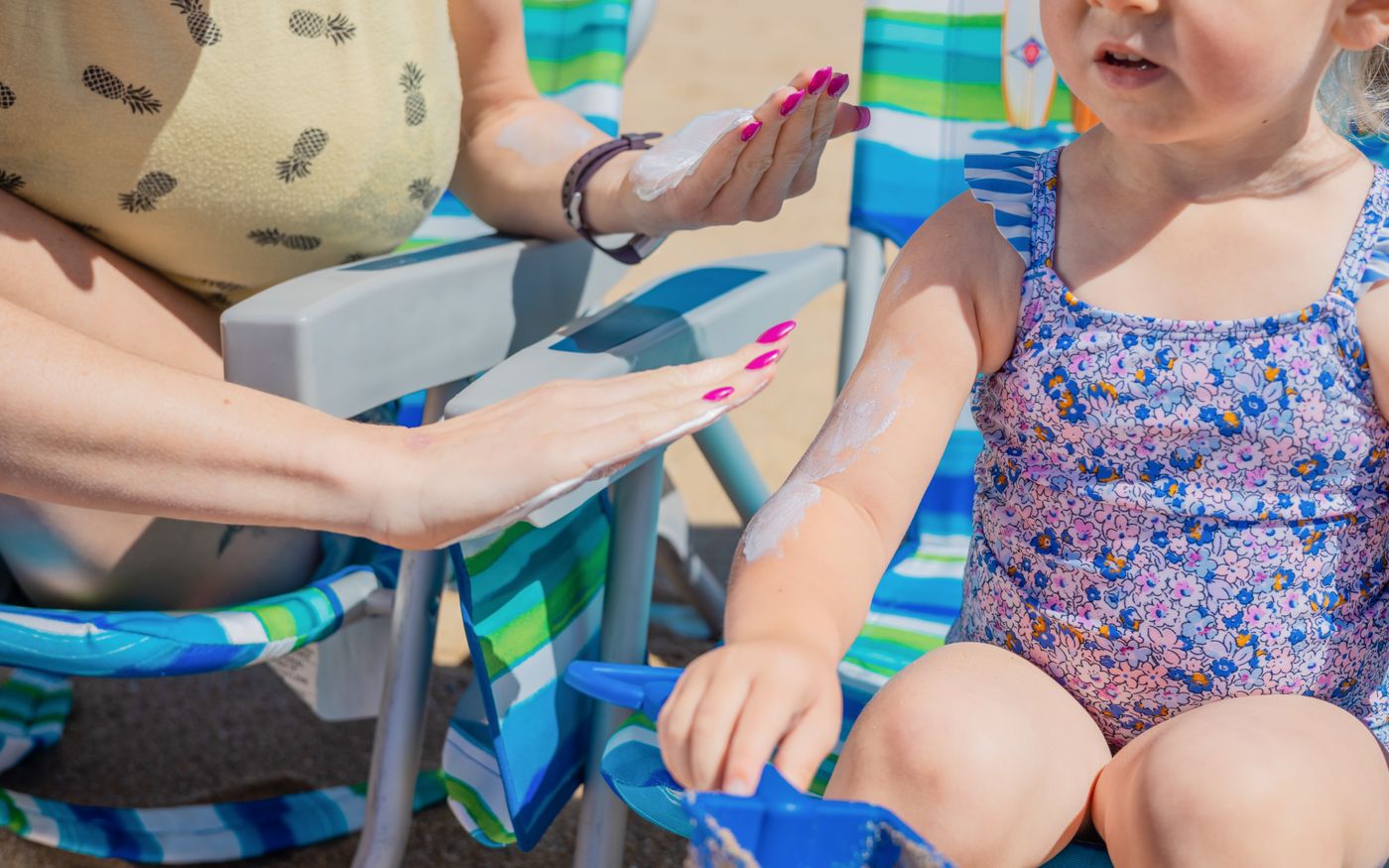
Sunscreen is a leaving-the-house skill, not a beach-only one
Kids need sunscreen on more days than a beach trip: a park, a zoo day, a sideline, a snow glare, a walk to school. The habit is: put it on at the door (or 15 minutes before you go out, if that’s what your product says), cover the easy-to-miss spots, and reapply after water, sweat, or a couple of hours outside. This sits next to water safety and outdoor play, not only next to vacation.
Use a product your pediatrician is comfortable with for their age, and keep it where you actually leave the house—by the door, in the bag, in the car in a place that doesn’t bake into goo if you can help it. A stick is easier for faces; a lotion is easier for arms and necks. Spray can miss spots and get into eyes and mouths; if you use one, spray into your hand first for the face, and do it out of the wind.
Teach the map of their own body, then let them help
Name the spots: face, ears, neck, the tops of feet if they’re in sandals, hands, the part in the hair if it’s thin, and the back if it’s exposed. You still do the back and the easy-to-miss places for a long time. A preschooler can rub lotion on their arms. A school-age kid can do most of the front while you check the rest.
Make it short and matter-of-fact, like brushing teeth or putting on a coat. Don’t turn it into a negotiation every time. “Sunscreen, then we go” is the script. If they hate the feel, try a different formula, a stick on the face, or a shirt with more coverage so there’s less lotion to argue about. A hat and a shirt do real work; they don’t replace the rest on a long, bright day.
Keep it out of eyes. If it stings, rinse and use a stick around the eyes next time. Don’t let them eat it or smear it on a sibling as a joke. A little on the hands, then wash the palms if they’re about to eat a picnic or a snack, or use a formula and a method that doesn’t leave a thick film on the palms.
Reapply, and plan the day so it’s possible
Set a reminder on a long outing. After a swim or a sweaty stretch, do it again. At a playground or a zoo, a bench and a pack in the bag beat a “we’ll do it later” that never happens. If you’re also running a snow day, remember that bright snow reflects; faces and lips still need care even when it’s cold.
Shade is part of the plan, especially at midday. A break under a tree, a covered picnic table, or an indoor snack can cut the load. You don’t need a perfect system. You need a product you will actually use, on the skin that is actually out, before anyone is already pink.
School and camp may want a labeled bottle and a form. Pack one they can use, and show them how at home so the nurse or counselor isn’t teaching the first try. If a child has a reaction, stop and check with your clinician; don’t keep using a product that makes them miserable.
When they refuse, or you’re already late
If you’re late, do the face, ears, and neck, put on a hat and a shirt, and finish arms at the first stop. A partial job is better than none. If they refuse every time, shrink the fight with a stick, a shirt, and a shorter outdoor window until the habit is less of a scene. Don’t bargain with a treat every time, or the lotion only happens when a prize is attached.
Babies and very young toddlers are a parent job, with the age-right product and more shade. Older kids still need a check—especially the back—before you assume they’re done. After the day, if they’re pink anyway, get out of the sun, cool the skin, and be more careful tomorrow; a bad burn is a reason to call the pediatrician if it’s severe, blistered, or the child feels unwell.
The goal is a boring door habit, like shoes and a water bottle. The days you remember it, not the days you give a speech about it, are the ones that protect them.
A daytime fair still needs a layer of sun care before you walk the grounds. See county fair with kids.
A daytime yard job still needs sun care, not only a beach day. See yard work with kids.
This guide is also listed in our life skills guides.
Quick FAQ
Do we only need sunscreen at the beach?
No. It is a leaving-the-house skill on bright days, playground days, and snow days too. Teach a simple map of their body and then let them help.
How often should we reapply?
Follow the product directions, and plan a reapply after water, sweating, or a long stretch outside. A single morning swipe is often not enough.
What if they refuse and we’re already late?
You can do a quick, firm apply and go, then practice the skill on a calmer day. Leaving without it on a high-sun day is not the compromise.
This guide is also listed in our health and safety guides.
The bottom line
Kids learn to put on sunscreen when it’s a short door habit, they know the spots, and an adult still checks the back. Use a product you’ll actually apply, reapply on long or wet outings, and pair it with a hat and a shirt. The ordinary park day is the one that counts, not only the beach.