
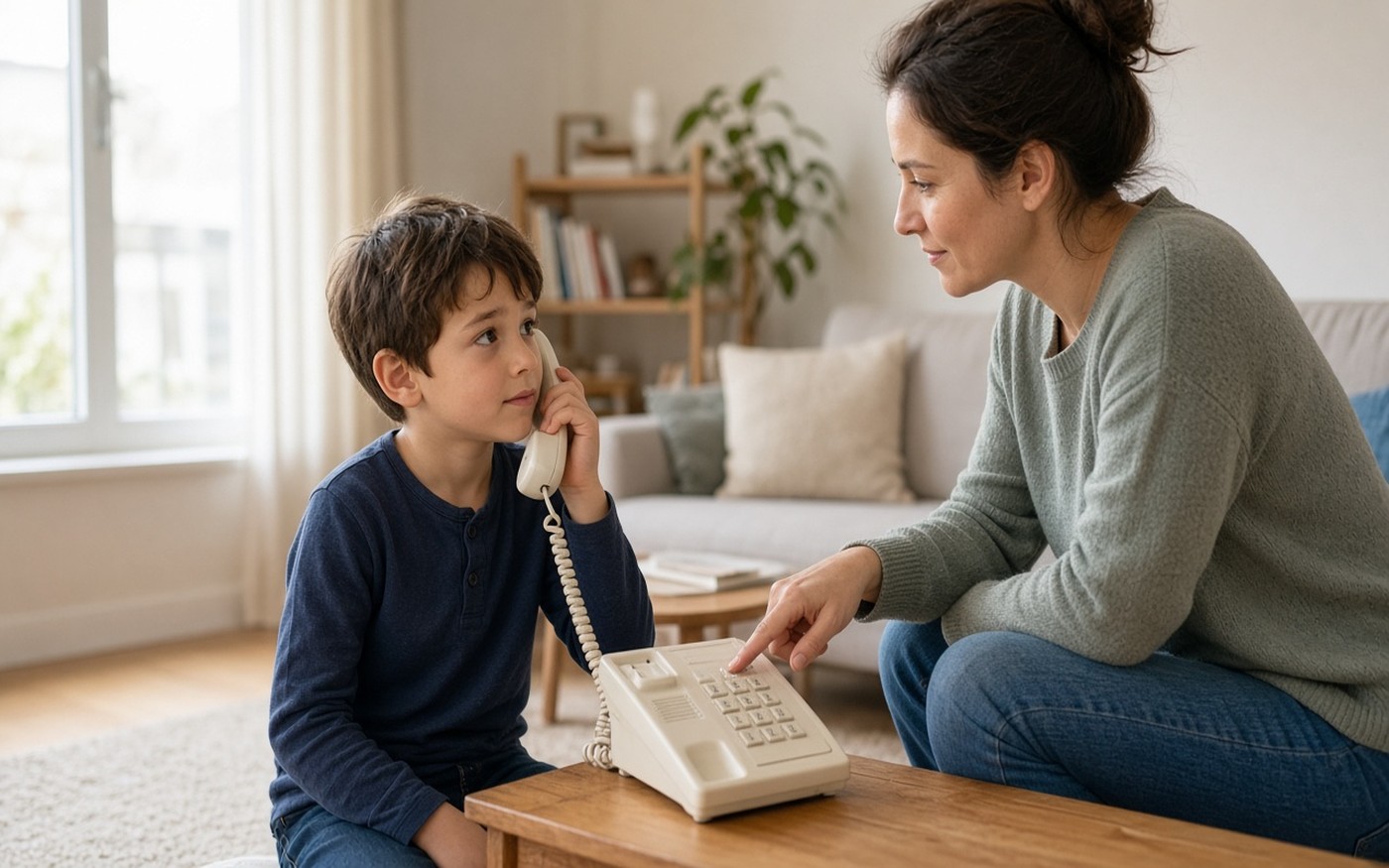
The goal is a calm, real call—not a practice call to 911
Kids should know how to get help in a true emergency, and they should not practice by dialing 911 on a live phone. A real 911 call sends responders. Teach the words, the numbers, and the decision first, using a toy phone, a disconnected handset, or an official community education program if your area has one. If they ever dial 911 by accident, they should stay on the line and say it was a mistake rather than hanging up, which can cause a call-back and a visit.
This skill sits next to a family emergency plan and a basic first-aid kit, but it is its own job: knowing when a situation is an emergency, how to reach a dispatcher, and what to say. It also belongs in a babysitter briefing—see leaving kids with a babysitter—so every adult in the house already knows your address and your numbers.
What counts as an emergency, and what doesn’t
Give simple examples. Call 911 if someone is badly hurt and a grown-up can’t help, if there is a fire, if someone is unconscious, if there is a crime or a stranger in the house who shouldn’t be there, or if they cannot wake a parent who is unresponsive. Do not call 911 for a spilled drink, a lost toy, a usual argument, or a minor scrape you would handle with a bandage.
The first move is still “get a grown-up if you can.” 911 is for when there is no safe grown-up who can take over, or when that grown-up is the one who needs help. For a fire, the first move is to get out, then call from a safe place if a grown-up isn’t already doing it. You can role-play these situations without touching a live keypad.
What they need to know how to say
Practice, out loud, on a play phone: their full name, their address including the city, a parent’s full name, and a callback number. “There is an emergency. I need help. My name is—. I am at—.” Stay on the line, answer the dispatcher’s questions, and don’t hang up until they’re told to. If they don’t know the exact problem, they can still say what they see: “My dad is on the floor and he isn’t answering.”
Post the address near the phone or on the fridge, in numbers and words a child can read or copy. Review it when you move, when you travel, and when they stay at a grandparent’s house (the address is different there). Locked phones in the U.S. can usually still place a 911 call; show an older child where the emergency call option is on the phone you actually have, without placing the call.
Keep the practice short and serious enough that it doesn’t become a game of “calling the police.” Praise them for knowing the address and for waiting to be told to hang up. If they like to pretend, use a clearly toy phone and a pretend dispatcher (you), and end the game clearly.
Age, fear, and accidental calls
Very young children can memorize a parent’s name and “get a grown-up or go to a neighbor you know.” School-age kids can practice the full script. You don’t need to scare them with graphic stories. Calm, specific examples are enough. If the topic makes them anxious, stop, and come back in a shorter session another day. Our guide to talking about feelings applies if they worry afterward.
If they call 911 by accident, stay on the line, explain, and follow the dispatcher’s instructions. Then talk at home about the difference between practice and a real call, without shame-piling. If a child has made repeated non-emergency calls, treat that as a teaching and supervision issue, and consider talking with your local non-emergency line about what they recommend.
Show them where the phones actually live in your house, including a charger that isn’t always in your pocket. A clearly labeled landline, if you have one, is easier for some kids than a locked smartphone. If you only have cell phones, a regular review of the emergency-call screen is worth more than a lecture they hear once.
Neighbors, a building entrance code, and a dog that shouldn’t be let out in a rush are the kind of details to mention when they’re older. Keep the first lessons smaller: emergency or not, name and address, stay on the line. You can add layers as they grow, the same way you add independence on a quieter street before a busy one.
911 is the next step when they can’t find a worker or feel unsafe; the first step is stay put. See if you get separated in public.
911 is the emergency skill; everyday answering is a shorter, calmer script. See teaching kids to answer the phone.
911 is a home skill; a station visit is a short look at the workplace, not a practice call. See fire-station visits with kids.
This guide is also listed in our life skills guides.
Quick FAQ
Should kids practice by calling 911 for real?
No. Practice the words, your address, and the phone itself without placing a live call. A real call is only for a real emergency.
What counts as an emergency for a child to call?
A fire, a serious injury, a grown-up who will not wake up, or a situation where they cannot find a safe adult. A spilled snack or a sibling argument is not 911.
What if they are afraid to talk to a stranger on the phone?
Practice the short script at home until it is boring. They can still call, say the emergency and the address, and stay on the line. Fear is normal; the script is the tool.
This guide is also listed in our health and safety guides.
The bottom line
Teach kids when 911 is for, what to say, and how to stay on the line—and practice those words without placing a live 911 call. Get a grown-up first when you can, get out of a fire first, and keep your address posted where they can find it. A short, calm practice at home is the whole habit.