
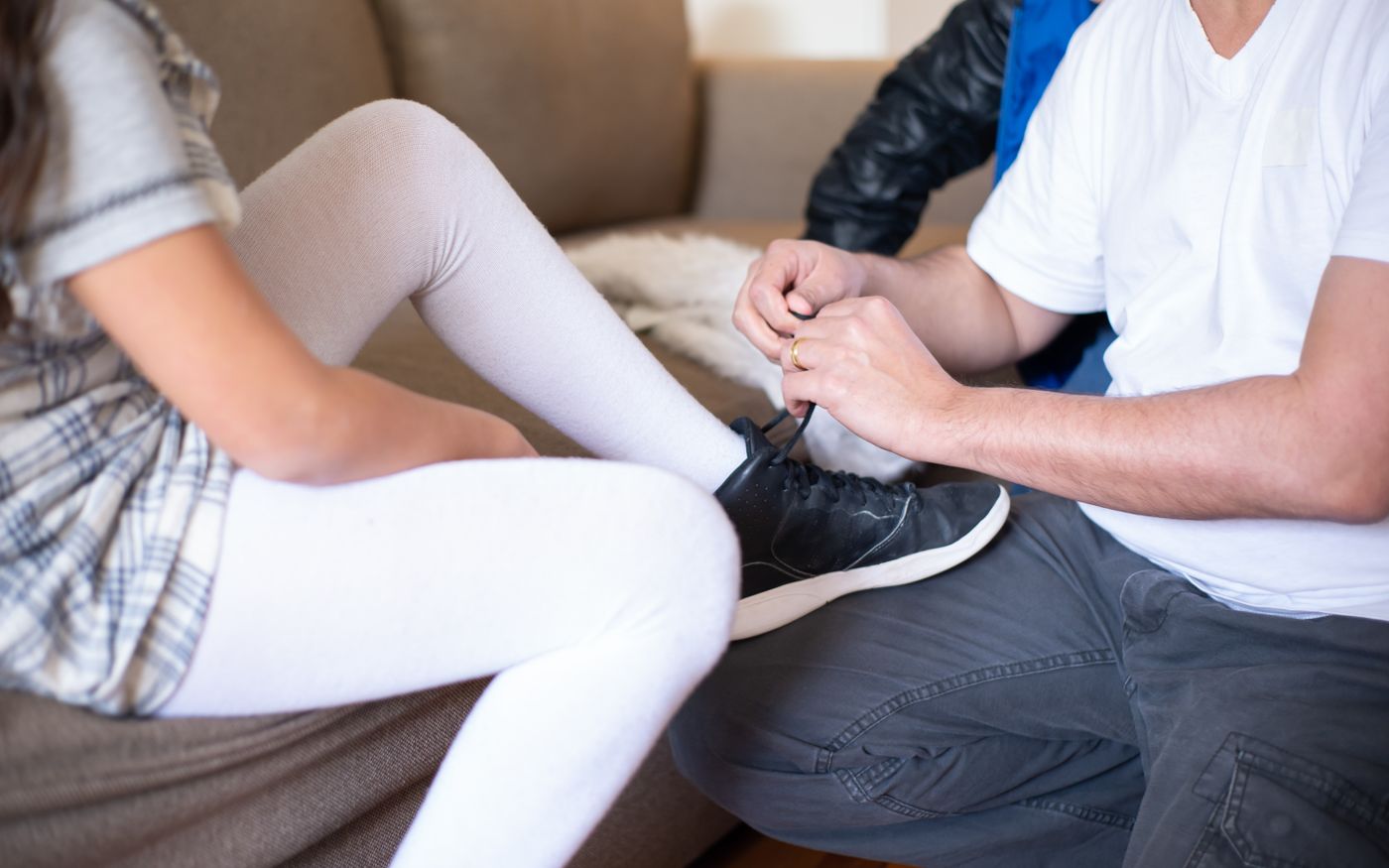
Tying shoes is a morning skill with a long runway
Most kids are not ready to tie shoes at the same age they learn to put shoes on. Our guide to getting dressed can still use velcro, slip-ons, or a grown-up tie for a long time. When you do teach tying, treat it as a short, repeatable practice, not a 7:20 fight on a school morning. The morning routine should keep a backup (velcro, or you tie) until the knot actually holds.
A shoe on their lap, or a practice shoe with fat laces on a table, is easier than a foot they can’t see well. Two-tone laces, or a lace with a slightly different texture, help some kids track the loops. Sit beside them, not over them, and use the same words every time.
One method, said the same way, then lots of easy practice
Pick one method and keep it. The two-loop “bunny ears” method is enough for almost every child; a single-loop wrap is fine if that’s how you already tie and you can teach it clearly. Don’t switch methods every afternoon because a video looked better. Say the same short script: two loops, wrap, pull, tighten. If a knot slips, show the last tighten, don’t start a new lecture.
Practice when no one is late: after school, on a weekend, or during a quiet stretch. Five minutes is plenty. If they get hot, stop. A finished loose bow they made is worth more than a perfect knot you completed for them. When you do have to tie for time, say so: “I’m tying this morning. After school you can practice.”
Double-knot for running, playground, and bike time once they have a basic bow, or you tie the double until they can. A trailing lace is a trip. Check the bow before they go out the door the first weeks, the same way you glance at a zipper. Don’t undo a working if imperfect knot just to redo it your way.
Shoes that help, and shoes that fight you
Fat, slightly waxy laces are easier than skinny satin ones. A shoe they can prop on a knee, with an opening they can hold, beats a stiff boot. If they still need independence on school mornings, keep one velcro or slip-on pair in the rotation even while they learn. That’s not a failure of the lesson; it’s how mornings keep working.
Tie on a chair, not in a crowded doorway. If a sibling is already dressed and waiting, this is not the practice window. Use a practice shoe in the living room, then transfer to the real pair once the motion is familiar. Some kids do better if they first tie a shoe that isn’t on a foot, then try it on themselves.
When the knot comes undone at school, they should know it’s all right to ask a teacher or to switch to a stuffed-in lace for the hour, then practice again at home. Shame doesn’t teach a bow. A small extra pair of laces in a backpack is optional; a shoe they can keep on is the real need.
When they refuse, or their fingers aren’t ready
If they can’t make a loop after many calm tries, pause for a few weeks and keep velcro in the mix. Fine-motor readiness varies. You can still have them pull tight after you make the loops, so they own part of the job. Don’t turn tying into a character test, and don’t compare them to a younger sibling who happened to get it earlier.
Frustration is ordinary. Name it and stop: “Your fingers are tired. We’ll try again tomorrow.” A weekend practice with no audience works better than a sidewalk performance. If they only want you to do it, keep a short practice window anyway, then you can tie for the exit. Over time, the practice window is how the morning job moves over to them.
Once they can tie, they still won’t do it every time. A reminder at the door is enough. Check that both shoes are actually tied before a run or a playground stretch. Then let a slightly messy bow be theirs.
If they have two pairs, practice on the one with the easiest laces, then try the stiffer pair later. A win on a practice shoe should move to a real shoe the same week, or the skill stays in the living room and never makes it to the door.
This guide is also listed in our life skills guides.
Quick FAQ
When are kids ready to tie shoes?
Often later than we expect, once their fingers can manage two laces. A long runway of practice on a well day is better than a lesson when you are late.
Should we pick one tying method?
Yes. One method, said the same way, then lots of easy practice. Switching methods mid-week usually slows them down.
What if their fingers are not ready, or we have to leave?
Use a simpler shoe for now—velcro or a slip-on—and practice later. You can tie the shoe today without canceling the skill.
The bottom line
Kids learn to tie shoes with one method, the same short words, and practice that does not happen at 7:20. Keep a velcro backup for real mornings, double-knot for running, and stop before anyone is in tears. The bow they can tie on a quiet afternoon is the one that will eventually show up at the door.