
Helping with dishes is a finish to the meal, not a second shift
Kids can help after a meal without owning a whole sink of greasy pans. Clearing the table, carrying unbreakable plates, rinsing a cup, or loading a few items in the dishwasher is a real job, and it belongs with age-appropriate chores. The meal isn’t done until the table is clear enough to use again. That is a different skill from table manners during the meal, and a different one from cleaning up toys.
Start while you’re still in the room, not with a shouted list from the couch. “Plates to the counter, then cups” is a finishable sequence. If you use a dishwasher, show them where forks go and which things are not theirs to handle (knives, heavy pans, glass you don’t want dropped).
Jobs by age, and what stays yours
A toddler can carry a plastic cup and a napkin to a low bin or the counter, and can put a spoon in a basket. A preschooler can scrape a plate into the trash or compost you already set up, and can put a plastic plate by the sink. A school-age kid can rinse, load everyday dishes, and wipe the table. You still handle sharp knives, breakable stemware, the heavy pot, and any soaking mess you don’t want poured down the sink the wrong way.
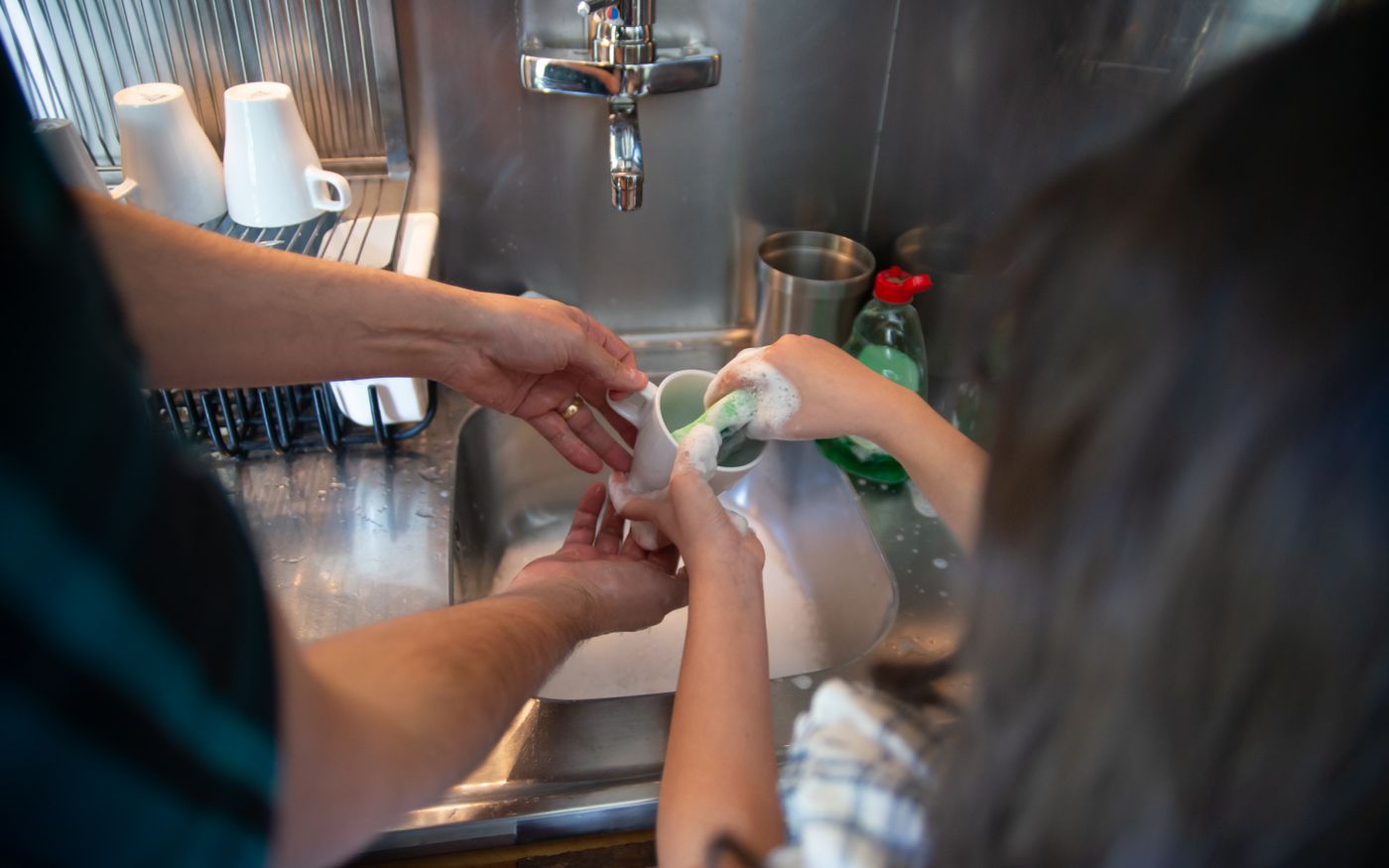
If they wash by hand, give them a stool that doesn’t wobble, lukewarm water, and items that can survive a drop. A mug, a plastic plate, and silverware are enough for a first try. Stay next to them. Suds are fun; a full sink of boiling-hot water is not a kid job. Rinse, then a towel they can actually lift, then done.
Don’t redo the whole load in front of them. If a bowl went in dirty, show one correction and let the rest stand. The same idea as making a bed: a job you silently finish stays yours. Pair this with laundry later in the week if you want two short, repeatable house jobs, not one giant Saturday clean.
Make the reset short so it actually happens
A ten-minute reset after dinner beats a 40-minute “kitchen deep clean” that no one will do on a Tuesday. Clear, wipe, load or rinse the daily dishes, and leave the pans if you must. Put trash in the bin and food away. That’s the habit. Our weekly meal plan is easier tomorrow if tonight’s table is actually clear.
If you have two kids, split the jobs so one isn’t always the clearer and one isn’t always disappearing. Rotate, or give each person their own plate plus one shared job (wipe the table, sweep crumbs). After pizza night or pasta night, the mess is larger; lower the bar to “table clear and trash out,” and you do the sheet pan.
Scripts help: “We’re clearing now,” not “Why is this still here?” If they stall, start the first plate with them and hand the next one over. Don’t bargain with a show for a five-minute job, or the job only happens when a prize is on the table.
When they refuse, or the kitchen is already a wreck
If the kitchen is already chaos, shrink the job: only their plate and cup, or only the table wipe. A wrecked kitchen is an adult problem you can chip at; don’t assign a child the whole backlog as punishment. If they’re tired, do a shorter version and name it: “Tonight we just do plates. Tomorrow we do the rest.”
Spills and a broken cup will happen. Have a broom and a visible trash can, and treat a break as a cleanup, not a character flaw, unless they threw it. For a child who can’t reach, a stable stool and a clear landing spot on the counter matter more than a lecture about responsibility.
Guests and holidays are a good time to lower the bar, then return to the ordinary reset the next night. The point is a habit at home, not a performance when Grandma is watching. If they cooked with you—see cooking with toddlers—they can also help put the unused cheese back and carry the unbreakable bowls.
After breakfast can be an even shorter version of the same habit, so it isn’t only a dinner fight. Cups and plates from the morning go in, the table gets a wipe, and you leave. Weekend brunch can wait a little longer, then return to the same clear-and-load idea before the afternoon starts.
Bowls and plates to the sink is the natural finish after a dipping night. See grilled cheese and soup night.
They can set the table at the start and help clear it at the end. See teaching kids to set the table.
This guide is part of our mealtime guides, where related pieces are grouped in one place.
This guide is also listed in our life skills guides.
Quick FAQ
What dish jobs can a young child do?
Clearing unbreakable plates, wiping a section of table, or putting silverware in a bin. You keep knives, the hot dishwasher door, and anything sharp or heavy.
Should dishes happen every night?
A short, predictable reset after dinner is how the habit sticks. A perfect sparkle is not the standard; starting the job is.
What if the kitchen is already a wreck?
Shrink the job to one surface or one load, and do it together. You can skip a full clean on a hard night without dropping the habit forever.
The bottom line
Kids help with dishes when the job is short, the breakable and sharp things stay yours, and an adult doesn’t silently redo the work. Clear, wipe, and load a few daily items after the meal, and treat that as the finish. The ten-minute reset you can repeat is the one that counts.