
A grocery list is a home job, not a store survival plan
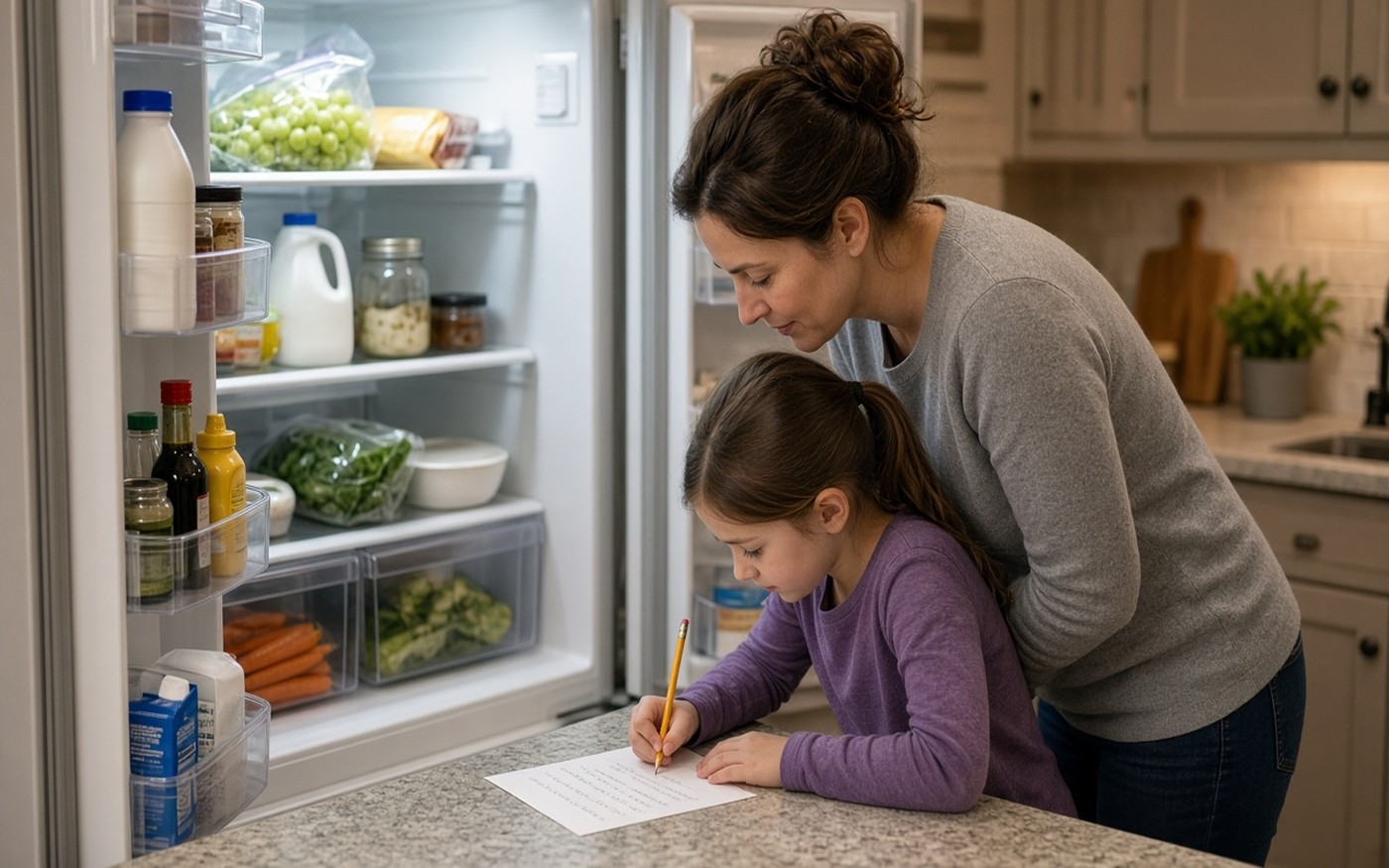
Teaching kids to write a grocery list is about planning food at home: looking in the fridge, naming what you need, and writing or drawing it before you leave. It is not grocery shopping with toddlers, which is how to get through the aisles with a small child in tow. The list is the skill; the store is where you use it. A good list also makes a weekly meal plan real, because the plan has somewhere to go besides your head.
Start at the kitchen, not in the parking lot. Open the fridge and the pantry together. Ask, “What is almost gone?” and “What do we need for the dinners we already named?” A preschooler can draw a milk carton or put a magnet on a picture list. A school-age child can write words, even invented spelling, or copy from a list you start. The point is a list they helped make, not a perfect one you rewrite in the car.
Keep the list short, and group it
A useful kids’ list is short enough to finish. Ten items is plenty; twenty becomes a scroll no one checks. Group by how the store is laid out if that helps—produce, dairy, dry goods—or by meals: “taco night,” “lunches,” “breakfast.” Either system is fine if you use it twice. A running list on the fridge, with a pencil already attached, beats a notes app only you can reach, at least while they are learning.
Give them one job on the list they own. “You are in charge of fruit” or “You check whether we need bread” is a real job. They can also be the person who holds the list in the store and crosses things off, if they are old enough not to lose it in a cart. That crossing-off is satisfying in the same way writing their name is: a mark they made that does a job.
Wants vs needs belongs on the list, briefly. If they want a treat, it can have a place—one item, already agreed—or it can wait. You do not need a lecture in the cereal aisle. The same idea shows up later in holiday wants and needs; the grocery list is just a smaller, weekly version.
Using the list at the store
At the store, the list is the script. Walk the sections you need, not the whole building. Let them find one or two items on the list and put them in the cart. You still handle breakable things, the budget, and the checkout. If they cannot read yet, pictures or a simple check-off sheet work. If the store is already a hard outing, keep their job tiny and get out; the list practice can happen more at home that week.
When something is out of stock, show the decision: skip it, or pick one substitute. That is a useful, small disappointment, not a crisis. If they added something that is not on the list, you can say, “Not this trip; we can put it on the fridge list for next time.” You do not have to win every request in the aisle to keep the list meaningful.
A farmers’ market or a quick corner-store run can use a tiny version of the same list: three things, one job. The habit is “we write it before we go,” not “we only shop at one kind of store.” If you often forget a staple, that item can live on a standing list you copy each week—milk, bananas, the sandwich bread they actually eat.
When the list gets ignored, or the writing is a fight
If they refuse to write, you can still let them name items while you write, then have them check the list with you. If the writing itself is the battle, use pictures or stickers for a while. The thinking is the skill; handwriting can catch up. If the list is lost every trip, keep a photo of it on your phone as a backup, and clip the paper to the cart or your bag.
Partners and sitters can use the same fridge list. A shared note that says “add what we are out of” works better than a text at 5 p.m. asking what to buy. Kids can add to it during the week, which is how the list stays current. End the store trip when the list is done, not after a bonus lap through every aisle. That is how the list stays the point.
The list also makes leftover night and lunch packing easier, because you already wrote down the milk, the fruit, and the bread you actually use. If Thursday is leftovers, the list does not need a new entrée—only the fresh side you are missing. That is planning, not a second shopping personality.
This guide is also listed in our life skills guides and mealtime guides.
Quick FAQ
Should a toddler write, or just draw the list?
Either. A drawn tomato or a copied word both count. The habit is “we decide at home, then use the list,” not perfect handwriting.
How long should the list be?
Short enough to finish: a handful of items grouped the way you shop. A novel-length list turns the job into homework.
Is this the same as taking them to the store?
No. The list is a home skill. Store survival is a different outing; see grocery shopping with toddlers for the aisle plan.
The bottom line
A kids’ grocery list is a short home habit: look in the fridge, write or draw what you need, group it, and use it at the store. Keep it short, give them one part to own, and treat wants as a planned item or a later list, not an aisle negotiation. The list you actually check off is the one worth teaching.