
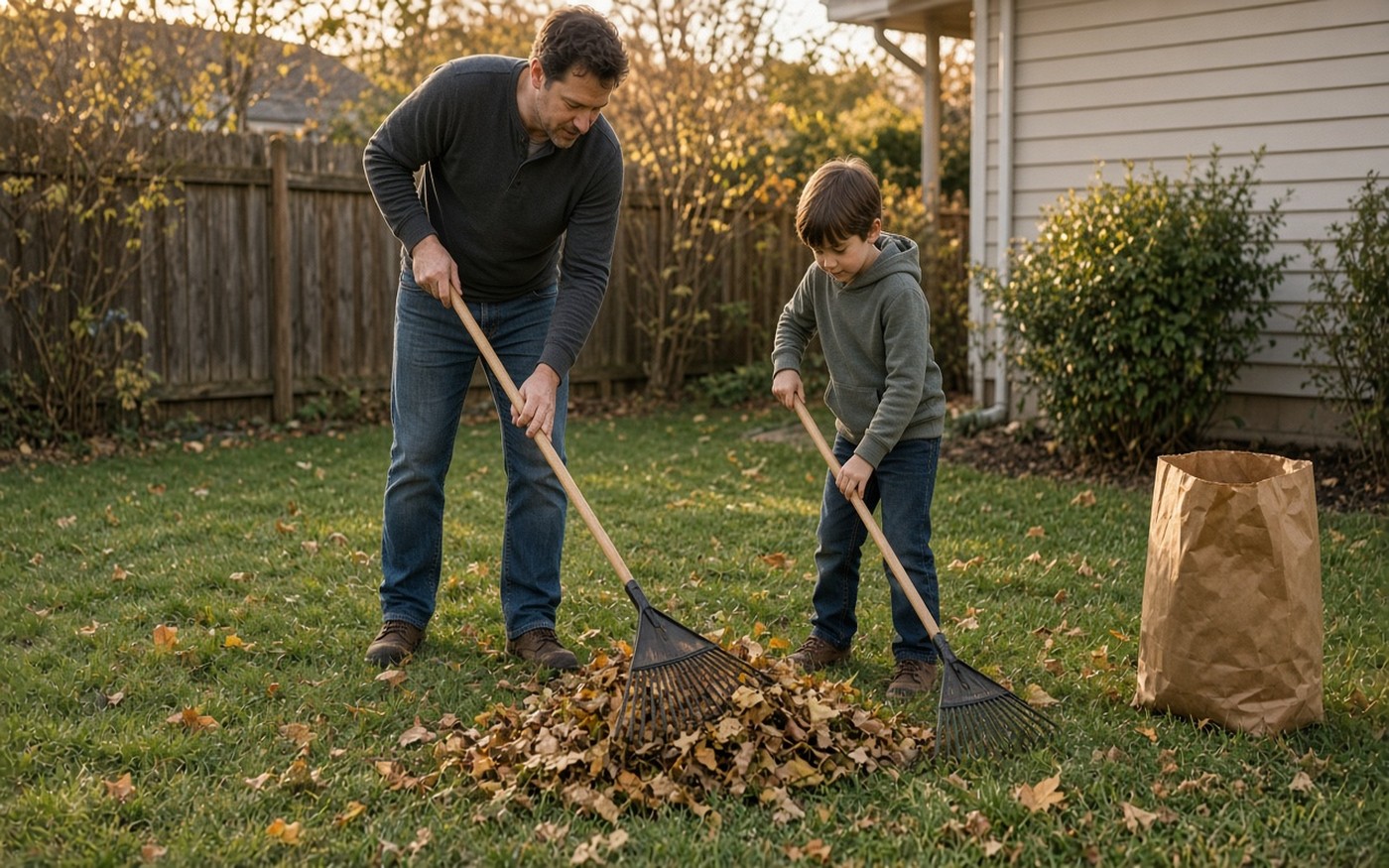
Yard work is a short outdoor job, not a landscaping project
Yard work with kids is a defined chore outside: raking a small pile, watering a bed, pulling a few weeds, or sweeping a porch. It is not growing food with kids, which is about planting something you might eat. It is also not twenty minutes of outdoor play, which is for moving and playing. And it is not a general chore chart for indoor jobs. Here the point is a short, supervised shift with a clear start and a clear “done.”
Pick one job that can finish in ten to twenty minutes. “Let’s tidy the whole yard” is how a Saturday turns into a fight. “We’ll fill this one bag of leaves” or “We’ll water the pots on the steps” is a job a child can see the end of. Say the plan before you go out: what you will do, what they may not touch, and when you will stop for water.
Jobs they can do, and tools they shouldn’t
A preschooler can carry a small watering can you already filled, put twigs in a bucket, or help hold a bag. A school-age child can rake a defined patch, sweep a walk, pull obvious weeds you point to, or hose a patio with you watching the spray. You handle power tools, the mower, trimmers, ladders, sharp pruners, chemicals, and anything that throws debris. That split is the same one we use for indoor chores: real work, clear limits.
Give them a tool that fits their hands: a child-size rake, a hand trowel, a broom, a bucket. Adult tools that are too heavy become frustrating or unsafe. Gloves help with prickly plants and splinters. Closed shoes, not sandals, if you are raking or walking in beds. Sunscreen and a hat belong on a daytime job, the same habit as teaching kids to put on sunscreen—not only at the beach.
Keep chemicals, fuels, and fertilizers locked or out of reach, and do not make “helping with the spray” a kid job. If you use a mower, kids stay well away while it is running, even if they want to watch. A leaf pile is for raking into a bag or a compost bin you already use, not for jumping if there are sticks, hidden tools, or a road nearby.
Make “done” visible
Yard work falls apart when the standard is invisible. Mark the patch with a hose, a chalk line, or “from this tree to the walk.” When the bag is full or the pots are watered, the job is over—even if the rest of the yard still looks like a yard. That is how a child learns they finished something, the same way making a bed is good enough when the covers are pulled up, not hotel-perfect.
Work beside them for the first many times. Narrate the job once: “We rake toward the bag, then I hold it, you scoop.” Then let them do their part without a running critique. If the pile is messy, you can tidy the edge after they are done, or on your own later. A child who is corrected on every stroke will not want the next shift.
Heat, cold, and bugs are reasons to shorten the job, not reasons to push. Bring water. Come in when anyone is done. A short outdoor chore on a pleasant afternoon is worth repeating; a long, hot one becomes a story about never helping outside again.
When it goes sideways, and how to try again
If they refuse, shrink the job or end it. You can say, “Today I’ll finish this bag; you can try a smaller patch next time.” If they make a bigger mess than they clean, give a narrower job next time—six leaves in a bucket, not a whole bed. If siblings turn the rake into a sword, the tools go in, and the job is over. Safety ends the activity faster than a lecture.
A weekly ten-minute yard job can live on the same list as indoor chores. Saturday morning is a natural slot for many families, but a Tuesday after school works if the job is tiny. Partners and sitters can run the same short job from a note: what to do, what is off-limits, and where the gloves live.
The habit also connects to looking after a place, not only to “helping Dad.” You can say, “We take care of this patch because we live here,” without a speech about character. If they later want a bigger project—a flower pot, a path they helped clear—that can grow out of these short shifts. Start with the small, finishable one.
If you do not have a yard, the same idea works on a stoop, a balcony, or a shared walk you are allowed to sweep. The job is still short and visible: water two pots, sweep the steps, bring in the toys that were left out. You do not need acreage to teach a finishable outdoor chore.
This guide is also listed in our life skills guides.
Quick FAQ
What yard jobs actually fit a young child?
Collecting sticks, filling a small bag of leaves, watering a pot, or sweeping a short walk—one job they can finish. Power tools and ladders stay off limits.
How long should a yard session last?
Short enough to finish the job you named. A landscaping project is an adult job they can help with for a stretch, not a full afternoon requirement.
What if they wander off or start playing?
Name the remaining work, then end the job when it is done or when they are clearly done helping. A little play after a finished job is fine; an unfinished “help” that you redo silently teaches less.
The bottom line
Yard work with kids works when the job is short, the tools fit their hands, and “done” is something they can see. You handle the dangerous equipment; they rake, water, sweep, or carry. Stop while it is still going well. The Saturday you finish one bag together is more useful than the afternoon you tried to reclaim the whole yard.