
A plan should be simple enough to practice
Kids don’t need a lecture about every disaster on the news. They need a short, calm plan for the things that actually happen: a fire alarm, a power outage, getting separated in a store, or knowing how to call for help. The goal is confidence, not fear. If you tell it like a scary movie, they will remember the movie and not the meeting place.
Keep it to a few pieces: how we get out, where we meet, who we call, and what we do if the lights go out. Practice once, then again in a month, the same way you’d review a fire drill at school without making it the theme of the week.
Fire: get out, meet up, don’t go back
Walk the house and find two ways out of each bedroom if you can—a door and, where it’s safe and you’ve planned it, a window with a usable exit. Pick an outside meeting place that’s easy to name: the big tree, the neighbor’s porch, the mailbox. In a drill, everyone leaves and goes there, even if it’s “just practice.” You can set off a smoke-alarm chirp (or just say “alarm”) and walk, not run, to the meeting spot. Stay low is the phrase if there’s smoke; don’t hide in a closet or under a bed.
Say clearly: we do not go back in for toys, pets, or phones. Grown-ups handle pets if they can do it safely; kids go to the meeting place. If you live in an apartment, practice the stairway, not the elevator. After the drill, have a snack and treat it as something you know how to do, not as a near-miss.
Names, numbers, and what to do if you’re separated
Teach your child their first and last name, your first name, and a phone number they can recite—or a card in a backpack pocket for younger kids who can’t memorize it yet. Practice what to do in a store: stop, stay in that aisle or go to a cashier, and don’t leave the building with a stranger who says they’ll help you find Mom. A “safe grown-up” is someone who works there, in a uniform or behind a desk, not a kind-looking shopper.
For 911, practice with a toy phone or with your phone in airplane mode, then stop. They should know it’s for when someone is badly hurt or there is a fire or they can’t find a grown-up and they’re scared and alone. It is not for jokes or for a missing snack. Keep the explanation small.
Power outages, flashlights, and a small kit
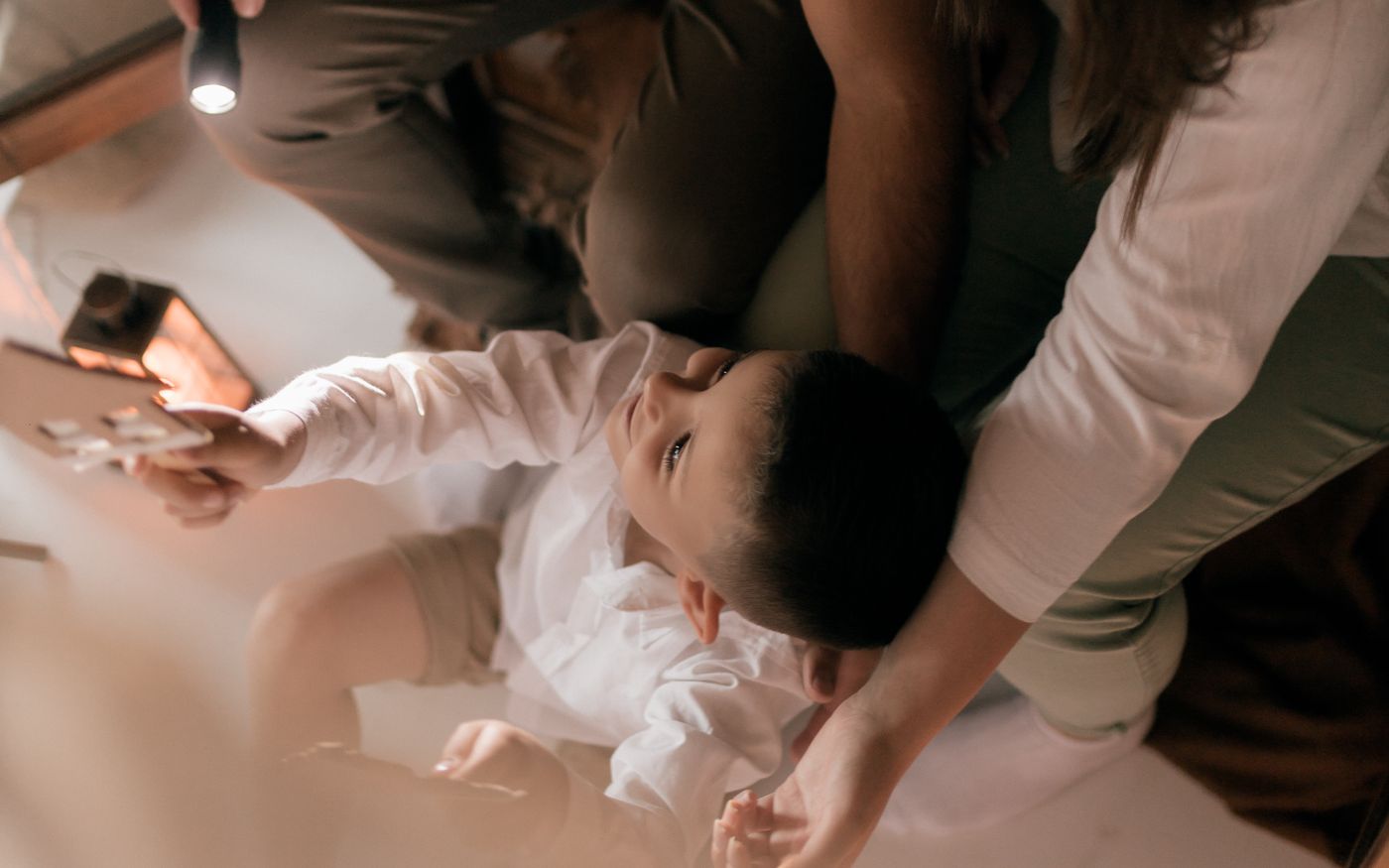
A flashlight in a known place—and permission to use it—turns a dark house from a scare into a job. Show them where it lives. Our fear of the dark tips still help at bedtime; an outage is just the dark in a new place in the house. A simple kit can live on a shelf: flashlights, extra batteries, a phone charger, a copy of important numbers, a few snacks, and any daily medicine. The home first-aid kit is the medical half of the same idea.
Talk about storms in ordinary language: “Sometimes the lights go out. We use flashlights, we stay together, and we wait.” If your child is a worrier, this kind of honest, small plan is more useful than avoiding the topic. See talking to kids about feelings if they need help naming the worry without spiraling.
What to say, and how often to practice
- “If the alarm is loud, we go to the tree. We don’t hide, and we don’t go back in.”
- “If you can’t find me in the store, you stay and find a person who works here.”
- “Flashlights live in this drawer. You can use one if the lights go out.”
Practice a fire drill twice a year, and after you move. If you’ve just moved to a new house, make the new meeting place one of the first things you walk, right after the bedrooms and the bathroom. Keep drills short. End with something ordinary so the plan feels like a skill, not a threat.
If you have a babysitter or grandparents who watch the kids, show them the meeting place and the kit on a calm day, not during an alarm. A one-page list on the fridge—meeting place, your numbers, and any medicines—helps a visiting adult follow the same plan you practiced.
A meeting bench at the playground is a small, everyday version of a meeting place. See playground safety for kids.
“We stay together at the corner” is a small, everyday version of a meeting place. See teaching kids to cross the street.
Give the sitter the same numbers and meeting place you already use. See leaving kids with a babysitter for the rest of the briefing.
A meeting place and a go-bag are one part of being ready; knowing how to call for help is another. See teaching kids to call 911.
A known phone number belongs in the emergency plan; everyday calling is practice before you need it. See teaching kids to answer the phone.
Smoke alarms and a meeting place belong in the home plan, not as a lecture in the bay. See fire-station visits with kids.
This guide is also listed in our life skills guides.
Quick FAQ
How simple does a family emergency plan need to be?
Simple enough to practice: how to get out, where to meet, and how to find a grown-up or call for help. A binder no one has opened is not a plan.
Should kids practice calling 911 as part of the plan?
They should know when and how, without making a real practice call to 911. See teaching kids to call 911 for the script.
How often should we practice?
A few times a year, briefly, and after you move or change a meeting place. A short drill is enough; a scary lecture is not.
This guide is also listed in our health and safety guides.
The bottom line
Pick a meeting place, practice a calm exit, teach a name and a number, and show them where the flashlight lives. A family emergency plan works when it’s small enough to remember—and boring enough to practice twice a year.