
Cleanup is a habit, not a personality trait
Kids don’t naturally put toys away because they suddenly care about a tidy rug. They do it when the job is small, the home for each thing is obvious, and an adult is still in the room. Treat cleanup like any other daily chore in our guide to age-appropriate chores: one short job, done with you at first, then with less help.
A ten-minute tidy at the same two times every day beats a Saturday “we’re cleaning this whole house” project. After play, and again as part of an after-school routine, is enough. The goal is a floor you can walk across and a child who knows where the blocks live—not a showroom.
Make the job possible
Open bins they can dump into and still lift are better than a lid they can’t work, a high shelf, or a “system” with twelve categories. One basket for cars, one for stuffed animals, one for blocks, and a bin for everything else is plenty. If a toy doesn’t have a home, it will live on the floor.
Fewer toys out at once also means a shorter tidy. Rotate a few sets into a closet and leave out what they can actually finish putting away in five or ten minutes. After a rainy-day indoor stretch, you can reset one room instead of three.
Give the job a clear start and end. “When the song is over, the cars are in the bin and we’re done.” A timer or a short playlist is a boundary, not a race. If they stall, you stay and do the job with them rather than doing it after they leave the room, which teaches them that cleanup is optional.
Scripts that work better than “clean this up”
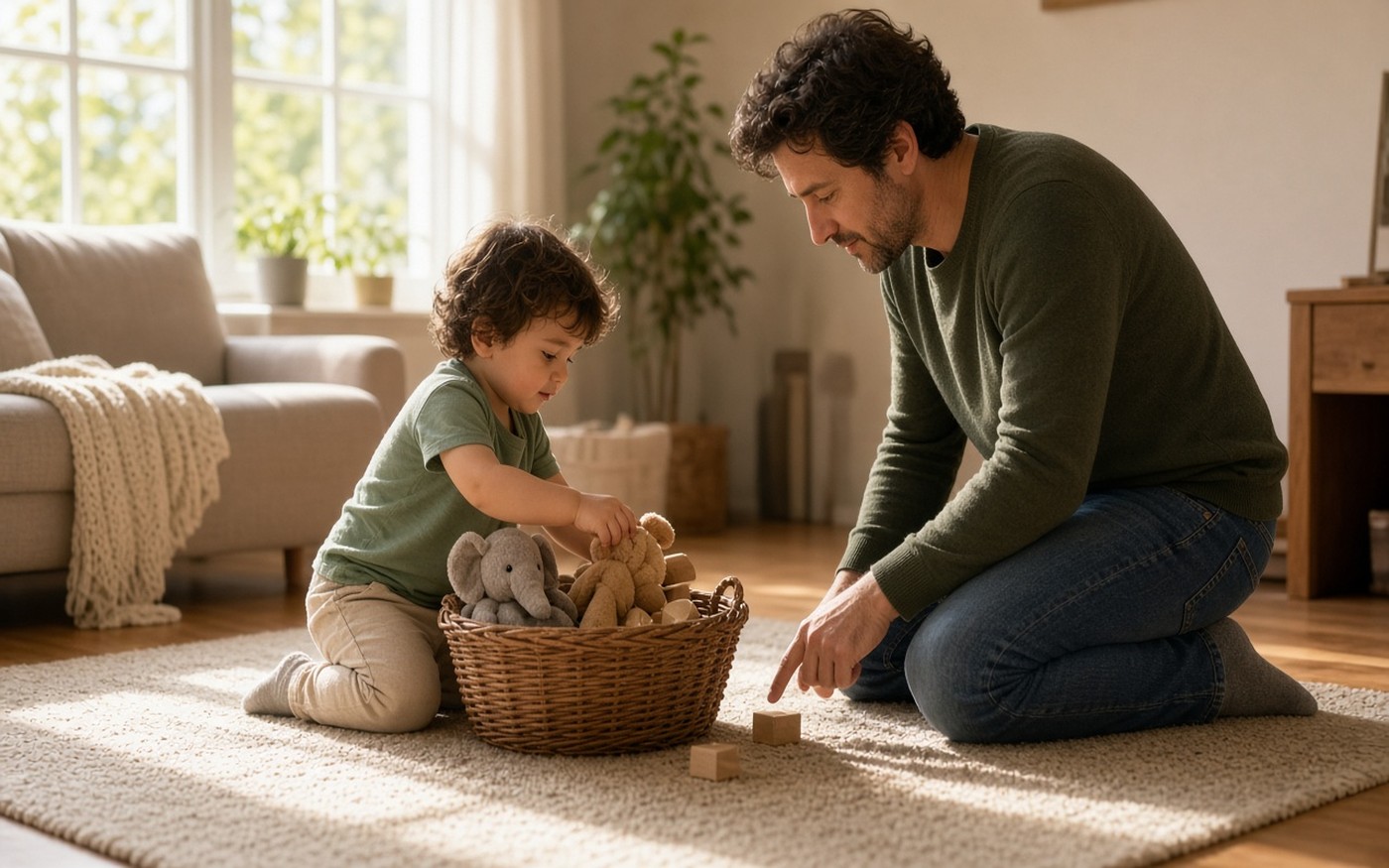
“Clean this up” is too big. Name the first piece: “Blocks in the green bin. I’ll do the books.” Or give a count: “Six things in the basket, then we’re finished.” For a toddler, you hand them one toy and point to the bin. For a preschooler, you start a category and they finish it. For a school-age kid, they run the room and you check the last corner.
If they refuse, don’t turn it into a lecture about responsibility. Get on the floor, start the first three items, and say, “Your job is the stuffed animals. I’m doing the crayons. Then we can go.” Help is not a reward for stalling if you still require their hands to stay in the job. If it becomes a fight every night, shrink the job until it’s finishable, then grow it again.
Sharing the floor with a sibling can stall cleanup if no one knows whose pile it is. Use the same turn-taking idea as teaching kids to share: “You put away the cars you used. I’ll help with the ones that were both of yours.” After a playdate, build two minutes of tidy into the goodbye so the visiting child isn’t left out and you’re not left with the whole room—the same courtesy you use when hosting a playdate.
What to do with toys they won’t put away
If a favorite has to “sleep” in their bed, that’s a small exception, not a new floor pile. If they want to leave a block tower up overnight, take a photo, then put it away, or give it one safe shelf until morning. A park of tiny pieces left out is how a younger sibling or a bare foot finds them later.
Broken or neglected toys don’t need a ceremony. A donation bag in the closet can collect what they’ve outgrown. Let them choose one or two to keep if they’re sad, then close the bag. Cleanup is easier when the volume of stuff actually fits the bins you have.
Some toys belong in the room where they’re used: crayons in a caddy near the table, bath toys in a bag that can hang and dry, outdoor balls in a bin by the door. Carrying a whole day’s mess back to one bedroom at 7 p.m. is how cleanup turns into a fight. Reset the room you’re leaving before you start the next thing.
If they “clean up” by shoving a pile under the bed, don’t pretend you didn’t notice, and don’t redo it silently. Bring the pile back once, say, “These go in the bin, not under there,” and finish the job with them. The next day, start the tidy five minutes earlier so there’s time to do it the real way.
A finishable pile beats a perfect system, whether it’s toys or shirts. See teaching kids to do laundry.
A made bed plus a short floor tidy is a finishable room reset. See teaching kids to make their bed.
A short kitchen reset is the mealtime version of a toy tidy. See teaching kids to help with dishes.
Outdoor toys and a swept walk can be part of the same short cleanup habit. See yard work with kids.
This guide is also listed in our life skills guides.
Quick FAQ
How do I get them to clean up without a fight?
Make the job possible: fewer toys out, a clear home for things, and a short, specific request. “Clean this up” is harder than “cars in this bin.”
Should I help, or will that teach them to wait me out?
Help beside them, especially at first. Doing it all for them while they watch is different from a shared five-minute reset.
What about toys they never put away?
Rotate them out, or put them away for a while. A smaller set of toys they can actually finish cleaning beats a playroom that never resets.
A wrapping session also ends with a clear floor. See teaching kids to wrap gifts.
The bottom line
Kids learn to clean up when the bins are obvious, the job is short, and you stay in the room until it’s done. Name the first category, help without taking the job over, and use the same two times of day so the habit doesn’t depend on your mood. A finishable tidy today is worth more than a perfect system they never use.