
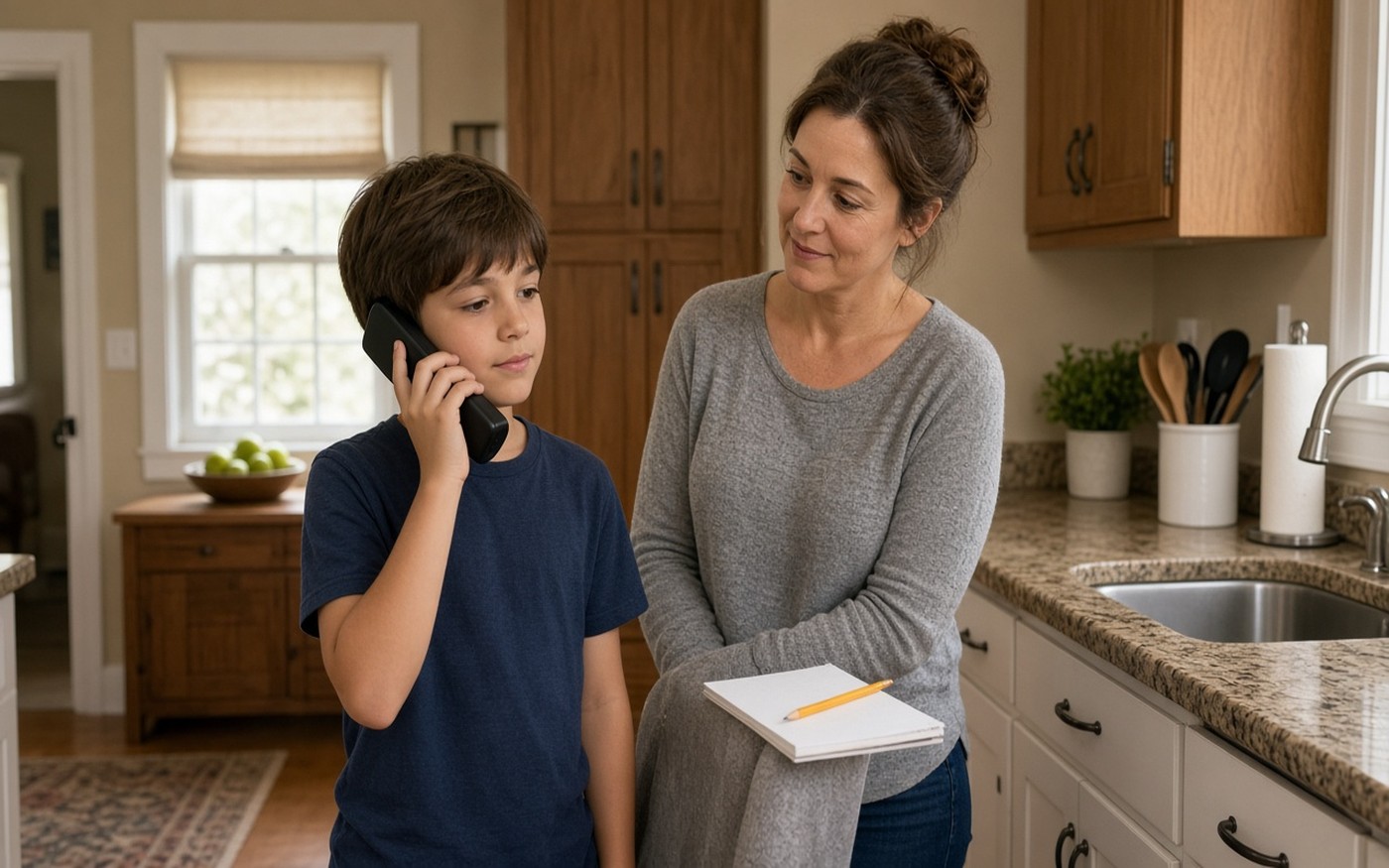
A phone call is a short script, not a personality test
Teaching kids to answer the phone—and to make a simple call—is a practical skill, not a charm lesson. They need a greeting, a way to get a grown-up, a way to take a short message, and a clear rule about what not to share. It is not the same skill as calling 911, which is for emergencies. It is also not a family emergency plan, though a known phone number belongs in that plan. Start with your real phone, in a calm moment, and keep the script short enough that they can use it when the ringing startles them.
Decide first whether they should answer at all. In many houses, kids do not pick up unknown numbers, video calls from people they don’t know, or the phone when they are home alone, if they are ever home alone. Answering is a skill you grant for known callers and for times a grown-up is nearby. That limit is part of the teaching, not a failure to trust them.
The script: greet, get help, or take a message
A usable script is small: “Hello, this is Maya.” Or, if you prefer not to give a first name to unknown callers, “Hello, Smith residence,” or simply “Hello.” Then they ask, “Who is calling, please?” If the caller is someone they know and you are home, they say, “Please hold,” and come get you. They do not yell the caller’s life story across the house, and they do not invite anyone over or share that a parent is out, at work, or arriving later.
If you cannot come to the phone, they can take a message: the person’s name, a number if you want one, and a short note. A pad and a pencil near the phone still work. On a cell phone, they can ask the person to hang up and wait for you to call back, then bring you the phone. Practice both versions. A child who can only answer a landline in a kitchen will freeze on a mobile phone in a bag.
Making a call is the other half. They should know their own full name, a parent’s name, and a home or cell number, and how to use a contact you have saved for a grandparent or a nearby grown-up. Rehearse a short call: “Hi, Grandma, it’s Maya. Can I tell you about school?” Then they hand the phone back or end the call politely. This is ordinary conversation practice, in the same family as writing their name: a specific, usable skill, not a performance.
What not to share, and how to end a call
Teach a short list of private information: addresses, whether they are home alone, when a parent will be back, school names, passwords, and any codes or delivery details. “My mom can call you back” is a complete sentence. They do not need to explain. If a caller asks something that feels odd, they find you or they hang up. You can say that plainly without a long stranger lecture. If they get a rude or confusing call, hanging up and telling you is the success.
Spam, scams, and school-robocalls will happen. Kids do not need to troubleshoot them. They should not press buttons because a recording told them to, give a card number, or share a code from a text. If a call claims to be the school, the bank, or you, they come get a grown-up. You can look up the official number later. This is one place a waiting skill helps: they do not have to solve the ringing in the moment.
Video calls need the same rules plus a camera rule. They should know how to keep the camera off until they see who it is, and they should not accept random incoming video. A family video call can still be practice for a greeting and a goodbye. End calls on purpose: “I have to go now, bye.” A child who never hears a closing line will trail off or freeze. Practice hanging up as calmly as answering.
Practice at home, then in real life
Role-play with the phone on speaker and you as the caller, then switch. Keep sessions short. Let them answer a planned call from a grandparent or a trusted friend while you stand nearby. Afterward, say what worked: they asked who was calling, they came to get you, they did not share extra information. Skip a long critique. If they freeze, you take the phone and try again another day. This is closer to a babysitter handoff than to a manners seminar: the sitter and the child should both know whether kids are expected to answer.
Age matters. A preschooler can learn not to pick up, and can say hello on a call you already started. A school-age child can take a simple message and place a call to a saved contact. A slightly older child can manage a known incoming call when you are in the next room. None of this requires their own phone. If they later get a device, these rules travel with it, along with when the phone is put away, including at meals and at night.
If a call goes badly—they shared too much, they hung up on someone kind, they were scared—reset the rule once and practice the line again. Don’t embarrass them in front of the caller. You can always call back. The goal is a child who can use a phone when they need to, and who knows when not to.
This guide is also listed in our life skills guides.
Quick FAQ
What should a child actually say when they answer?
A short script: a greeting, who they are if you want that, and “please hold” while they get a grown-up, or a simple message. They do not need to be charming.
What should they never share on a call?
Where they are alone, when a parent will be back, or personal details to a stranger. If they are unsure, they should get you or end the call.
When are they ready to answer the family phone?
When they can follow the script and get help, not because they like gadgets. Practice with you first, then a known caller.
The bottom line
Kids can learn to answer and make simple calls with a short script: greet, ask who it is, get a grown-up or take a message, and keep private information private. Practice on a real phone, start with known callers, and treat hanging up or coming to find you as a success. 911 stays its own skill. The everyday phone is just a tool, and a few rehearsed sentences are enough to use it well.