
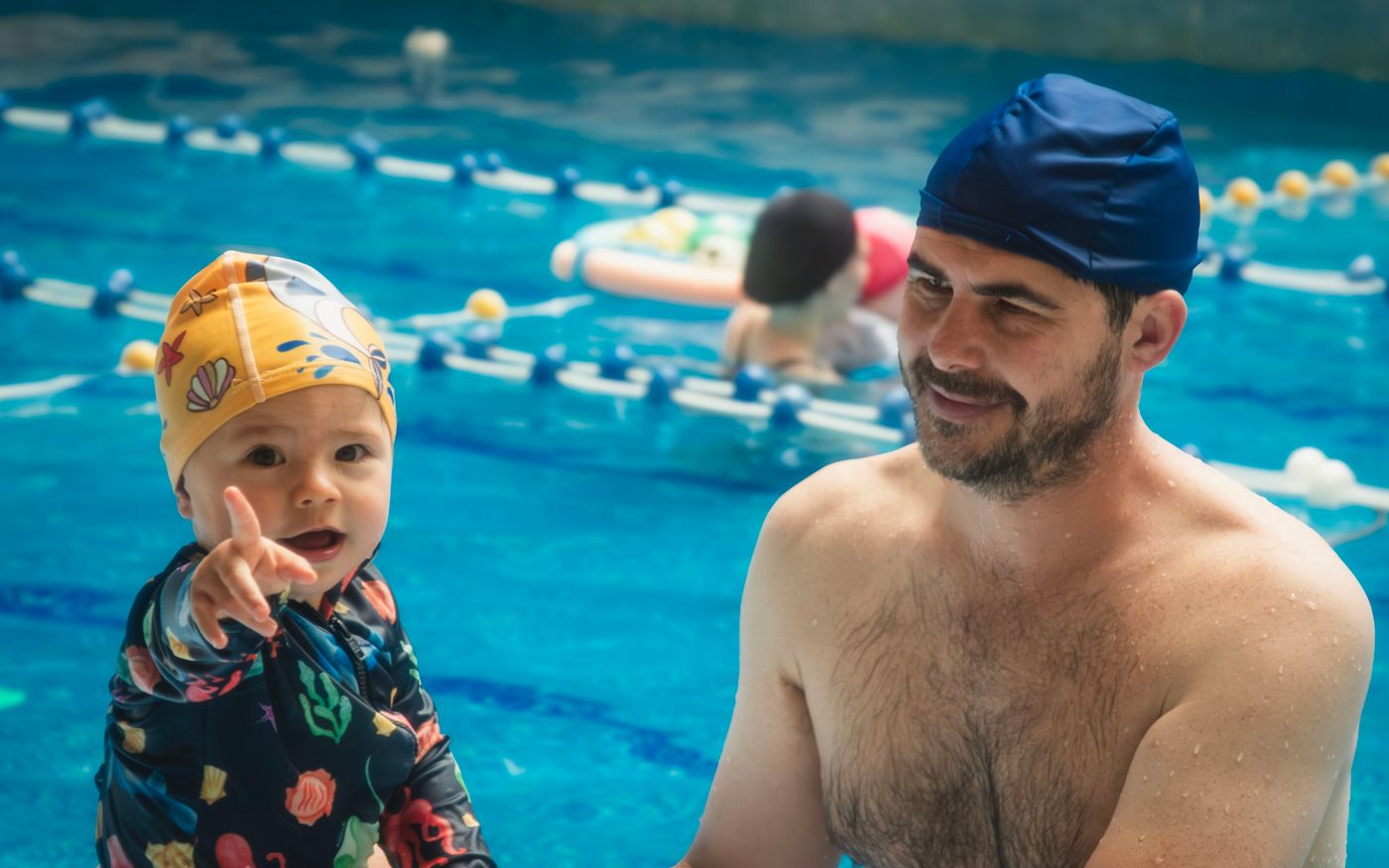
Swim lessons help. They do not replace a watching adult.
Water is fun, and it is also one of the places young children can get into trouble fastest. The core rule does not change with a new swimsuit or a week of lessons: a designated adult stays within arm’s reach of a toddler near water, and nobody leaves “just for a second.” Lessons, life jackets, and fences are layers. Supervision is the one you never skip.
That sounds stern because it is. You can still have a good time at a pool, a beach, or a backyard kiddie pool. The goal is a plan you use every time, not a scare story you tell once in June and forget in July.
Layers that actually help
Start with the environment. A backyard pool needs a four-sided fence with a self-latching, self-closing gate that a child can’t open, and the toys should not live in the water advertising a swim when nobody is out there. Empty and store kiddie pools after you use them. Baths are water too: if the doorbell rings, take the child with you.
Life jackets meant for the child’s weight beat inflatable arm bands and floatie rings, which can slip off or flip. Use a jacket around open water, on a boat, and any time you can’t be sure you’ll be arms-length every second. Lessons still matter: informal parent-and-child classes, then formal lessons when they’re ready, teach comfort in the water and skills that help. They do not make a preschooler “drown-proof.” Assign a water watcher when several adults are chatting—one person whose only job is the kids in the water, phone down, until they hand the job to someone else.
Choosing lessons, and what to practice at the pool
Look for a class with a small ratio, a teacher used to young kids, and a pool that feels okay to you. You can stay in the water for early classes. Preview it like any new place: “We’ll get wet, you’ll stay with me or the teacher, and then we’ll get dry and go home.” If they’re scared, don’t force a dunk for the photo. Comfort with water on the face and holding the wall is a real first season.
Practice the boring skills that matter: getting to the wall, holding on, rolling to their back if they can, and calling for a grown-up. Make getting out part of the game, not only jumping in. For other short outdoor stretches, the same “one adult, a clear end, and a leave-while-it’s-okay” idea shows up in our 20-minute outdoor play guide. New physical skills also take patience; we use a similar slow build when teaching kids to ride a bike.
What to say, in and out of the water
- “You wait for me before you go in. I get in with you.”
- “Life jacket on at the lake, even if we are just sitting on the dock.”
- “If you want to get out, say ‘out’ and come to the wall. I’ll help.”
- “We don’t run on the wet deck. We walk to the steps.”
Don’t use the deep end as a punishment or a dare. Don’t assume a cousin or an older sibling is the water watcher unless you’ve actually handed them that job—and even then, a young child still needs an adult. If someone else is hosting, ask about the fence, the alarm, and who is watching, the same way you’d ask about car seats.
Lakes, beaches, bathtubs, and vacations
Open water is harder than a clear pool: waves, drop-offs, and murky water change the plan. Keep kids in jackets, stay close, and pick a landmark so they know where to come back. At a hotel pool, the rule does not relax because you’re on vacation. A basic first-aid kit belongs in the beach bag, but prevention is the main work.
If your child is scared after a slip or a mouthful of water, believe them and go smaller next time: sitting on the steps, pouring water on their own feet, a shorter visit. Fear after a scare is information, not defiance. You can try again later without making this the story of the whole summer.
Learn basic CPR if you can, and keep a phone at the pool, not inside on a charger. Those are adult jobs, not things to hand a child. The child’s job is still the simple one: wait for you, stay near the wall or the adult, and get out when you say it’s time.
Water days need a grown-up watching and a sunscreen reapply after the swim. See teaching kids to put on sunscreen.
A stream or lake at a campsite still needs a grown-up watching, even if no one is swimming. See camping with kids.
Looking at water behind glass is a different outing from being in it. See aquarium visits with kids.
This guide is also listed in our life skills guides.
Quick FAQ
Do swim lessons mean my child is water-safe?
No. Lessons help. A watching adult, barriers, and rules around pools, lakes, and tubs still matter every time.
When should lessons start?
When you can get there consistently and your child can handle the class. Infant classes are about comfort and parent skills; they are not a promise of independent swimming.
What about lakes, beaches, and vacation pools?
The same rules: an adult watching, life jackets when they fit the situation, and no assumption that lessons transfer automatically to open water.
This guide is also listed in our health and safety guides.
The bottom line
Assign a water watcher, stay within arm’s reach of little ones, use a real life jacket around open water, and treat lessons as a help—not a substitute. Water safety is a boring, repeatable plan, and that’s what makes the fun possible.