
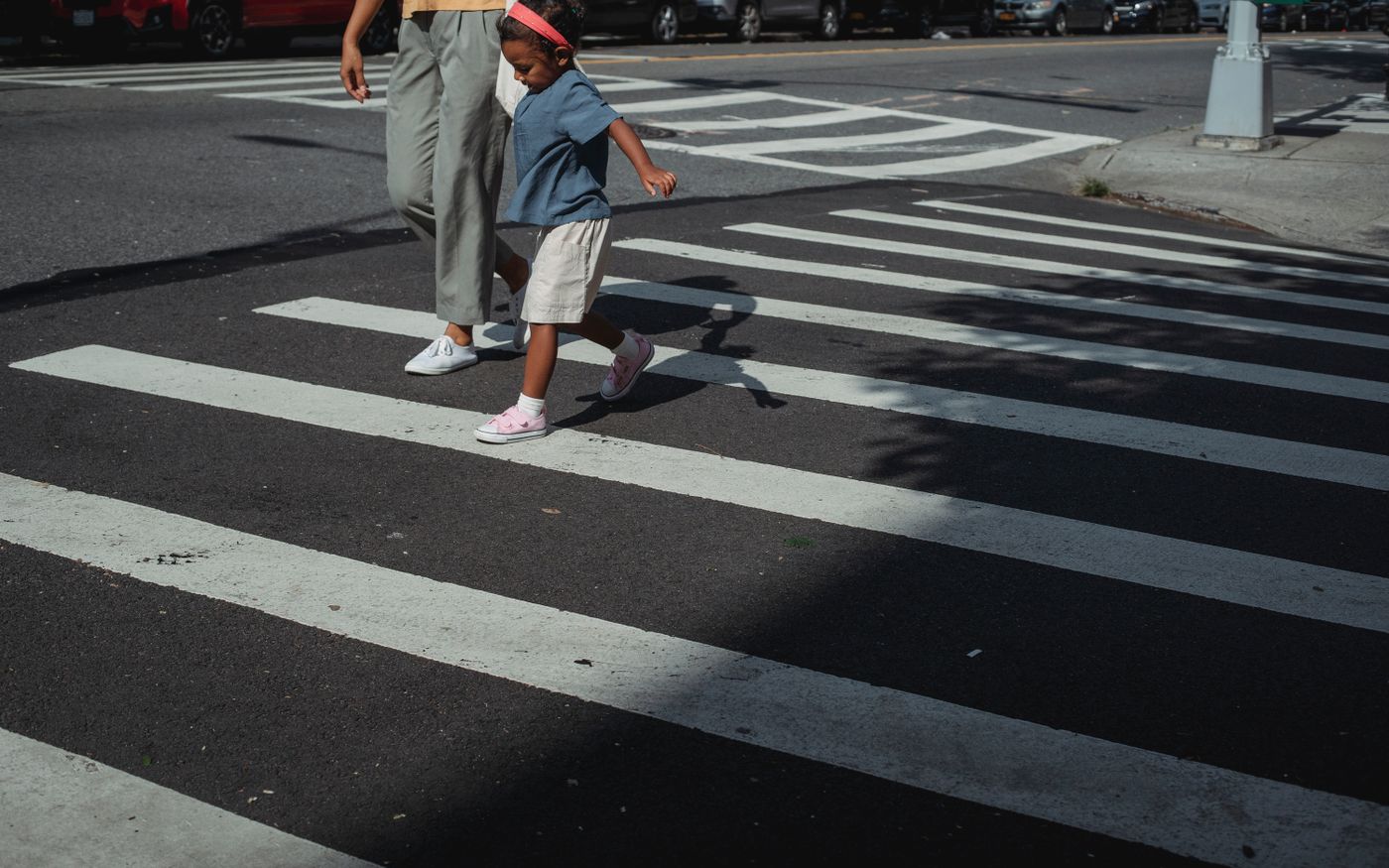
Holding a hand is the first rule, not a lecture
Kids learn to cross a street by doing it with you, the same way every time, long before they do it alone. The habit is: stop at the edge, hold a grown-up’s hand, look and listen, then walk—don’t run—when you say it’s time. They will not remember a speech you gave in the living room when a ball rolls into the road.
Start in calmer places: a quiet residential corner, a marked crosswalk on a slower street, the walk from the car into the grocery store. Our guide to grocery shopping with toddlers is a natural place to practice parking-lot rules, which are as important as the street itself.
The steps to practice, out loud
Stop at the curb or the edge of the parking stall, not two steps into the lane. Hold a hand, even if they “already know.” Look left, right, and left again, and let them look with you. Listen for engines, bikes, and backup beeps. Make eye contact with a driver if someone is waiting, then say “now we walk” and cross at a steady pace. Don’t start if a car is still rolling, even if you have a light.
Teach “driveways and alleys count.” A car can come out of a driveway while you’re on the sidewalk. Pause at the end of a driveway the same way you pause at a curb. In a parking lot, walk in front of the cart, keep a hand or a cart-handle rule, and never let them dart between parked cars for a head start to the door.
Lights and walk signals help, and they are not a guarantee. A walk sign means you may start if the intersection is clear, not that you stop looking. If the light changes mid-cross, keep going to the other side; don’t turn back. If there is no marked crossing, you still stop, look, and choose a shorter, clearer place to cross rather than mid-block between parked vans.
When they can do more, and when they still can’t go alone
Preschoolers can learn the words and the looking, and they still need a hand. School-age kids can start narrating the check themselves while you still hold on at busier corners. Independence on a quiet block is not independence on a four-lane road. There isn’t a birthday when every child is ready to walk to school alone; maturity, the actual street, and your local conditions all matter.
Practice on the route they actually use: to the park, to the bus, to a neighbor’s house. Our guides to playground safety and short outdoor play assume you can get there safely. If they ride a bike or scooter, they still stop and walk it across a street unless you have taught a separate, stricter plan.
Scripts for the hard moments
If they pull away: stop walking, get low, and say, “We hold hands to cross. We can go when you have my hand.” Don’t bargain mid-intersection. If a ball or a dog goes into the street, the rule is “you stop, a grown-up gets it.” Practice that on purpose with a toy in a safe driveway so the first time isn’t an emergency.
If they run ahead toward a corner, call them back and restart the stop at the edge. Running across is the habit you’re trying to prevent. Praise the stop and the looking, not only the arrival on the other side. If a driver waves you on and you’re not sure, you can wait. You are allowed to let a car go first.
If something goes wrong
A scrape from a stumble in the crosswalk is a first-aid moment, not a reason to skip the next crossing—see a basic home first-aid kit. If a close call shakes everyone, get to the sidewalk, breathe, and talk about what you’ll do next time. A family meeting place at a busy event is the bigger version of “we stay together at the corner,” which also shows up in a family emergency plan.
At dusk, in rain, or in a costume that limits vision, be stricter than usual: a hand, a shorter route, and bright or reflective clothing if you’re walking after dark. A holiday stroll or a trick-or-treat night is not the night to test new independence. You can talk through the route before you leave the house the same way you preview any outing.
The walk to the stop is still a street-crossing job. For the ride itself, see a school-bus routine for kids.
Parking lots and store edges are where a few extra steps become a separation. See if you get separated in public.
This guide is also listed in our life skills guides.
Quick FAQ
When can a child cross a street alone?
Later than many kids want. Holding a hand is the first rule. Independence comes only after they consistently stop, look, and wait without a reminder, on a street you have judged is appropriate.
What steps should we practice out loud?
Stop at the edge, look both ways, listen, wait for a gap or the signal, then cross without running or looking at a screen. Say it the same way every time.
What if they pull away at the curb?
Stop the crossing, get the hand back, and try again or take another route. A close call is a reason to tighten the rule, not to give a lecture in traffic.
This guide is also listed in our health and safety guides.
The bottom line
Kids cross streets safely when the steps are the same every time and a grown-up’s hand is still part of the plan for a long while. Stop at the edge, look and listen, walk without running, and treat parking lots and driveways as real traffic. Independence comes later, on quieter routes, when the habit is already boring in the best way.