
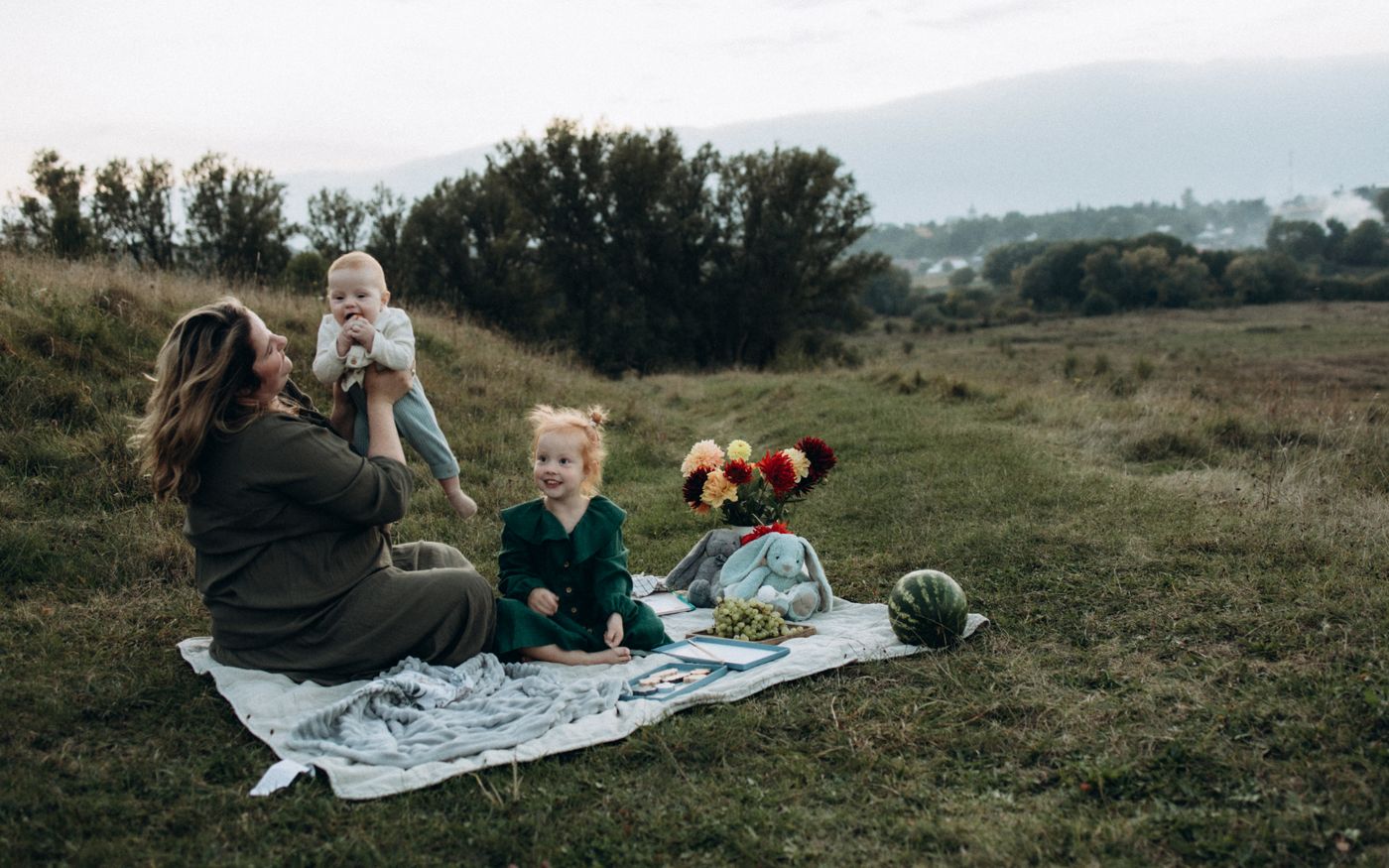
A picnic can be a park, a yard, or a living-room blanket
Picnic with kids does not have to mean a cooler, a long drive, and a perfect meadow. A blanket in the backyard, a bench at a nearby park, or even a blanket on the living-room floor on a rainy day still counts. The point is a meal you can pack, carry, and eat somewhere that isn’t the usual table, with enough food and a way to sit.
This is different from packing a daily school lunch, which we cover in packing school lunches, and different from a restaurant meal, which we cover in restaurant dining with a toddler. A picnic is the in-between: you brought the food, you chose the spot, and you can leave when it stops being fun.
Pack food that travels, and jobs kids can actually do
Choose food that still tastes good slightly warm or slightly cool: sandwiches, quesadillas cut into strips, cheese and crackers, cut fruit, leftovers from easy toddler snacks, or a simple wrap. Skip the ice-cream-first plan and the soup that spills in the bag. Pack a wet rag, extra napkins, water, and a bag for trash. A small cutting board at home before you leave is easier than knives in a park.
Kids can help pack: choose a fruit, put napkins in a bag, carry the blanket, and pick a stuffed animal if there’s room. Our cooking with toddlers jobs still apply—wash hands, work away from heat, and keep the packing short. If you have leftovers from taco night or a pasta night, pack them cold in a container that actually closes.
Bring less than you think, plus one familiar item for a cautious eater. A picnic is a change of scenery, which is already a lot. Don’t use it as the day you introduce three new foods. See picky eaters if you need a deconstructed option: crackers, cheese, and fruit in separate containers work better than a salad they can’t identify.
Pick a spot you can leave, and set a short window
A playground with a patch of shade, a backyard, or a close park beats a scenic hour-long drive with a toddler who will last twenty minutes. Check the ground for ants, glass, and dog mess. A waterproof layer under a thin blanket helps. If it’s hot, pack more water than food. If it’s cold or buggy, shorten the sit or eat in the car with the doors open—still a picnic if you need it to be.
Set a loose end time: eat, a short play, then pack up before anyone is wrecked. Outdoor play after the meal can be the same short burst as 20-minute outdoor play. If a child wanders, one adult stays with the food and one stays with the child. For water nearby, keep the usual water safety rule: a grown-up watching, not a snack doing the watching.
Sunscreen, hats, and a change of shirt if you expect a spill will save the car ride home. If you go to a crowded park, agree on a meeting spot. This is still a meal, so sit long enough to actually eat before the playground wins. A five-minute “we eat first” rule is kinder than a blanket no one sits on.
When it falls apart, and when to try again
Some picnics end in ten minutes, and that’s information, not a failure. Pack up, go home, and try a closer spot next time. If the food was a disaster, next time pack only what they already eat. If the location was the problem, try the yard. A living-room picnic on a rainy day keeps the ritual without the drive—see rainy-day indoor activities for the rest of the afternoon.
Leave the site better than you found it. Kids can help put trash in the bag and fold the blanket, even if the fold is a lump. The next picnic is easier if the bag is already packed with the rag, the trash bag, and the same two containers. You don’t need a new kit every time; you need a repeatable one.
If you have a baby or a crawler, pack a way for them to sit that isn’t the bare ground, and keep small food pieces you can actually supervise. A short picnic close to home is safer and more repeatable than a scenic spread you spend an hour staging. The photos can wait until someone has actually eaten.
A sandwich they helped make is a natural picnic food. See making sandwiches with kids.
A packed snack or a simple picnic makes a zoo loop easier. See zoo visits with kids.
Put sunscreen on before you spread the blanket, and wash palms before they eat if needed. See teaching kids to put on sunscreen.
A camp meal is a picnic that stays overnight. See camping with kids.
A picnic on the grass with something you just bought can be the whole outing. See a farmers’ market with kids.
A simple packed snack travels to the bleachers the same way it travels to a picnic. See watching a game with kids.
Eat something before you go; fair food is a treat, not a picnic. See county fair with kids.
This guide is part of our mealtime guides and our travel and outings guides, where related pieces are grouped in one place.
Quick FAQ
Does a picnic have to be at a park?
No. A yard, a blanket in the living room, or a bench near home all count. The packed food and the short window are the ritual.
What food travels without turning to mush?
Sandwiches, cut fruit, cheese, crackers, and leftovers that are safe at the temperature you can keep. Skip mayonnaise-heavy food if you do not have a cold pack.
How long should we stay?
Short enough that you leave while it is still going well. Pack so you can go when someone is done, not when the last planned game ends.
The bottom line
A picnic with kids works when the food travels, the spot is close, and you can leave when it’s done. Pack a familiar meal, a blanket, water, and a trash bag, eat first, then play, and treat a short outing as a success. The picnic you can repeat on an ordinary afternoon is the one that counts.