
The first trip should be close, short, and a little boring
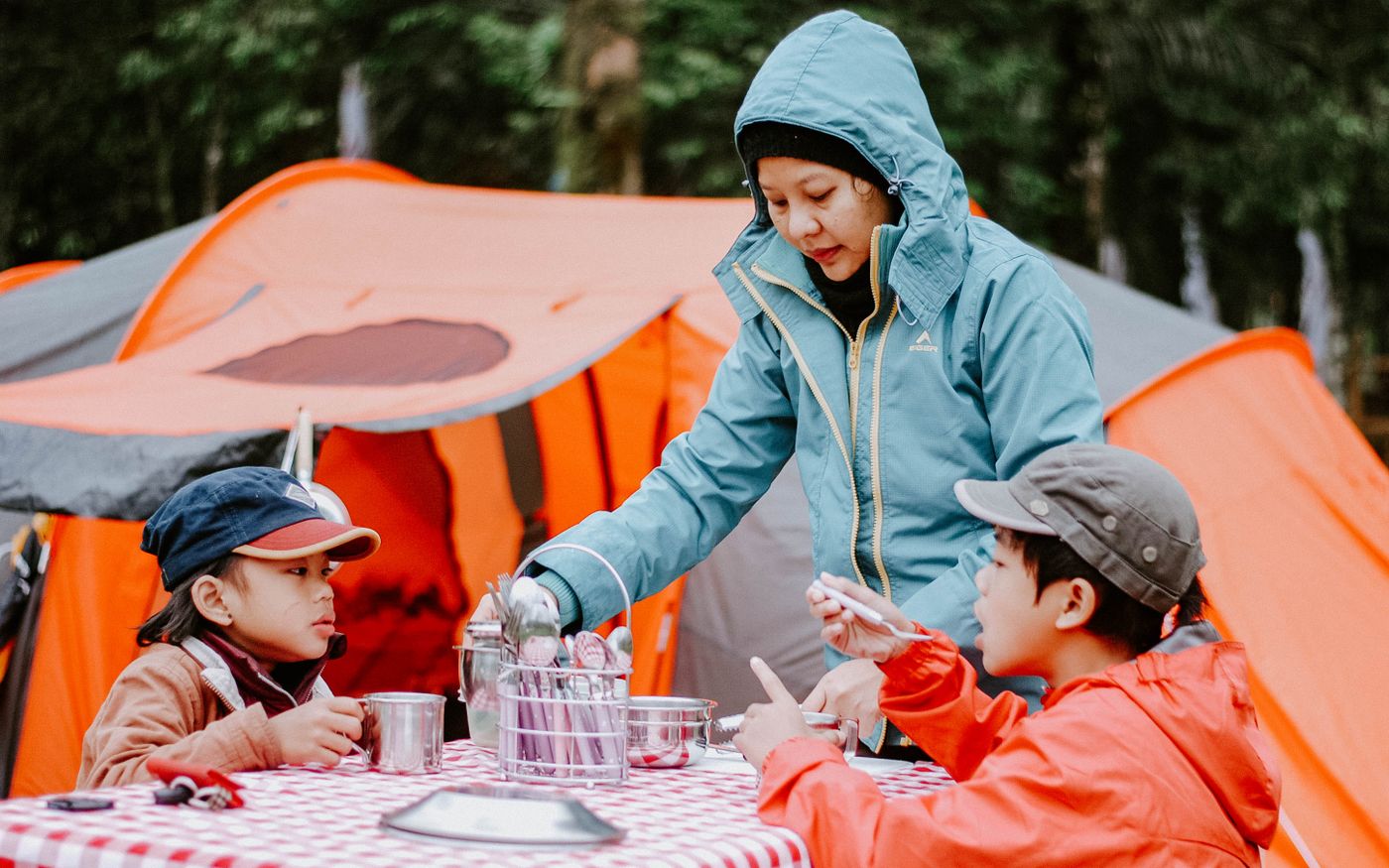
Camping with kids works when the first night is almost too easy: a familiar park, a short drive, a tent you can put up before anyone melts down, and a plan to go home if it all falls apart. You do not need a wilderness résumé. You need sleep, food, a bathroom plan, and a grown-up who is still willing to be in charge after dark. This is different from a hotel stay and from a picnic, even if some of the food looks the same.
If they’ve never slept in a tent, try a backyard night first, or arrive at a campsite in the afternoon with plenty of light. Pack the sleep kit the way you would for any night away: familiar pajamas, a lovey, a layer, maybe a small light. See packing a suitcase with kids for the clothes bag; add a “sleep stuff” pouch you can find in the dark.
Site, safety, and the shape of the day
Pick a site with a toilet you can walk to, water, and not too long a hike from the car. Set the tent, then the sleeping pads, then a clear “no food in the tent” rule if that’s your park’s expectation, and a place for shoes. Do a short safety talk once: fire is for grown-ups, water has a hand, they stay where you can see them, and they don’t wander to another site. If you’re near a lake or stream, the same attention you already use for water safety applies, even if no one is “swimming.”
Keep the day shorter than a vacation brochure. A walk, some unstructured play, a meal, an early wind-down. A long hike plus a late fire plus a first tent night is how you get a 2 a.m. request to leave. Short outdoor play is enough. Bring a backup indoor-ish activity for rain or a cranky late afternoon: cards, a book, a simple game in the tent.
Food should be easy and familiar: a cooler with meals you already like, a way to wash hands, and a plan that doesn’t depend on a perfect camp stove performance at 7 p.m. One hot meal is plenty. Snacks they already eat, water bottles, and a breakfast you can serve cold if the morning is slow. Sit to eat. Pack out trash. If you cook, keep kids back from the stove and the fire, the same way you would in a kitchen.
Sleep, weather, and the exit plan
Start the bedtime routine earlier than at home. The tent is exciting, and every zipper is a noise. Do the short version of your usual wind-down, lower the lanterns, and accept that the first night may be short. If someone is miserable and unsafe-tired, leaving is allowed. A first trip that ends at 9 p.m. and a drive home is still camping practice. A ruined night you “power through” can sour the idea for a year.
Check the weather before you go, and have a rain plan: a tarp, a dry change of clothes in a bag that actually stays dry, and a go-home time if the site floods or the cold is more than you packed for. In heat, seek shade and offer water more often than you think. Layer for night; woods get cooler than the parking lot felt at 4 p.m.
Wildlife and other people are usually a matter of ordinary caution: food stored as the park asks, no chasing animals, quiet hours respected, a light for the bathroom walk, and kids told to come back if they need you. You don’t need to frighten them. You do need to be the person who gets up.
What to pack, and what to skip
Pack the boring things: headlamp, first-aid basics, medications, wipes, a spare outfit, a way to wash hands, tickets or a reservation printout if you need one. Skip the gear that only works if everything is perfect. Kids can help carry a stuffed animal and a small bag, not a full load. After the trip, unpack and dry the tent before it becomes a science project in the trunk.
If it goes well, the next trip can be a little farther. If it doesn’t, scale down, not up. The point is a night outside with your people, not a performance of ruggedness. A close, short, slightly boring first camp is the one that makes a second trip possible.
Neighbors in a campground can be part of the charm or part of the noise. Teach a short “this is our site” boundary, and don’t let kids wander into someone else’s setup to pet a dog or inspect a fire. In the morning, a simple breakfast and a short walk can be the whole plan. You do not have to fill the day to justify the reservation.
A family tent trip still has you in the next sleeping bag. For nights with counselors, see first sleepaway camp.
This guide is part of our travel and outings guides, where related pieces are grouped in one place.
Quick FAQ
How far should a first camping trip be?
Close enough that you can go home if you need to. A nearby site, one night, and a slightly boring plan beats a remote adventure.
What do we actually need to pack?
Sleep, weather, light, food you can cook simply, and a way to stay dry. Skip most gear “for the experience.” An exit plan is part of the packing list.
What if they are scared or miserable at night?
Comfort them, lower the bar for the next day, and leave if the trip has truly failed. A short, unfinished first trip can still lead to a better second one.
The bottom line
Camp with kids by starting close and short: a workable site, easy food, an early bedtime, and a real plan to leave if you need to. Keep fire, water, and food storage in adult hands, and pack sleep cues you can find in the dark. The easy first night is the one that works.