
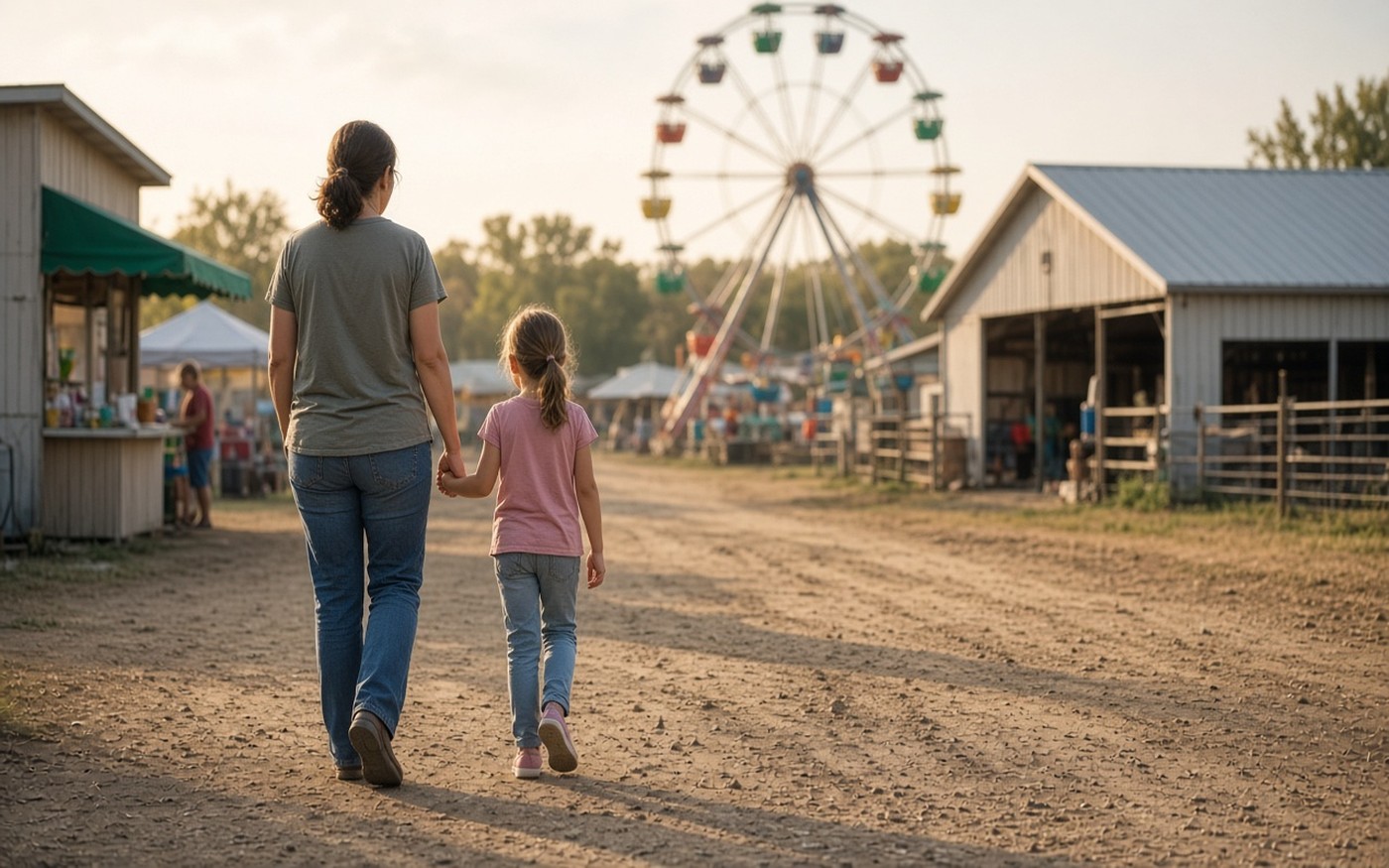
A fair is a short loop of rides, animals, and one treat
A county fair or carnival is its own outing: tickets, height marks, livestock barns, loud midways, and food that is more sugar than dinner. It is not a farmers’ market, where the job is a short shopping loop, and it is not a zoo visit, where the animals are the whole map. Here you pick a few things on purpose—one barn, a ride they can actually go on, one treat—and you leave before the lights become the only reason to stay.
Say the plan before you park: what you will do first, how many tickets or how much money, where you will meet if you get split up, and about when you will go home. A mid-afternoon arrival often beats a late-night close, when kids are tired and midways are packed. If there are fireworks at the end, decide in advance whether you are staying for them. Plenty of good fair visits end at dinner time.
Tickets, height marks, and what to skip
Read height requirements before you get in line. A long wait that ends at a measuring stick is a hard disappointment. If only one child can ride, decide now whether a grown-up rides with them, whether the other child has a different job—watching, a smaller ride, a barn stop—or whether you skip that ride this year. You do not owe every child every attraction in one evening.
Buy a limited number of tickets or set a spending cap, and let kids help spend it. “We have eight tickets” is clearer than an open tab. Midway games are optional and often a poor value; if you play one, treat it as the treat, not as a plan to win a giant toy. Souvenirs can wait until the exit, or they can be skipped. If money lessons are useful later, they belong in ordinary weeks, not in a negotiation under carnival lights, though a small cap is good practice in the same spirit as a lemonade stand: a limit, a job, and a defined end.
Animals, food, and staying close
Livestock barns are often the calmest, best hour of a fair, especially for younger kids. Wash hands after touching animals or rails, and keep food out of the barn. Walk slowly. One or two animals they can look at closely beats a march through every aisle. If a child is scared, leave the barn; there is no prize for finishing it.
Fair food is part of the culture and also a lot of sugar, salt, and heat. Eat a real snack or a simple meal before you go, then choose one treat to share or one item each, and sit down to eat it. Standing in a walkway with a funnel cake becomes a spill and a crowd problem. If you need a fuller meal, pick the simpler plate—a corn dog, a grilled ear of corn, fruit if you can find it—and still sit. This is not the night to invent a balanced picnic; a picnic is a different outing. Just don’t arrive starving and then negotiate five treats in a row.
Crowds and parking lots are the risky parts. Hold hands, name a meeting place, and point out a worker or an information booth when you arrive, using the same stay-put plan as getting separated in public. Strollers help with little ones and also make midways harder; be willing to park the stroller and carry. Set a time to check in if older kids have a short, supervised range, and don’t give that range on the first visit to a packed night fair.
When to leave, and how to go again
Leave when the day is still good. A child who is melting down at the ticket booth will not enjoy the ride you already paid for. You can walk to the car, sit, and decide whether to go back in; often you will just go home. That is a successful fair if you saw a barn, or rode one ride, or ate the treat you planned. Heat, dust, and late noise are reasons to shorten the visit, not reasons to push.
If rides are too much, make the animals and one treat the whole visit. If barns are too much, do the carousel and go. Next year you can add. Take a bottle of water, sunscreen if it’s daytime, a layer for evening, and a plan for bathrooms that does not depend on the most crowded restroom nearest the stage. Afterward, talk about one favorite thing, not a recap of what you didn’t have time or money for.
Photos can wait for one calm moment—an animal, a ride they liked, a shared treat—rather than a posed campaign in every line. The souvenir you will actually use is a short visit you would repeat, plus maybe a small thing you already budgeted. The stuffed animal that requires six more games is not a plan.
This guide is part of our travel and outings guides, where related pieces are grouped in one place.
Quick FAQ
How much of the fair should we try to do?
One barn or animal area, one ride if they want it, and one treat. A short loop beats a full midway.
How do we handle tickets and height limits?
Check height marks before you get in line, and skip rides that will only disappoint. You do not owe them every ticket you bought.
When should we leave?
Before the sugar, the crowds, or the late afternoon crash takes over. A fair you leave early is one you can try again next year.
The bottom line
A county fair with kids works as a short, planned loop: a barn or a ride they can actually go on, one treat, a spending cap, and a leave time that does not depend on fireworks. Stay close in crowds, wash hands after animals, and treat a shorter visit as a success. The fair you would go back to is better than the one you barely survived.