
A sandwich kids make is a real meal, not a cute activity
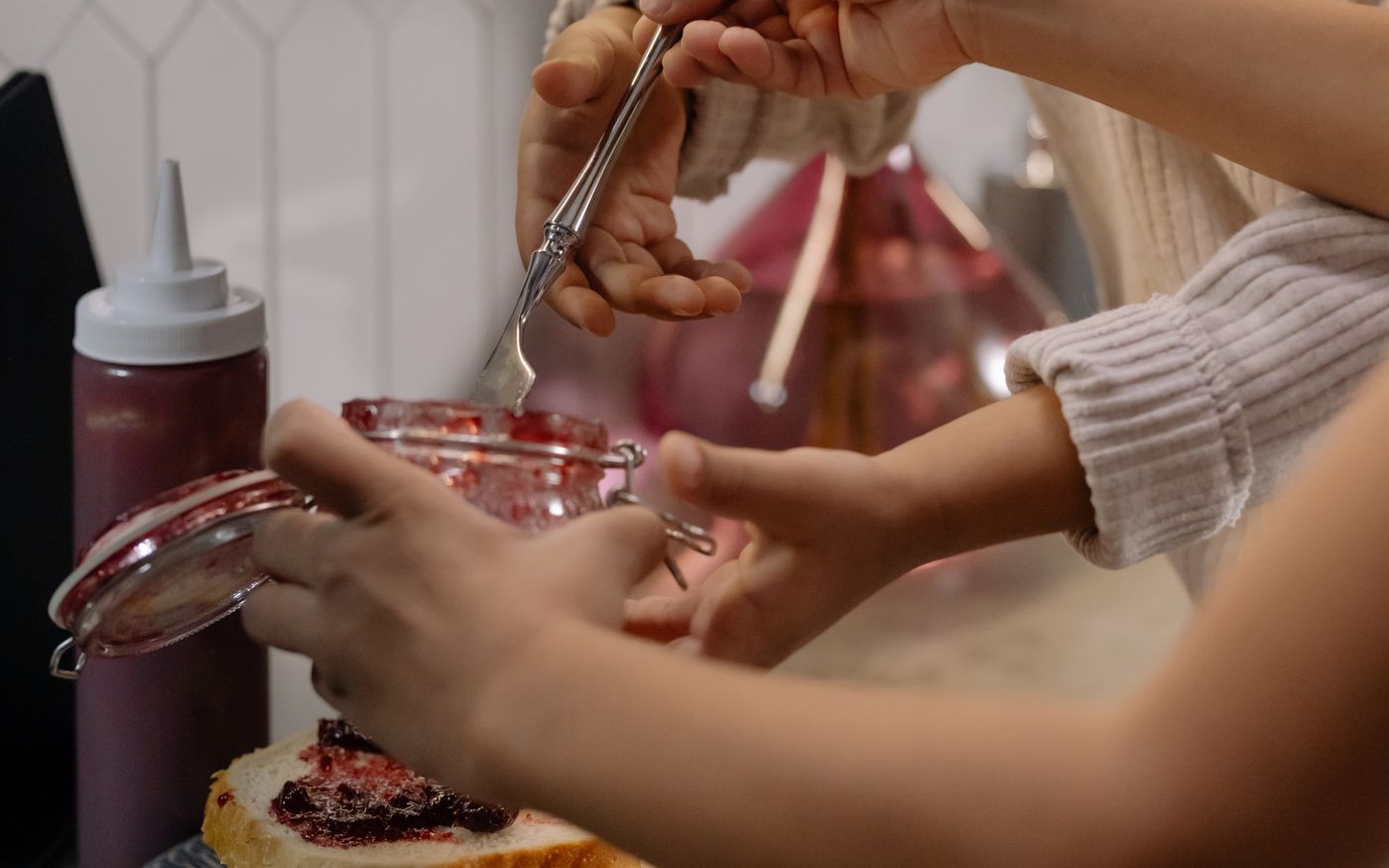
Making sandwiches with kids is one of the first meals they can almost do themselves: two slices of bread, a filling they recognize, and a plate. It is different from packing a finished lunch, which we cover in packing school lunches, and different from a hot grilled cheese. The skill is assembly on a counter, with a safe knife or a spreading tool, and a sandwich they will actually eat.
Set out a short bar: bread, one or two fillings, a fruit or vegetable, and a spread they can manage. That’s enough. Our cooking with toddlers rule still holds—wash hands, stay off the hot stove, and keep the job short. A weekend lunch or a picnic is a better first try than a rushed school morning.
Tools they can use, and fillings that stay put
A dull butter knife or a child-safe spreader is enough for cream cheese, butter, or jam. You still cut tomatoes and meat if a real knife is required. Show a thin layer, not a scoop. If the bread tears, that’s ordinary. Toast one side if you want a firmer base, then let it cool so they can touch it.
Kids can take bread from a plate, spread, add cheese or a familiar protein, close the sandwich, and carry it to the table. You can cut it after they close it, into halves or strips. A cookie cutter is optional and often more work than it’s worth on a Tuesday. For a cautious eater, a “deconstructed” plate—bread, cheese, and fruit separate—still counts as sandwich practice. See picky eaters if that is the main need.
Allergies matter here more than in some meals, because peanut butter, nuts, and some seeds are common fillings. Use what is safe in your house and at their school, and keep a clean board for anyone who can’t have a shared spread. Tell visiting kids what’s on the table before they grab.
Keep the menu short so they finish one sandwich
Two bread choices and two fillings are plenty. If they build a tall mess they won’t eat, shrink it next time and let them eat the parts. A side of fruit, cucumber, or leftovers from easy toddler snacks makes it a meal. Sit down, even for ten minutes, with the same few table manners. Then they can help with the short dishes reset.
Pack a sandwich they made for a later lunch only if it will still be safe and palatable: sturdy fillings, no mayo sitting warm, bread that doesn’t go soggy in an hour. Jam and cheese often travel better than a wet tomato. Wrap it so it doesn’t get crushed in a bag, or eat it at home and pack something else for school until the skill is solid.
A tired-day version is toast and a spread they can put on themselves, with fruit. That’s still the habit: they assemble food and sit down. You don’t need a new kind of bread every week. The ritual is “we make a sandwich and eat it,” not a content-worthy spread.
When it gets messy, or they only lick the jam
Mess is the cost of a child using a jar. A washable cloth under the work zone and a lid you close when they’re done will do. If they only want jam, you can still have them put the bread on the plate and add a slice of cheese or a side they already eat, without turning lunch into a fight. If they refuse to try, shrink the job to one step they will do, then you finish the sandwich.
Don’t make a second secret lunch every time. If they built it, they can sit with it. You can offer the side and a bit of help cutting. Leftover parts go in a container, not in the trash as a speech. Next time, put out less jam and more of the filling they actually ate.
Older kids can make a sandwich for a younger sibling with you watching, which is a real help on a busy day. They still need the same allergy and knife rules. Thank them and let that be a normal lunch job, not a rare performance.
After they get the hang of it, they can pack a sandwich for a weekend outing as long as you still handle food safety and the bag. The win is a child who can feed themselves a simple lunch, not a perfect cut and a perfect photo.
This guide is part of our mealtime guides, where related pieces are grouped in one place.
Quick FAQ
What fillings actually stay put for little hands?
Nut or seed butter with jam, cheese, hummus, or leftover sliced meat—spreads in a thin layer, not a pile. Skip runaway tomato slices until they have more control.
Should I recut or remake a messy sandwich?
Only if it is truly inedible. A slightly uneven sandwich they made is a better meal than a perfect one you took over. Keep a towel handy and move on.
Can this be lunch and a life skill?
Yes. A sandwich they assemble is practice for later independence, including packing school lunches.
The bottom line
Kids learn to make a sandwich when the tools are safe, the filling list is short, and an adult doesn’t quietly remake the whole thing. Wash hands, spread, close, cut, and sit down. The sandwich they can make on an ordinary weekend is the one that eventually shows up on a weekday too.