
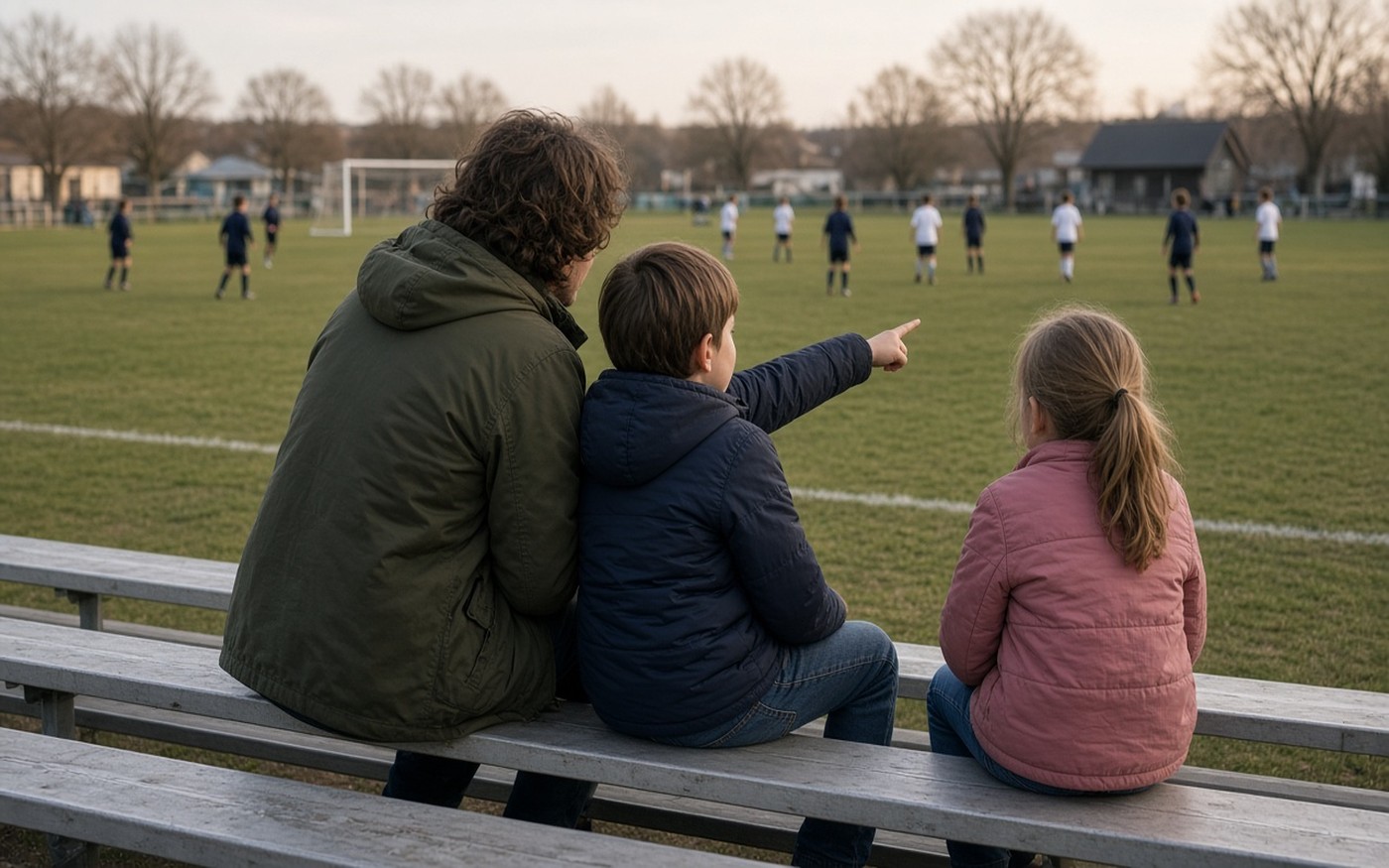
Watching a game is a spectator outing, not a practice
Taking kids to watch a game—on a field, in a gym, or on the couch—is a different job from playing one. You are not teaching them how to lose from the sideline. That work lives in teaching sportsmanship. Here the project is simpler: stay long enough to see some of the game, keep them fed and close, and leave when they are done, even if the clock is not. A school-age sibling’s match, a local college game, or a televised one at home can all count, as long as you treat the time as finite.
Before you go, say the plan out loud: where you will sit, where the bathroom is, what you will eat, and when you might leave. “We’ll watch the first half and then decide” is a complete plan. “We’ll stay for the whole game unless you are perfect” is not. If you are in a crowd, agree on a meeting place and a stay-put rule, the same short plan as if you get separated in public. Hold a hand in aisles and parking lots. A stadium is a parking lot with louder noise, not a playground.
What to pack, and what to skip
Pack for weather, a layer, and a snack you already trust. Stadium food can be a treat, but it should not be the only plan, especially if lines are long or prices are a surprise. A simple packed snack is closer to sports snacks than to a concession strategy. Bring water. Ear protection helps at loud indoor games and some outdoor ones; a child who is already overwhelmed will not suddenly enjoy a horn section because you paid for tickets.
At home, the same rules shrink. Sit together for a set amount of time, keep the volume tolerable, and don’t narrate every play like a coach. A short explanation of what people are trying to do is enough: “They’re trying to get the ball to that end.” You can leave the game on in the background after they drift, or you can turn it off. A game on TV is also not family movie night. There is no need to finish it. There is no intermission you have to honor if someone is done.
During the game: watch, don’t perform
Let them watch in their own way. Some kids track the ball. Some watch the crowd, the mascot, or the snack. That still counts as being there. Point out one or two things—a good pass, a kind gesture, the scoreboard—and then be quiet enough that they can see. Cheering is fine. Coaching from the seat, criticizing players, and arguing with officials is not a lesson you want them to copy.
Bathroom and snack breaks are part of the outing, not a failure of attention. Go before the game starts, and go when they ask, even if it is a “big moment.” A child who is uncomfortable will not remember the play you waited for. If you have two kids with different stamina, pick the shorter window and let the older one know the plan in advance so the end does not feel like a punishment.
If a sibling is the one playing, your watching job is even more specific. You are there for a short stretch, not to evaluate every shift. Wave, watch, and keep the post-game talk light: “I loved watching you play,” not a recap of mistakes in the parking lot. Save skill talk for practice, or skip it. The child who sat with you also needs a goodbye to the outing, not a long wait while you rehash the game with other adults.
When to leave, and how to try again
Leave when they are still willing, not after a meltdown in a packed aisle. That may be twenty minutes. It may be halftime. You can walk, get air, and come back if everyone wants to; you can also go to the car. Tickets you already bought do not obligate you to stay. A short visit you will repeat is better than a long one that poisons the next invitation.
If they are scared of the noise or the crowd, pick a smaller venue next time, sit farther from speakers, or start with a game at home. If they are bored, that is information, not a character flaw. Some kids like one inning and a playground stop on the way out. Some will sit for a half if they have a job, like keeping a simple score or watching one player. Don’t invent a complicated stat sheet for a five-year-old.
Money stays visible and limited. If you are buying a treat or a program, decide the budget before the gate, the same way you would at a fair. “One snack from the stand” is a rule a child can understand. “We’ll see” becomes a negotiation in a line. Afterward, a short debrief is enough: what they liked, what was too much, and whether you want to go again. You do not need a lecture about being a good fan.
This guide is part of our travel and outings guides, where related pieces are grouped in one place.
Quick FAQ
How long should we stay at a game?
For a stretch, not necessarily until the final whistle. Leave at a planned break if they are done. A shorter visit still counts as going.
What should we pack?
Layers, a simple snack, and whatever the venue requires. Skip a huge activity bag; the game is the outing.
What if they are not actually watching?
That is fine for a while. Let them look around, take a walk at a break, and leave when the outing has lasted long enough. This is a spectator trip, not a lesson in being a fan.
The bottom line
Watching a game with kids works when the plan is short, the packing is ordinary, and leaving is allowed before the final whistle. Keep them close in crowds, skip the sideline coaching, and treat the outing as a chance to see a little of the game together—not as a test of endurance, loyalty, or sports knowledge. The visit you would happily repeat is the successful one.