
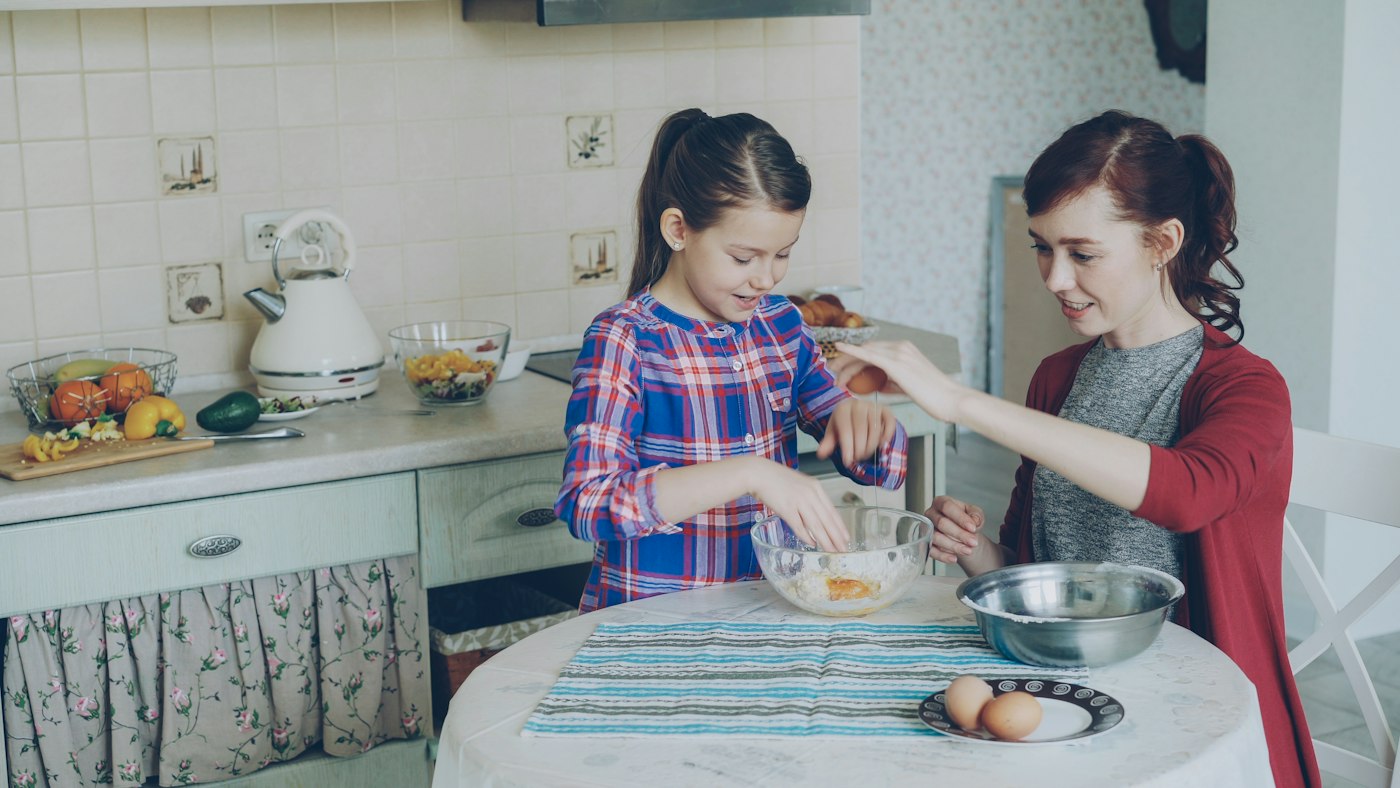
Why cook with a toddler at all?
Cooking with toddlers is slower and messier than doing it yourself. It is also one of the best ways to raise kids who are curious about food. Children are more likely to taste something they helped make, and kitchen jobs build fine motor skills, counting, patience, and pride. It also gives a clingy toddler a place to be while you make dinner.
You do not have to do it every night. Once or twice a week, with one small job, is enough to see the benefits.
Set up a safe toddler station
Before handing over a spoon, decide where your toddler will work:
- A stable standing spot — a learning tower or kitchen helper stool with sides is safer than a regular step stool or chair.
- Away from heat — place them at the counter far from the stove, or move their job to the kitchen table.
- A wipeable work surface — a rimmed baking sheet or a raised-edge silicone mat keeps flour, water, and spilled berries in one place.
- Their own tools — a small whisk, a silicone spatula, a plastic measuring cup, and a child-safe nylon knife for older toddlers.
Set out everything they need before you invite them in. Waiting while you search for the measuring cup is where toddler patience ends.
Kitchen safety rules toddlers can follow
Keep the rules few and say them the same way every time:
- “Hands washed before we cook.”
- “The stove and oven are grown-up only.”
- “Knives stay with grown-ups unless it’s your helper knife.”
- “We taste when the food is ready, not raw dough or raw egg.”
Turn pot handles toward the back of the stove, keep sharp knives and hot pans out of reach, and never leave a toddler standing at the counter alone. Raw egg, raw flour, and raw meat should stay away from little mouths; plan jobs that avoid them when possible.
Helper jobs by age
18 months to 2 years
- Washing produce in a bowl of water
- Tearing lettuce or herbs
- Dumping pre-measured ingredients into a bowl
- Stirring cold mixtures (pancake batter, yogurt dip)
- Placing fruit on a plate or skewer-free “kebab” on a straw
2 to 3 years
- Mashing bananas, avocados, or cooked potatoes with a masher
- Spreading butter, cream cheese, or hummus with a dull knife
- Sprinkling cheese or toppings on pizza
- Pouring from a small pitcher (practice with water first)
- Scooping batter into muffin cups with a cookie scoop
3 to 4 years
- Cutting soft foods (banana, cucumber, strawberries) with a nylon knife
- Cracking eggs into a separate small bowl (fish out shells, then wash hands)
- Measuring dry ingredients and leveling with a flat edge
- Kneading dough and rolling it out
- Peeling mandarins, hard-boiled eggs, and bananas
Starter recipes that work
Choose recipes with lots of dumping, stirring, and assembling, and very little waiting:
- Mini pizzas — English muffins, sauce, cheese, toppings. Toddler builds, you bake.
- Banana oat muffins — mashing, pouring, stirring, scooping.
- Yogurt parfaits — layer yogurt, fruit, and granola in a clear cup.
- Taco or rice bowls — kids pick and place cooked fillings themselves.
- Fruit salad — wash, tear, cut soft fruit, stir.
Assembly meals double as a picky-eating strategy. When kids control what goes in their own bowl, they are more willing to try. More on that in picky eaters: practical strategies.
Fitting it into a real dinner
Weeknight dinner with a toddler helper works best if you give them one job, not the whole recipe. While you handle the stove, they wash the green beans, tear the lettuce, or set the forks. Plan one “helper-friendly” step into your weekly family meal plan so you are not inventing jobs while the pasta boils over.
Save full recipes from start to finish for weekend mornings when nobody is in a rush.
Keeping the mess under control
Mess is part of it, but it can be contained:
- Pre-measure into small bowls and only hand over one at a time.
- Use a bigger bowl than you think you need for stirring.
- Put an apron or old T-shirt on your child and roll their sleeves up.
- Work on a tray or silicone mat with raised edges so spills stay put.
- Make clean-up part of the job: a damp cloth and a “wipe your spot” step.
When the food is ready, serving it on the same kind of contained surface keeps the payoff—eating what they made—from ending on the floor.
When it goes sideways
Toddlers lose interest fast. If they wander off after two minutes, that is a normal session. If they start flinging flour, calmly end the job: “Flour stays in the bowl. We’re done with flour today. You can stir next time.” Keep it short and try again another day. A successful toddler cooking session might be five minutes long.
Put it into practice this week
Choose one job from your child’s age list. Set up a stable stool, a rimmed mat or tray, and a pre-measured ingredient. Invite your toddler in for one step of dinner on two nights this week. Praise the effort, eat what they made together, and let the mess be part of the memory.
The bottom line
Cooking with toddlers works when the job is small, the station is safe, and the mess is contained. Start with washing, stirring, and mashing, keep heat and knives grown-up only, and let your child taste the pride of “I made this.”