
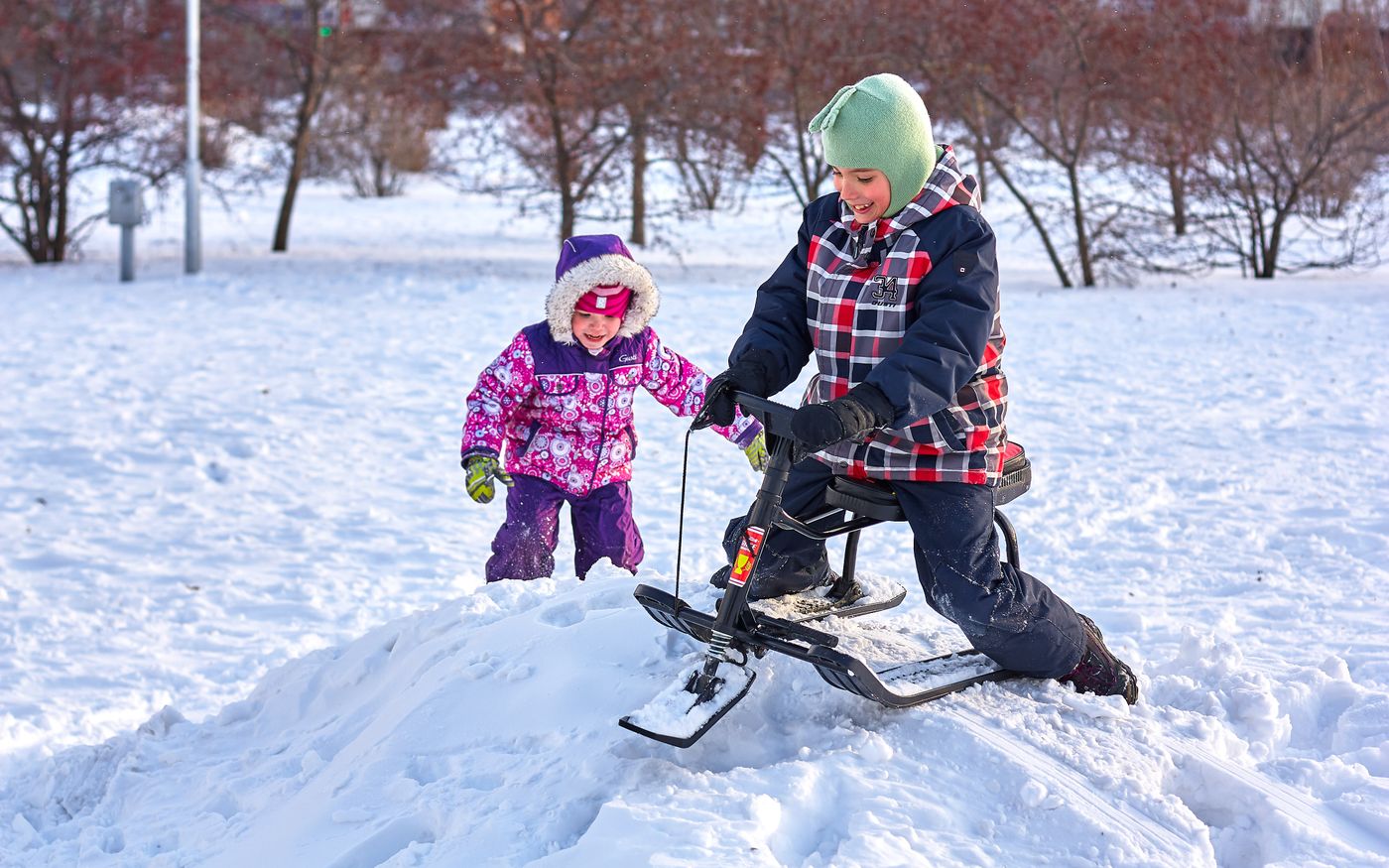
A snow day needs a plan for outside and a plan for wet socks
A snow day is not the same as a rainy indoor day, and it is not only the fight we cover in getting kids to wear winter coats. It’s a short outdoor window, a drying system when you come in, and a low-demand rest of the day when school is canceled. The kids who enjoy it are usually the ones who got out, got warm, and didn’t spend the entire afternoon in soaked socks.
Check the actual weather: temperature, wind, and ice, not only whether it’s pretty. A short first stretch—20 or 30 minutes—beats a two-hour plan that ends in tears. Bring them in before they’re miserable. You can go out again after cocoa and dry layers.
Dress them so they can actually move, then get outside
Base layer, socks that will stay up, snow pants, a coat they can zip or that you zip, mittens that can be put on by someone who is already late, a hat, and boots that go on over the socks. If a child hates the coat, use the scripts in the winter-coat guide and go anyway for a short window. Waterproof mittens beat pretty knit ones that are soaked in four minutes. An extra pair by the door is the whole trick.
Sunscreen still matters on bright snow. So does a rule about streets, plows, and roofs that shed ice. Play in a yard or a known park, not at the edge of a road. If you sled, look at the run-out before the first ride: no street at the bottom, no trees in the path, one person at a time on a small hill. A grown-up watches, the same idea as playground safety.
Shoveling a short path can be a real job for a school-age kid with a small shovel, not a full driveway. Building a little wall or a short slide of snow is enough of a project. You do not need an all-day festival. Our 20-minute outdoor play mindset still applies when the air is cold: a short, real burst, then in.
The coming-in system is half the day
Boots stay on a mat, wet mittens and socks come off immediately, and there’s a dry change waiting. A towel on the floor and a radiator or a dryer-safe rack for gloves will save the evening. If you have two kids, stagger the undress so you’re not fighting four wet gloves at once. Hot drinks and a simple snack—something from easy toddler snacks—reset the mood faster than a lecture about puddles.
Wet clothes go in a pile you actually start, not on the sofa. If they want to go out again, they need dry layers. That’s a natural limit, not a punishment. A second short outing is often the best part of the day, once everyone is warm.
For the indoor stretch, keep it low-key: a puzzle, a movie, a blanket fort, or the same indoor list you’d use on a rainy day. Don’t schedule a huge craft you resent and they abandon. If neighbors come over, set a clear end time and a wet-gear pile for guests too.
When to stay in, and how to end the day
Stay in if the wind is bitter, if ice is the main event, if a child is already sick, or if you cannot see a safe place to play. A snow day is not a requirement to go out. It’s a canceled school day. An indoor picnic on a blanket still counts—see picnic with kids—and an earlier bedtime often helps after a cold, exciting morning.
Watch for red, numb, or white fingers and toes, and come in sooner than you think. Don’t use a snow day as the day you also run every errand. One short outing and a quiet afternoon is a good snow day. If the power is out, use the same family calm you’d use in any disruption, and keep flashlights where kids can’t play with them.
The next morning, boots and mittens need to be dry or you start behind. Set them up before bed. Tomorrow they may have school, or they may have another snow day. The same short system will work either way.
This is a good meal after you come in from the cold. See grilled cheese and soup night.
Bright snow reflects; faces still need care when it’s cold. See teaching kids to put on sunscreen.
A delay or a snow day changes the clock, not the wait-back-from-the-curb habit. See a school-bus routine for kids.
This guide is also listed in our holiday and season guides.
Quick FAQ
Do we have to go outside on a snow day?
It helps, even for a short stretch, if the weather is safe. Then come in, dry off, and have a simple indoor plan. A snow day that is only screens often feels longer.
How do we keep the house from filling with wet gear?
A defined coming-in system: towels, a place for wet clothes, dry socks, and a snack. The system is half the day.
When should we stay in?
In dangerous wind, ice, or extreme cold, or if someone is getting miserable. A movie and a quiet afternoon is a valid snow day too.
The bottom line
A snow day with kids works when the outdoor window is short, the clothes actually stay dry enough to go out again, and the afternoon is allowed to be quiet. Dress them to move, pick a safe spot, come in before they’re miserable, and treat wet gear as a system, not a surprise. The day you can repeat the next time school closes is the one that counts.