
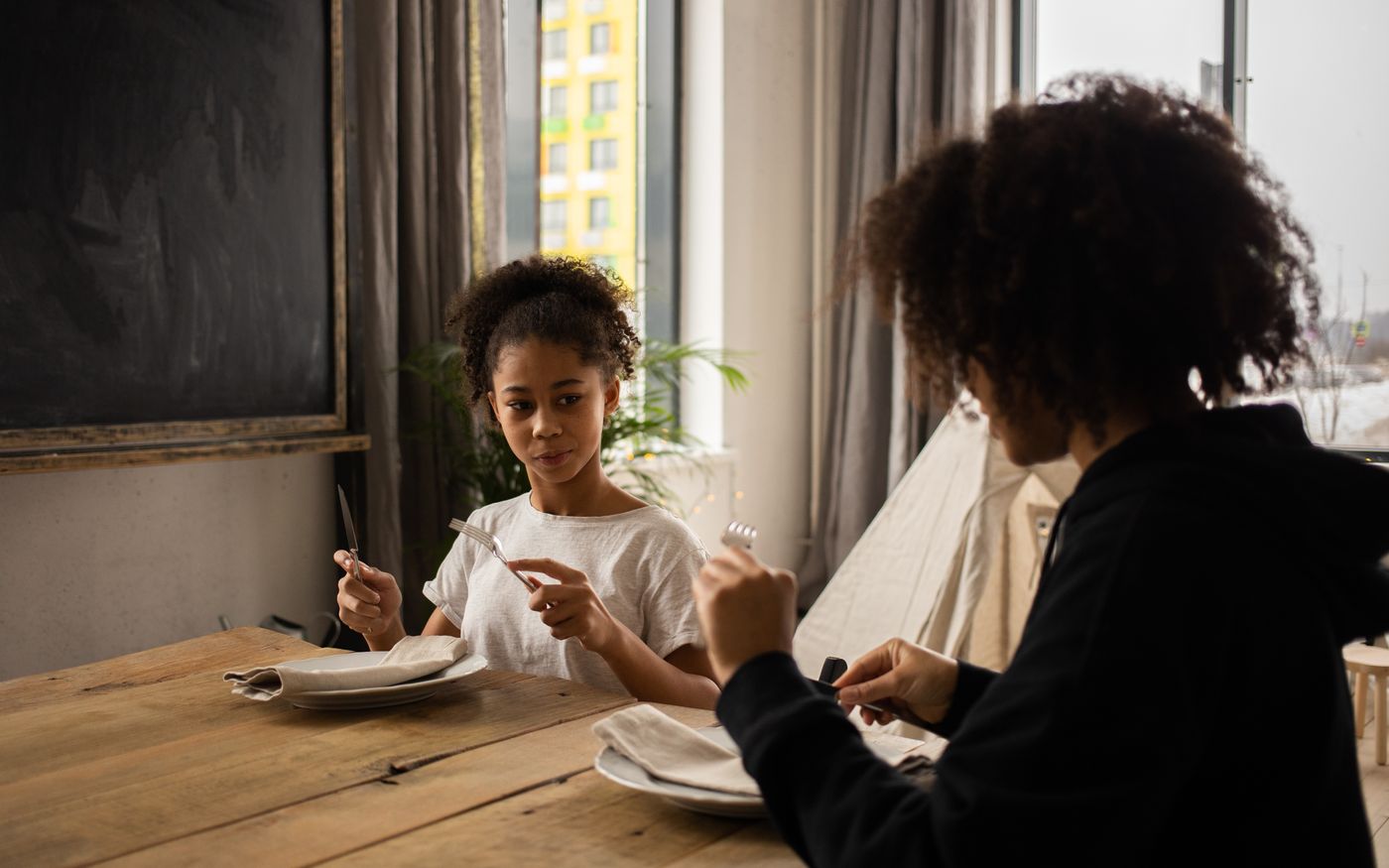
Manners are a few habits, not a formal course
You don’t need a child who can host a dinner party. You need a few repeatable habits: come to the table when it’s time, sit for a short stretch, use a utensil they can actually hold, chew with a reasonably closed mouth, and say “please” and “thank you” without a weekly campaign. That’s enough for most family dinners, and it’s the same foundation that helps at a restaurant or a holiday table.
Start at home, at an ordinary meal, not at someone else’s house. Keep the list short. If you correct five things at once, nobody hears any of them, and dinner becomes a manners clinic.
Set the table so the habits have a place
A predictable seat, a plate, a cup, and a utensil they can lift are more useful than a speech about elbows. If a toddler is still learning, a small fork or spoon and a cup that doesn’t tip at the slightest bump will do more than a formal place setting they can’t use. Give them a job: napkin on the table, fork down, cup at the top. Our family dinner conversation starters pair well with this—once they’re sitting, they need something to do besides being told to sit.
Keep the meal short enough to succeed. Fifteen or twenty minutes of sitting is a win for a toddler; a preschooler can often last a little longer. Announce the end: “Two more bites if you want them, then we’re done.” Don’t stretch dinner to prove a point.
The core habits, one at a time
- Coming to the table: A two-minute warning, then “it’s time to sit.” Screens off before the first plate goes down.
- Staying seated: They may get up. Walk them back once, calmly. If they leave and you’re done helping, the meal can end.
- Utensils: Show, then let them try. Fingers are still fine for some foods. Coaching beats grabbing their hand mid-bite.
- Mouth closed, voice reasonable: Model it. A quiet reminder—“chew, then talk”—is enough. Don’t narrate every chew.
- Please and thank you: Prompt once if needed: “You can say, ‘please pass the bread.’” Thank the cook, even if the cook is you.
Pick one focus for a week. When “please” is mostly sticking, add staying seated. A child who is a picky eater still has manners to practice; just don’t make the new food and the new habit the same battle.
What to say (and what to skip)
- “You can sit on your pocket and keep your food on your plate.”
- “When you’re done chewing, you can tell us.”
- “Please pass the milk—thank you.” Model the whole phrase.
- “The meal is over. You can get down.” A clear ending is a manner too.
Skip public shaming, sarcasm, and “we don’t eat like a baby.” Skip a long comparison to a sibling who sits perfectly. If a meal falls apart, end it and try again at the next one. Holiday meals will go better if the everyday table is already a little practiced; see Thanksgiving dinner with kids for the bigger-night version of the same plan.
When you’re out, and when they’re tired
In a restaurant or at a relative’s house, lower the bar to the two or three habits you’ve already practiced. Bring a small activity for the wait, order food you know they can eat, and leave before the wheels come off if you can. Save new foods and a long sit for home.
Tired, hungry, and overstimulated kids will not perform. A snack before a late dinner, a shorter sit, and a kind exit are manners in the real world. Praise the specific thing they did—“you said thank you to Grandma”—instead of a generic “you were so good at the table.”
Adults at the table teach more than reminders do. Put your own phone away, say please when you want the salt, and wait to start until more than one person is served if that’s your rule. If grandparents have a different standard, give your child a short preview before you go—“at Grandma’s we stay at the table until she stands up”—instead of correcting them through someone else’s meal.
Napkins, pushing a chair in, and carrying a plate to the counter are manners too, and they’re easier to practice than “be polite.” Give one job at the end of the meal and thank them for it. Competence at the table often looks like helping, not sitting perfectly still.
Take two or three home table habits with you, not a new curriculum on the walk to the door. For the rest of being a guest, see teaching kids to be good guests.
The pizza still gets a sit-down, not a standing buffet if you can help it. See family pizza night for the cooking side.
Sit down once the first tacos are built, even if people go back for a second. See family taco night.
Sit down once the bowls are served, and save the twirl lesson for later. See family pasta night.
Manners happen during the meal; the dishes are the finish. See teaching kids to help with dishes.
Manners happen during the meal; setting the table is the start. See teaching kids to set the table.
Manners come later; first they have to be allowed to get food to their mouth. See baby self-feeding milestones.
This guide is part of our mealtime guides, where related pieces are grouped in one place.
Quick FAQ
Which table manners actually matter at home?
A few habits: come to the table, stay seated for a short meal, use a utensil reasonably, and speak without a full mouth. Formal place settings can wait.
Should we correct every slip?
No. Pick one habit at a time, model it, and skip a running commentary. Tired meals need a lower bar, not a lecture.
How do manners change when we eat out?
The same core habits, plus a slightly quieter voice and a plan if they need a break. See restaurant dining with a toddler for the outing itself.
Manners start with the simplest one: staying in the seat for a short meal. See when a toddler won’t stay seated.
The bottom line
Choose a few habits, practice them at ordinary dinners, and correct one thing at a time. Table manners stick when the meal is short enough to succeed—and when “please,” a seat, and a thank you are just how your table works.