
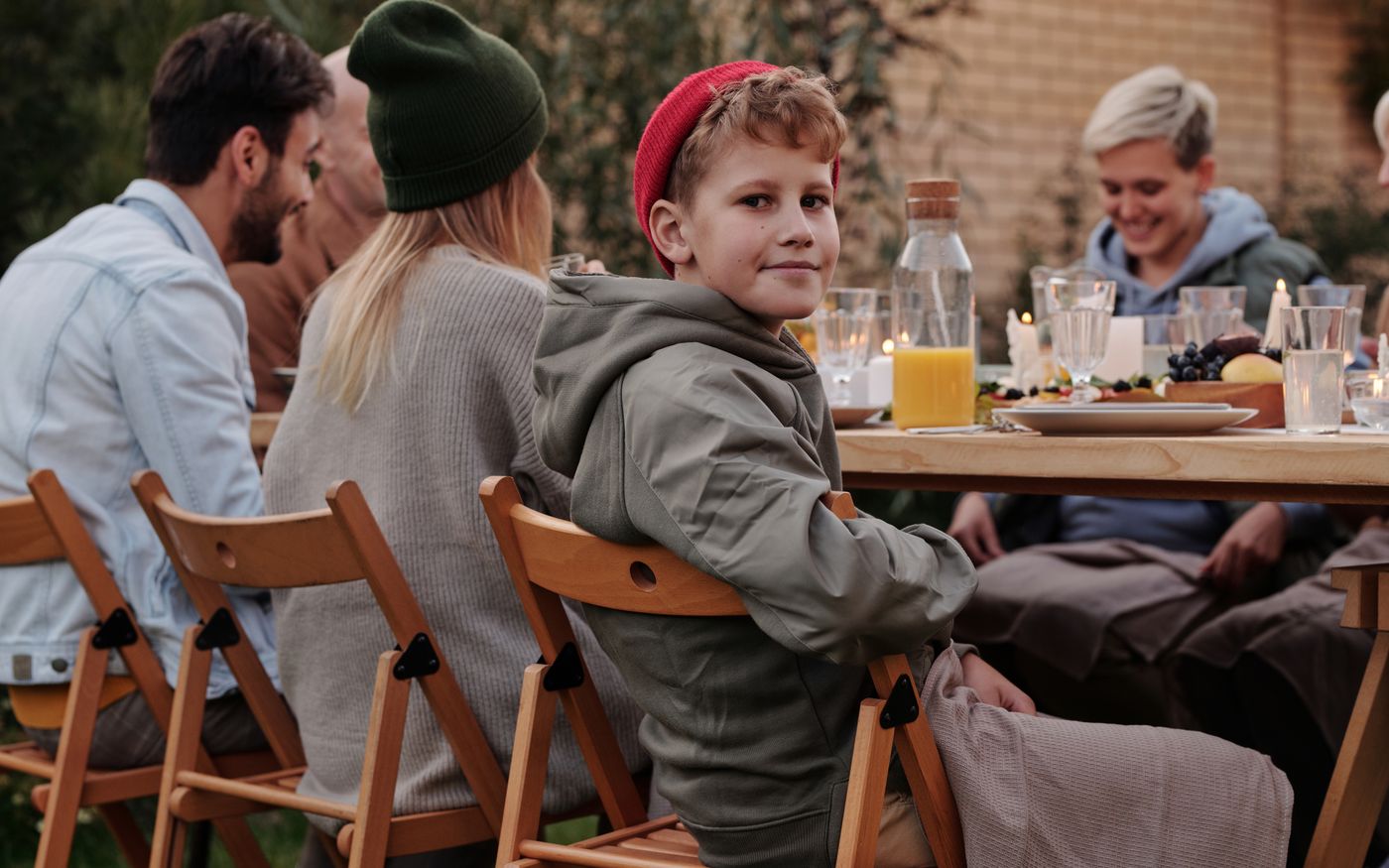
A good guest is mostly a few manners plus a plan to leave
Visiting someone’s house—grandparents, a friend’s family, a holiday table—is a skill. Kids aren’t rude for needing a preview. They’re new at someone else’s rules. Your job is to tell them, ahead of time, the few things that matter: how we greet, what we do with our shoes and our bodies, how we ask, and how we leave without a scene.
This overlaps our guides to table manners, holiday visits, and hosting a playdate, but the focus here is the child as the guest, not the host. Keep the list short. Three or four expectations beat a ten-point lecture in the driveway.
Preview on the way, not in front of the host
In the car, say what will happen: “We’ll say hello and take our shoes off. You can play with the toys they get out. If you want a snack, you ask me first. When I say it’s time, we say thank you and we go.” If there will be a meal, add one or two table habits you’ve already practiced at home. Don’t introduce a brand-new manners curriculum on the walk to the door.
If the house has different rules (no shoes, no jumping on the couch, a dog they shouldn’t grab), say those too. A child who knows the plan is more able to follow it than a child who is surprised and then corrected in front of an audience.
Greetings, toys, and the “please ask” rule
A greeting can be a hello, a wave, or a hug if they want one—not a forced kiss. Then they need a next thing to do: a toy the host has offered, a job like putting their coat in a pile, or sitting with you for a minute if they’re shy. Shy is allowed. Hovering in your lap for the first ten minutes is participation.
Not everything in someone else’s house is for playing. “You can play with what they get out. We ask before we open a closet or a special shelf.” If a toy belongs to a child who isn’t ready to share, don’t force a share any more than you would at home; move to another activity. If your child hurts someone, use a simple repair from teaching kids to apologize, then stay close for a while.
Meals, thank-yous, and when it’s time to go
At the table, use the two or three habits you already have: sitting for a short stretch, a please, a thank you. They don’t have to finish a food they never eat at home. A polite “no thank you” is a guest skill. If you know the meal will be a stretch, a small snack before you arrive can help, the same idea we use at restaurants.
A thank-you at the door is enough in the moment: “Thank you for having us.” A drawing or a short note later, as in our thank-you notes guide, is a nice follow-up, not a requirement for every ordinary playdate. Leaving is the hard part for a lot of kids. Give a five-minute warning, then follow through. Don’t start one more game you can’t end. If they protest, the short public scripts you already use still work; the goodbye happens anyway, kindly and firmly.
What to do when it goes badly
If they’re melting down, take them to a quiet hallway, a porch, or the car, not the center of the living room. It’s okay to leave early. You’re not failing the host; you’re taking care of your child and their house. Text a thank-you later. If a visit is always hard at a particular house (too many people, no place to retreat, a late dinner), shorten the next one on purpose, or host instead.
Afterward, notice one specific thing they did: “You said hello to Grandma” or “You asked before you took a cookie.” Skip a long recap of what they did wrong in the car, especially if they’re already done in. You can practice one piece before the next visit. Being a good guest is a habit you build across a lot of ordinary doorways, not a performance at one holiday meal.
If you’re visiting a house with a pool, a dog, or a baby, add one safety line to the driveway preview and stay closer than you would at a plain playdate. The host shouldn’t have to be the only adult watching your child around those extras.
This guide is also listed in our routines and behavior guides.
Quick FAQ
What should we preview on the way?
Greetings, asking before touching special things, food manners, and when you will leave. Do it in the car, not in front of the host.
How do we handle a child who will not say hello?
A wave or a smile can count. You can greet the host yourself and skip a forced performance. Practice at home later, not in the doorway.
When should we leave if it’s going badly?
Sooner than you think. Thank the host, go, and talk about it later. A graceful early exit is part of being a good guest too.
A potluck is a good place to practice a hello, a thank-you, and clearing your own plate. See holiday potlucks with kids.
The bottom line
Preview a few rules on the way, keep greetings and thank-yous simple, stay close if play gets rough, and leave when you said you would. A good guest is a child who has a plan—not a child who never needs a warning.