
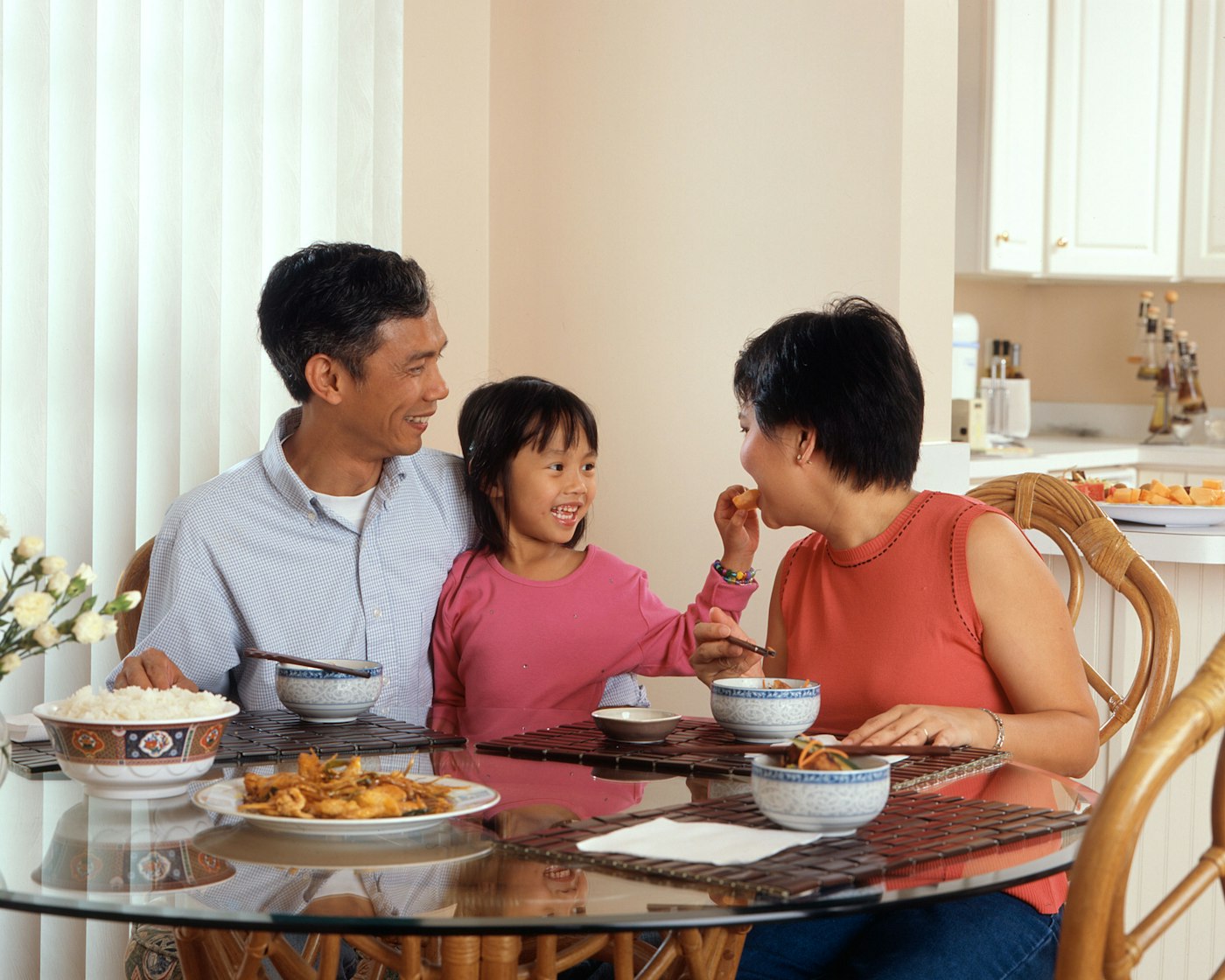
Why dinner talk is worth the effort
Shared family meals give kids a regular, low-pressure time to be heard. Groups like The Family Dinner Project point to research linking regular family meals with better vocabulary in young kids and stronger connection as they get older. You do not need a perfect meal or a long one. Twenty minutes, a few good questions, and adults who listen do most of the work.
The trick is that kids rarely open up when they feel quizzed. Good dinner conversation feels like a game or a story swap, not a status report.
A few ground rules that help
- Phones away — Put them in a basket or another room, including the adults’. Kids notice.
- Everyone answers — Parents too. Your answers model what an interesting answer sounds like.
- No wrong answers — Silly counts. Skipping a turn is allowed.
- No fixing — If a child shares a problem, listen first. Save the advice unless they ask.
- Food is not the topic — Dinner talk goes better when it is not about how many bites are left. If that is a daily battle, our picky eater strategies can help take pressure off.
Conversation starters for toddlers (ages 2–4)
Little kids do best with concrete, playful questions and lots of choices.
- “What animal would you want to be today?”
- “What was the silliest thing you saw today?”
- “Did you play inside or outside today?”
- “Which is bigger, a dog or a house? A house or a mountain?”
- “What sound does your favorite truck make?”
- “If your stuffed animal could talk, what would it say?”
Toddlers love being included even when they cannot follow every word. Narrate for them: “Sam is telling us about the slide at school.”
Conversation starters for little kids (ages 5–7)
- “Who did you sit with at lunch?”
- “What made you laugh today?”
- “If you could have any superpower for one day, what would you pick?”
- “What’s something you got better at this week?”
- “Would you rather live in a treehouse or under the sea?”
- “What would you do if you were the teacher tomorrow?”
Conversation starters for big kids (ages 8–12)
- “What was the best part and the hardest part of your day?”
- “If you could invent a new school rule, what would it be?”
- “What’s a game or show everyone is talking about right now? What’s it about?”
- “Who is someone you admire, and why?”
- “If we had a free Saturday and $50, what should our family do?”
- “What’s something you think adults get wrong about kids your age?”
Conversation starters for teens
Teens open up more with opinion questions than questions about their own day.
- “What’s a song you can’t stop listening to?”
- “If you could live anywhere for a year, where would you go?”
- “What do you think is overrated? Underrated?”
- “What’s something you’ve changed your mind about?”
- “What would you do with a free day and no responsibilities?”
Let teens ask the adults hard questions too. Answering honestly earns a lot of trust.
Table games that do the work for you
- High–low–funny — Each person shares a high point, a low point, and something funny from the day. A cousin of the “rose, thorn, thank-you” ritual from teaching kids gratitude in everyday moments.
- Question jar — Write 30 questions on slips of paper and keep them in a jar on the table. A different person pulls one each night.
- Would you rather — Quick, silly, and great for mixed ages: “Would you rather have a pet dragon or a pet unicorn?”
- Two truths and a lie — Older kids love catching parents in a fib.
- Story chain — One person starts a story with a single sentence, and everyone adds one sentence in turn.
- Theme nights — Pick a topic for the week: animals, travel, or “when I was your age.”
Getting past one-word answers
If you hear “fine” or “nothing,” try these swaps:
- Ask specific instead of general: “What did you do at recess?” beats “How was school?”
- Offer a choice: “Was today more of a pizza day or a broccoli day?”
- Share first: tell a short story from your own day, then ask a related question.
- Wait. Silence for a few seconds gives kids time to think.
- Follow up with “Then what happened?” instead of judging the answer.
Some nights will be quiet, and that is okay. A calm, regular table matters more than a great conversation every night.
Including the littlest diners
Babies and toddlers in high chairs belong at the table, facing everyone, eating a version of the family meal when possible. Simple setups—a pulled-in high chair, a placemat that holds food in one spot, a sippy cup within reach—cut down the interruptions that pull parents away from the conversation. Our high chair setup guide covers the details.
Make it work on busy weeknights
Family dinner does not have to be fancy or every night. Pick three nights a week you can protect. Breakfast or a weekend lunch counts too. A simple plan helps: our weekly family meal plan keeps prep short so there is energy left for talking. On practice nights, a sandwich at the table still beats eating in the car.
Put it into practice this week
Tonight, put a phone basket by the table. Write ten questions from this list on slips of paper and start a question jar. Try high–low–funny at one meal and “would you rather” at another. Notice which one your kids light up for, and lean into it.
The bottom line
Good family dinner conversation starters are specific, playful, and matched to age. Put phones away, let everyone answer, skip the interrogation, and keep it short. The habit of showing up at the table matters more than any single question.