
Why toddlers get up, and why it isn’t defiance
A toddler who climbs out of the chair four bites into dinner is usually not making a statement about your cooking. Two- and three-year-olds have short attention spans, small stomachs, and bodies that want to move. They also stop being hungry faster than adults expect. Most of the time, “getting down” means one of three things: they are done, they are uncomfortable, or the meal has gone on longer than they can sit.
That is useful, because each of those has a fix that doesn’t involve a fight. The goal is not a child who sits for forty minutes like a guest at a wedding. It is a child who sits for a short, predictable stretch, eats what they want of what you served, and learns that leaving the table means the meal is over. That is a habit you can build in a few weeks of ordinary dinners.
Fix the seat before you fix the child
Start with the chair, because a lot of wiggling is really discomfort. Check three things. First, feet: dangling feet make kids squirm. A high chair or booster with a footrest, or a sturdy box under their feet at a regular chair, lets them brace and settle. Second, height: their elbows should land roughly at table level. If the table is at their chin, they will kneel, stand, and slide. Third, reach: the plate should be close enough that they don’t have to lean out of the seat to get food.
Use the straps if your high chair has them, every time, without discussion. Straps are a safety feature, not a punishment, and consistency matters more than the strap itself. For a child who has moved to a booster, pull the chair all the way in. If you are still working out a setup for a younger eater, our high chair setup guide covers the footrest and tray questions in more detail.
Clear the space around them, too. A tablet on the counter, the dog under the table, or a toy within sight is an invitation to leave. A boring, comfortable seat with food in front of them is the easiest seat to stay in.
Make the meal short on purpose
For most toddlers, ten to fifteen minutes at the table is a realistic target. Twenty is a good night. If your family dinner runs longer, that is fine for the adults, but plan for the toddler to finish first. Serve them as soon as they sit, not after everyone else is settled, so the clock starts with food in front of them.
Timing outside the meal matters as much as the meal itself. A child who had a big snack at 4:30 will not sit through dinner at 5:30. Leave about two to three hours between the last snack and dinner, and keep milk or juice with the meal rather than before it. Our guide to how much toddlers eat explains why a small appetite at one meal is normal, and why you can judge intake over a week instead of a plate.
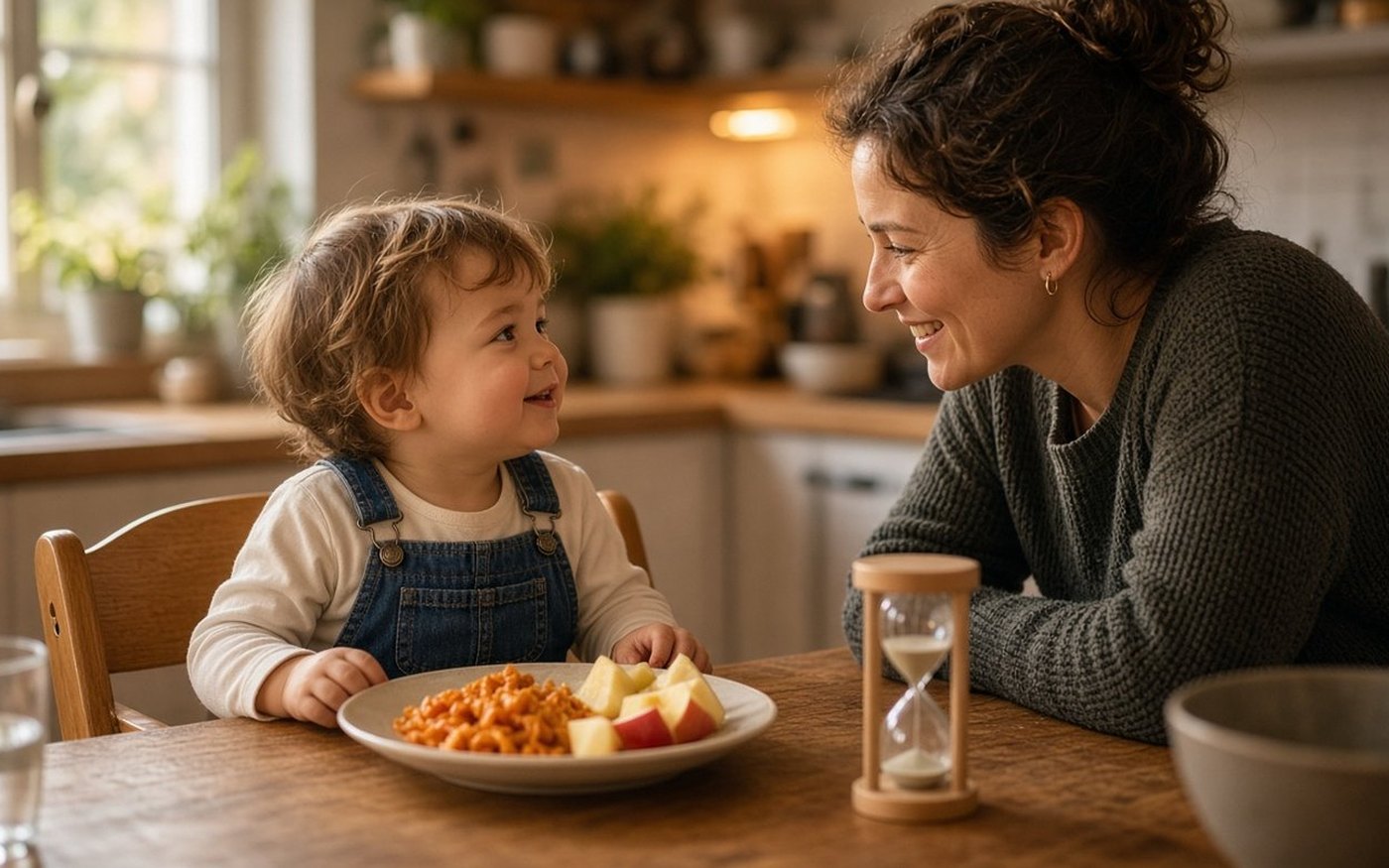
Some families use a small sand timer or a simple rule: “We sit until the timer is done, then you can ask to get down.” A visible end point helps a child who can’t yet judge time. Keep the timer short enough that they can win.
A simple, calm rule for leaving the table
Pick one rule and say it the same way every night: “When you get down, dinner is done.” Then follow it, kindly. If they climb out, you say, “Okay, you’re all done,” take the plate, wipe hands, and let them go play. No chasing them with a fork. No bringing the plate to the living room. No snack thirty minutes later because they “didn’t eat dinner.” The next food is the next planned meal or snack.
This feels harsh the first few nights, and it usually works within a week or two, because the toddler learns the table is where food happens. Most children start staying longer once they understand that leaving really ends it. If they come back two minutes later saying they are hungry, it is reasonable to let them sit back down once, early on, while they learn. After that, hold the line.
Give them a way to say they are done that isn’t climbing. A phrase like “all done, please” or a sign, plus “you can ask to get down,” teaches the habit you actually want. Praise the asking: “Thanks for asking. Yes, you can get down.” Over time, sitting and asking becomes the ordinary way meals end, which is also the start of table manners that will matter later.
Give them a reason to stay
Toddlers stay longer at a table that includes them. Eat with them when you can, even if it is just a few bites of your own dinner at 5:15. Talk to them, not only around them. A question as simple as “Is your apple crunchy or soft?” keeps a small child engaged. For older siblings, a few dinner conversation starters keep the whole table in one conversation instead of a toddler competing for attention.
Small jobs help too. Let them carry their cup, put napkins out, or set their own place. A child who helped build the table has a little more reason to sit at it. Serve one food you know they like next to anything new, so there is always something safe to eat, and keep portions small enough that they can ask for more.
What not to do: don’t turn the meal into a negotiation (“two more bites and you can get down”), and don’t offer dessert as a reward for sitting. Both teach that the table is a place to bargain. A calm, predictable meal is less exciting, and that’s the idea.
When getting up is a sign of something else
Some kids leave the table because the meal is genuinely hard: they gag on textures, they are anxious about new foods, or they are uncomfortable in ways they can’t explain. If your toddler refuses almost every food, seems to be in pain when eating, is losing weight, or meals have become a daily battle that is affecting the whole family, talk to your pediatrician. A feeding therapist can help, and asking early is not overreacting.
Restaurants and holiday tables are a separate skill. Expect less sitting in a new place, pack a small activity, and plan to finish early. Our restaurant guide covers that version of the problem.
This guide is also listed in our mealtime guides.
Quick FAQ
How long should a toddler sit at the table?
Ten to fifteen minutes is a realistic goal for most two- and three-year-olds. Sitting longer usually comes with age, comfort, and a predictable routine, not with pressure.
Should I let my toddler eat while walking around?
It’s safer and simpler to keep eating at the table. Walking with food raises choking risk and teaches that food can go anywhere. If they get down, the meal is done.
What if my toddler barely eats before getting down?
Toddler appetites vary day to day. Offer the next planned meal or snack at its usual time, and look at what they eat over a week. Talk to your pediatrician if you’re worried about growth.
The bottom line
A toddler who won’t stay seated usually needs a better seat, a shorter meal, and one calm rule: when you get down, dinner is done. Fix the footrest and the height, leave space between snacks and meals, eat with them when you can, and give them a way to ask to be finished. Expect ten good minutes, not forty. Repeated every night, that short, boring meal becomes the habit.