
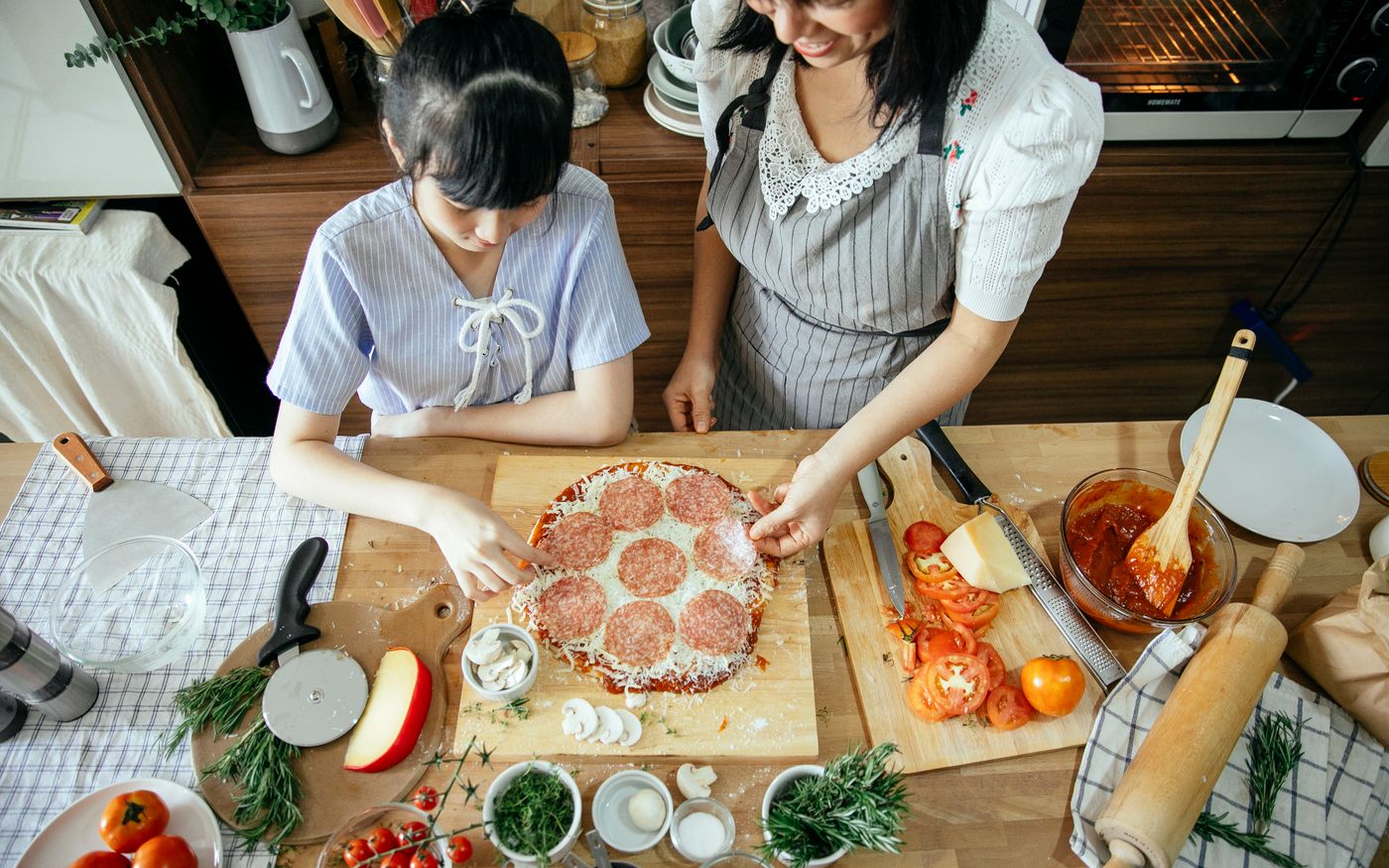
Pizza night works because the jobs are real
A family pizza night is less about a perfect crust and more about a meal kids can help make and then actually sit down to eat. It’s a weekend or Friday version of cooking with toddlers: a few safe jobs, a clear end, and dinner that doesn’t depend on a restaurant reservation.
Keep it simple enough to repeat. One dough (store-bought is fine), a sauce already in a jar, shredded cheese, and two or three toppings everyone can recognize will beat a theme night you pull off once a year. Put it on the weekly family meal plan so you’re not deciding at 5 p.m. whether you have the energy.
Set the table, then set the jobs
Wash hands first. Give each child a job that matches their age: dump the pre-measured flour, press the dough in a pan, spoon sauce, sprinkle cheese, or place toppings in a zone of the pizza that’s “theirs.” A toddler can tear basil or move pre-sliced mushrooms from a bowl to the dough. A school-age kid can use a pizza cutter with you standing there, or measure water for the dough.
Skip raw meat toppings in little hands, or cook sausage ahead and let them add it from a cool bowl. Keep knives, the hot oven, and the pizza stone as grown-up jobs. A low chair or a sturdy stool and a clear “oven is closed unless a grown-up opens it” rule matter more than an apron.
If you have a picky eater, make one small pizza or one half that’s plain cheese, and put one new topping on a corner instead of negotiating the whole pie. The same idea as our guide to practical strategies for picky eaters: they see the new food, they don’t have to win a debate about it.
While it bakes, keep the wait short
Pizza in the oven is a waiting lab. Set a timer they can hear, clear the counter together, and set the table. If they hover at the oven door, give them a job away from the heat: napkins, cups, a simple salad they can tear. The wait is easier when they already practiced teaching kids to wait in smaller moments during the week.
When it comes out, you cut it. Let it cool enough to eat. Then sit. Pizza night still works better with the same few table habits you use on ordinary nights—see teaching kids table manners—and a question or two from family dinner conversation starters so the meal isn’t just chewing and screens.
Store-bought, takeout, and “we’re tired” versions
A take-and-bake crust, English muffins, or pita pizzas on a weeknight are still pizza night. If you order in, let them choose one topping and help set plates so the ritual isn’t only the homemade version. The point is a regular, low-stakes meal you look forward to, not a test of your dough skills.
Leftovers make lunch. Reheat slices in a skillet or the oven so they’re not rubbery, and pack one for school if that works for your kid—see packing school lunches kids will eat. A Friday pizza and a Saturday leftover lunch is a weekend win, not a failure to cook twice.
When it gets messy, or someone refuses to help
Flour and sauce will leave the board. That’s the night. Put a washable cloth or a big board down, keep wet cloths nearby, and clean the station once the pizza is in the oven, not after everyone’s tired. If a child opts out of helping, they can still set the table or come back when it’s time to eat. Don’t turn participation into a ticket for dinner, and don’t redo their topping job unless it’s a safety issue.
Allergies and special diets can still have a pizza night: a gluten-free crust in its own pan, a dairy-free cheese on one half, or a vegetable-only pizza next to a cheese one so the board doesn’t mix. Wash hands and use separate spoons for the special crust. Tell visiting kids what’s on each pie before they grab.
If you’re having friends over, keep the same short job list rather than turning it into a cooking class. One dough, toppings already prepped, and a set eating time so the visit has an end. Leftover energy after dinner can be a short game, not more kitchen projects.
If pizza night is your Friday ritual, taco night can be the weeknight fillings-bar version. See family taco night.
If pizza is your Friday project, pasta can be the one-pot Tuesday. See family pasta night.
This guide is part of our mealtime guides, where related pieces are grouped in one place.
Quick FAQ
Is store-bought dough or takeout still “pizza night”?
Yes. The point is a short, shared meal with real jobs—or a tired-night version you can still sit down for. Homemade crust is optional.
What if they only want cheese?
A plain cheese pizza, or one plain half, is a reasonable safe food. Offer a fruit or salad on the side and skip the lecture about toppings.
How do we keep the wait from unraveling?
Set the table first, give a small job, and have a short activity ready while it bakes. A very long from-scratch project is a weekend choice, not a weeknight requirement.
The bottom line
Family pizza night is a repeatable meal with real jobs, one plain option for cautious eaters, and an oven you handle yourself. Use a simple dough, a short list of toppings, and the same sit-down habits you want on ordinary nights. The night you can pull off again next week is the one that counts.