
The three questions that decide most mornings
School and daycare policies vary, so always check yours. But most sick-day calls come down to three questions:
- Does my child have a fever?
- Are they vomiting or having diarrhea?
- Can they participate? Could they sit through class, play at recess, and eat lunch, or do they need an adult’s one-on-one care?
If the answer to either of the first two is yes, or the answer to the third is no, they stay home. A runny nose with normal energy usually means school.
Fever: the 24-hour rule
For most kids, a fever is a temperature of 100.4°F (38°C) or higher. Most schools and daycares ask that children stay home with a fever and return only once they have been fever-free for 24 hours without fever-reducing medicine like acetaminophen or ibuprofen.
That last part matters. A morning dose of medicine can hide a fever for a few hours, and it often comes back by lunch. Sending a medicated child to school usually ends with a call from the nurse—and other kids exposed.
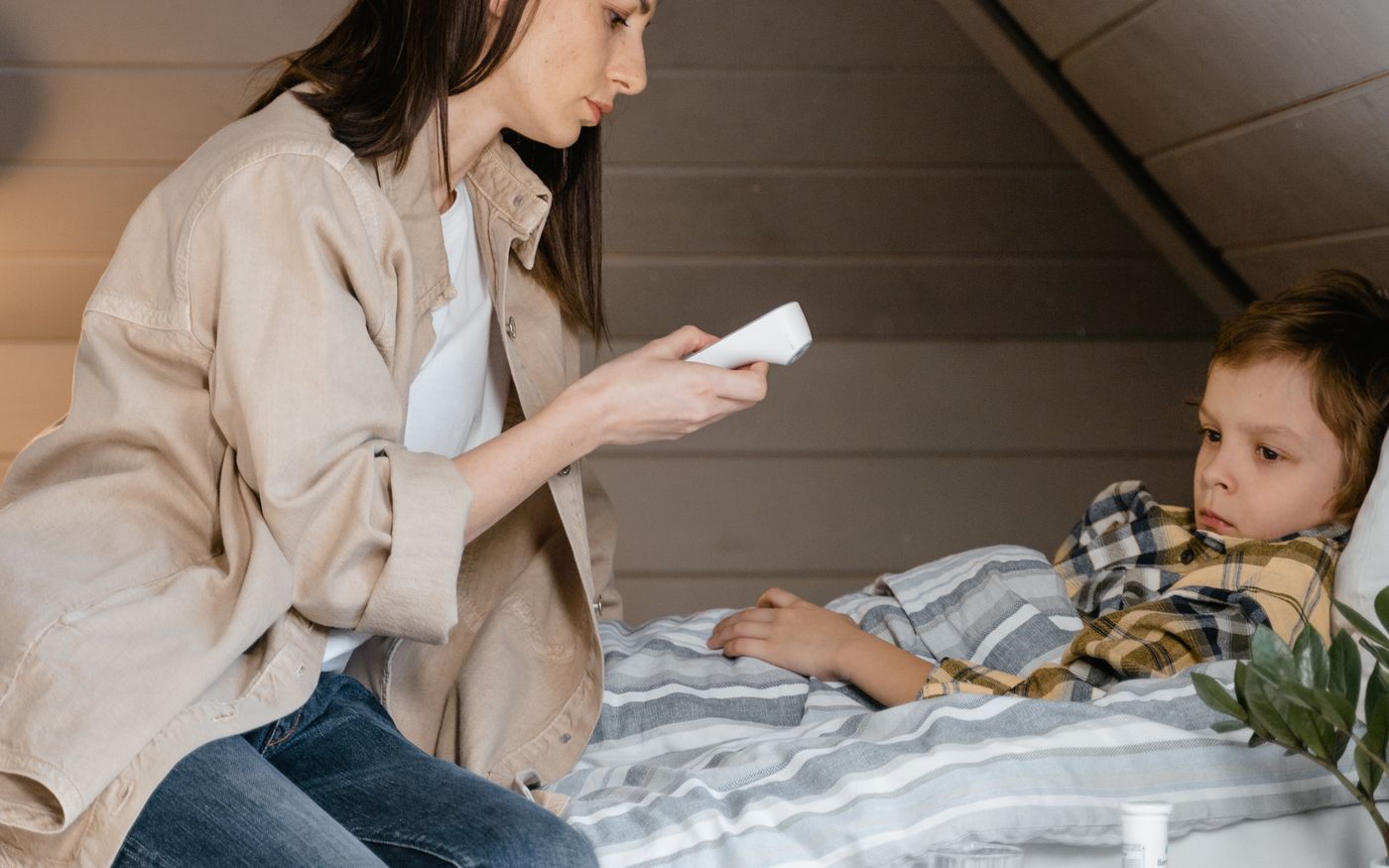
Take the temperature in the morning before deciding, and write it down with the time. If you call the doctor, they will want the numbers.
Vomiting and diarrhea
Stomach bugs spread fast in classrooms. Keep kids home if they have vomited or had diarrhea in the last 24 hours, or per your school’s policy. Many schools use the same 24-hour window as fever. Focus on fluids at home: small, frequent sips of water or an oral rehydration solution work better than big gulps.
Wash hands with soap and water after bathroom trips and diaper changes; hand sanitizer does not kill some stomach viruses well.
Colds, coughs, and runny noses
Kids can catch several colds each year, especially in daycare and the early school years. A mild cold without fever usually does not need a day home. Keep them home if:
- The cough is frequent enough that they cannot rest or focus
- They have a fever along with the cold
- They seem truly wiped out, not just a little tired
- They are having any trouble breathing
The CDC’s guidance for respiratory viruses like flu, COVID-19, and RSV says people can return to normal activities when symptoms are improving overall and they have been fever-free for 24 hours without medicine. Follow your school’s current rules, which may be stricter.
Common illnesses, quick rules
- Strep throat — Stay home until fever is gone and they have had at least 12 hours of antibiotics (many schools ask for 24).
- Pink eye — Many pediatricians say kids with mild pink eye can attend school, but daycare and school rules differ. Call to check, and teach hand washing and no eye rubbing.
- Flu — Expect several days home. Call your doctor early, since antiviral medicine works best when started soon after symptoms begin, especially for kids under five or those with asthma.
- Hand, foot, and mouth disease — Usually home while they have fever or drool a lot from mouth sores. Check daycare policy.
- Rashes — A rash with fever, or a rash that spreads fast, should be checked before school.
- Head lice — The American Academy of Pediatrics says kids do not need to miss school; treat at home and follow school guidance.
When to call the doctor
Call your pediatrician or nurse line if:
- Your baby is younger than 3 months with a temperature of 100.4°F (38°C) or higher—call right away.
- A fever lasts more than two or three days, or goes above 104°F (40°C).
- Your child is not drinking, has very few wet diapers, or has no tears when crying.
- An earache, sore throat, or cough is getting worse instead of better.
- They have a stiff neck, unusual sleepiness, or you are worried for any reason.
Call 911 for trouble breathing, blue or gray lips, a seizure, or if your child is hard to wake.
The “I don’t feel good” mystery
Some mornings bring vague complaints: a tummy ache, a headache, “I just don’t want to go.” Check for fever and look at how they are acting. If they perk up after breakfast, school is likely fine. If the complaints show up most school mornings, or always before a certain class or day, there may be something else going on—worry, friend trouble, or trouble with schoolwork. Gently ask questions, and see our guide to talking to kids about feelings. Loop in the teacher or school counselor if the pattern sticks.
Make a sick-day plan before you need it
Working parents feel the most pressure on sick mornings. A plan made in September makes the 6 a.m. decision easier in January.
- Backup care list — Grandparents, a trusted neighbor, a sitter, or a backup care benefit through work.
- Who stays home — Parents can alternate days or split the day, each taking a half.
- A note template — Keep a short absence email to the teacher saved on your phone.
- A stocked shelf — Thermometer, fever reducer dosed by weight, electrolyte drinks, tissues, and crackers. Our home first aid kit checklist covers the basics.
What a good sick day looks like
Sick days are for rest. Keep them low-key: fluids, simple foods like toast, soup, or applesauce, naps, books, and some screen time if it helps them rest. Limit friends and playdates until they are well. A quiet day often means a faster return.
Prevent the next one
- Teach 20-second hand washing, especially before eating and after the bathroom.
- Cough and sneeze into the elbow.
- Keep up with recommended vaccines, including the yearly flu shot for kids six months and older.
- Protect sleep; tired kids get sick more often.
The bottom line
Keep kids home for fever, vomiting, or diarrhea, and wait until they have been symptom-free for 24 hours without medicine. Send them in with a mild cold if they can participate. Call the doctor when symptoms worsen or you’re worried, and make a backup care plan before cold and flu season hits.