
Why food hits the floor (and why “just stop tossing” fails)
Babies drop food to learn cause and effect. Toddlers drop food to test boundaries, ask for attention, or because their grip fatigue is real. Lecturing a nine-month-old about hardwood maintenance does not work. Changing the environment does.
Most floor mess comes from three places: the front edge of the tray, sideways swipes during exploration, and the moment you unbuckle and lift a child whose hands are still full. Design your setup for those moments.
Step 1: Stabilize the high chair itself
A wobbly chair increases spills. Place the high chair on a level floor, lock wheels if it has them, and pull it close enough to the table that you can help without creating a long “launch corridor” between tray and dining surface.
Footrests matter more than many parents expect. When feet dangle, kids slide forward, lean hard on the tray, and shove food off the front. Adjust the footrest so knees bend comfortably and hips stay back. Better posture means fewer dramatic tray avalanches.
For a full BLW-oriented checklist, use our baby-led weaning high chair setup checklist.
Step 2: Turn the tray into a containment zone
High chair trays are rarely designed for yogurt physics. Hinges, textured plastic, and shallow lips let liquid migrate. Add a silicone placemat with raised edges so spills stay on a wipeable surface instead of racing into crevices.
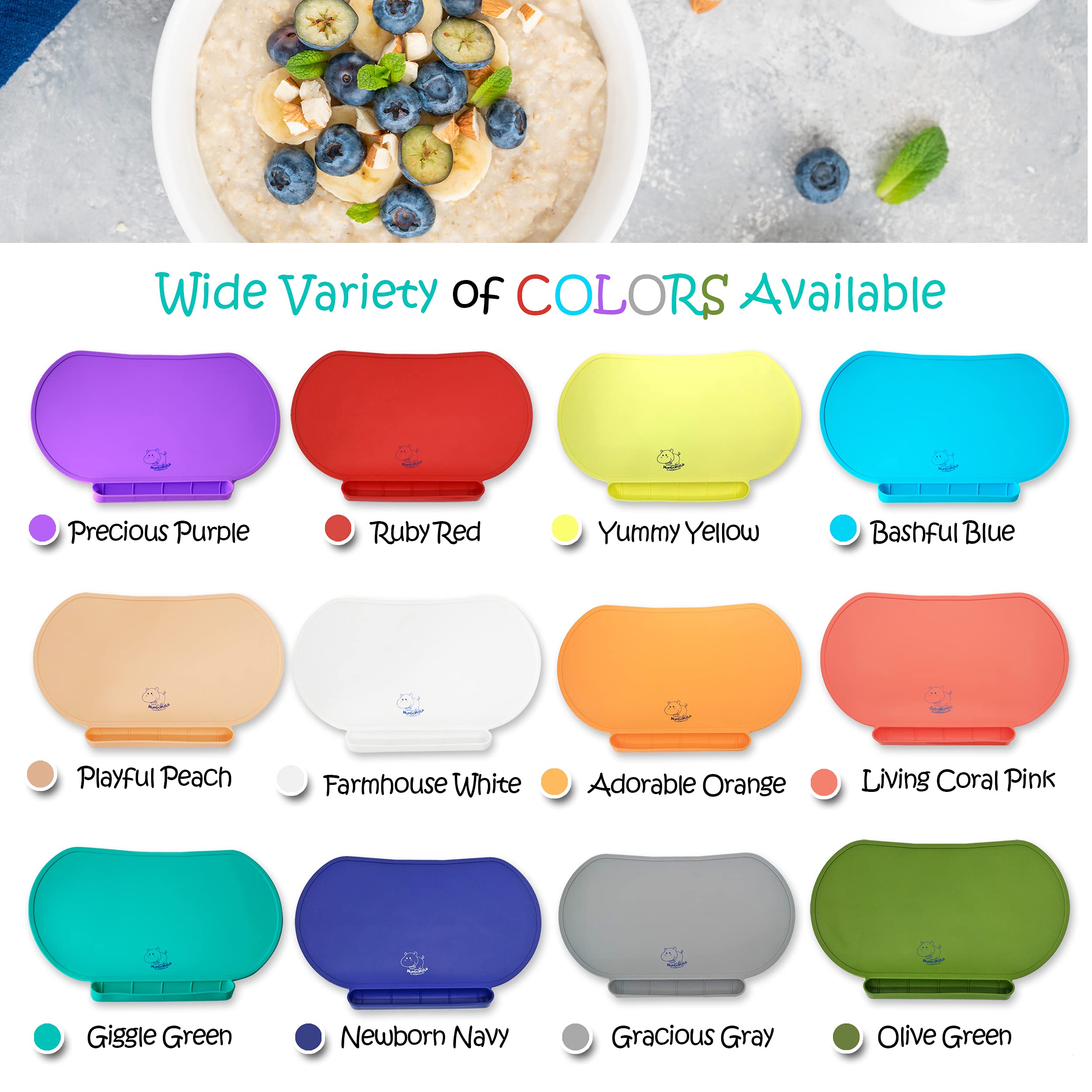
Prioritize a front spill tray or accident catch. Food’s favorite exit is forward and down. A mat with a built-in catch at that edge—like the Mumbo Mat spill tray—intercepts a surprising amount of what would otherwise become floor art. Learn which features matter in best silicone baby placemat features.
Wipe the tray dry before placing the mat. Oil and crumbs underneath create sliding, and a sliding mat becomes a food catapult.
Step 3: Define a small floor “drop zone”
You do not need to tarp the entire kitchen. Place a washable mat, wipeable runner, or old towel under and slightly in front of the chair—where gravity sends most debris. Keep it small enough that you will not trip, large enough to catch the splash radius.
Hard floors are easier than rugs. If you must eat over carpet, lean harder on tray containment and sleeved bibs, and accept that a handheld vacuum will join your mealtime kit.
Step 4: Dress the baby for mess, not for a photoshoot
A full-coverage bib with sleeves (or a smock) keeps puree off onesies. Snap bibs that catch crumbs in a pocket help, but for BLW the sleeved option usually wins. Keep a dedicated meal outfit if laundry capacity is limited.
Have a damp washcloth ready before you start. Cleaning hands while the child is still seated prevents the “sticky handrail tour” of your kitchen on the walk to the sink.
Step 5: Portion like a refill station, not a buffet
Overloading the tray is the fastest way to decorate the floor. Offer two or three foods at a time in small amounts. When interest stays high, refill. When tossing begins, calmly remove the tossed item once and end the food-as-toy loop without a speech.
Thick foods stay put better than watery ones early on. Serve sauces in a small silicone cup on the mat rather than flooding the surface. Soft finger-food shapes reduce crumb explosions compared with dry crackers pulverized by gums.
Step 6: Cup and utensil placement
Put cups toward the rear third of the mat. Front-edge cups are floor cups. Use a weighted base or a training cup with a modest water amount. Open-cup practice is valuable—just start with a sip’s worth.
Spoons can be tools or projectiles. Offer one soft spoon for dipping. If throwing becomes the main activity, pause utensils and return to hand foods for a bit.
A five-minute cleanup sequence that sticks
- Wipe face and hands while buckled in.
- Lift child out; immediate handoff to a clean towel or second caregiver if available.
- Fold or tip the placemat so crumbs fall into the trash—not onto the chair seat.
- Wipe mat or park it in the dishwasher.
- Shake or wipe the floor mat; spot-mop only the drop zone.
- Quick pass on high chair rails and buckle straps where sticky fingers landed.
Consistency beats deep cleans after every snack. A reliable short ritual prevents the “I’ll deal with it later” crust that becomes a weekend project.
What to do when tossing is the main sport
Some phases are developmental. Stay calm, shorten the meal, and reduce how much is within reach. Narrate briefly—“Food stays on the tray”—then follow through by ending the meal if throwing continues. Offering a clear end is clearer than endless retrieval missions that teach “dropping summons a waiter.”
Also check hunger and timing. An overstretched baby who needed a nap an hour ago will invent chaos. The floor is not always the problem; sometimes the schedule is.
Restaurant and travel versions of the same setup
Pack a rollable silicone mat, a sleeved bib, and wipes. Wipe the restaurant tray, lay your mat, and you have imported your containment system. Afterward, wipe or bag the mat and leave the restaurant floor mostly as you found it. Full playbook: restaurant dining with a toddler.
Gear worth owning (short list)
- Stable high chair with adjustable foot support
- Food-grade silicone placemat with raised edges and a front spill catch
- Sleeved bib or smock
- Small washable floor mat
- Dishwasher-safe cups and spoons (see dishwasher-safe feeding gear)
That is enough. More gadgets often mean more parts to wash and fewer habits that stick.
Mindset: contain, don’t perfection-chase
You will still find a pea under the fridge in March that fell in January. The goal is not zero mess. The goal is a system where mess is predictable, limited to a zone, and cleaned in minutes so you can keep offering real food without dread.
For the weaning philosophy alongside the logistics, read the mess-free baby-led weaning guide. When you want tray-level containment with a spill tray built in, see the Mumbo Mat or shop on Amazon.
Quick FAQ
Will a mat stop all floor mess?
No. It reduces tray-edge disasters significantly. Combine with a small floor mat for best results.
Is a plastic splash mat under the chair enough alone?
It helps, but cleaning food out of chair hinges is still miserable. Tray containment plus floor protection beats floor protection alone.
What if my baby eats only while standing on my lap?
Lap feeding has different physics. Use a sleeved bib, smaller portions, and a towel on your lap. Transition gradually back to the chair for seated practice when possible.