
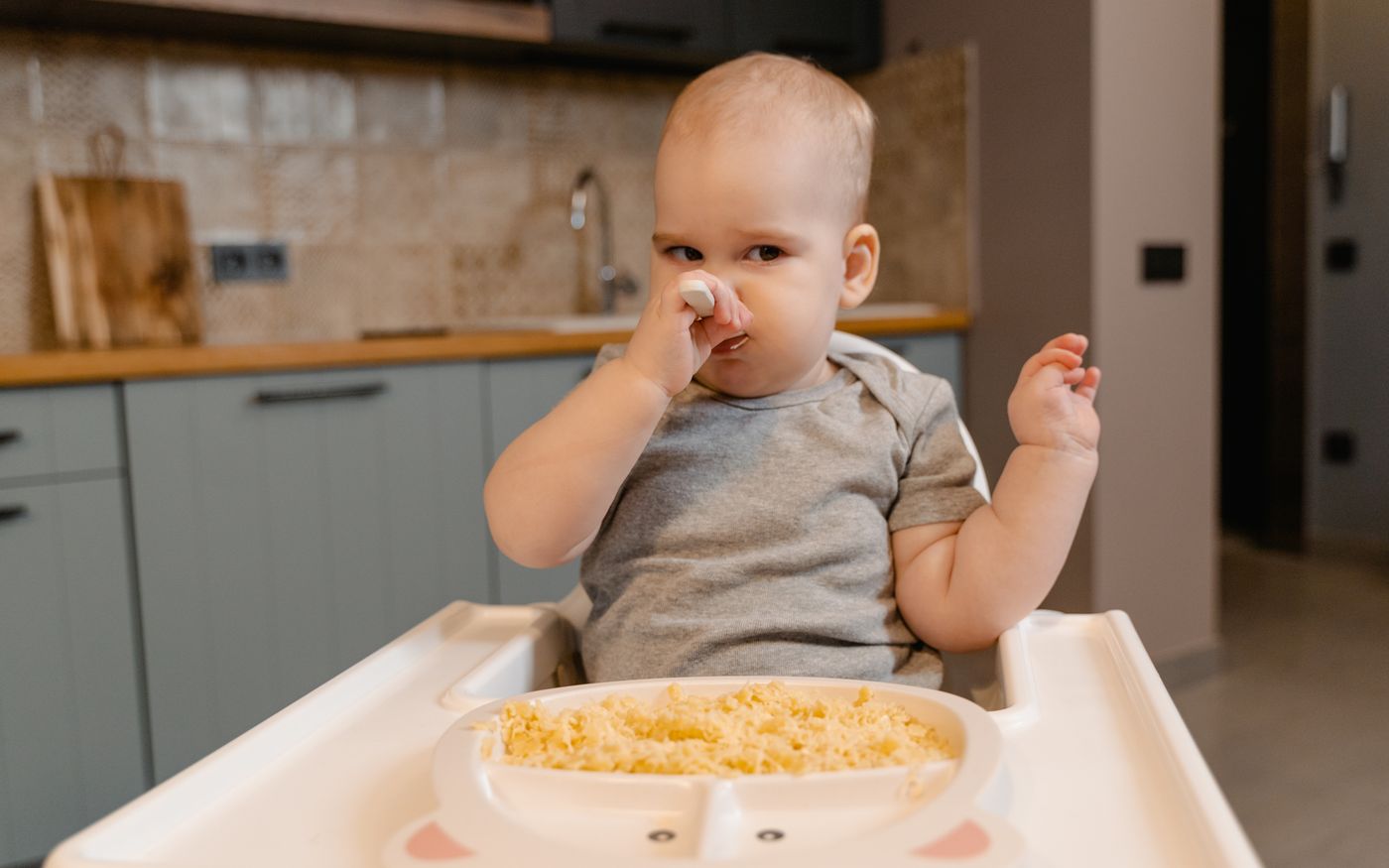
Start with readiness, not a calendar date
Starting solids is less about a birthday and more about a cluster of signs: steady head and neck control, sitting with support in a safe high chair, fading of the tongue-thrust reflex that pushes food back out, and real interest in what you’re eating. Many babies show this cluster around six months. Some are a little earlier or later. A single “open mouth at the table” is not enough on its own, and a calendar reminder is not a substitute for those signs.
This is not a high-chair wiring guide—that lives in our baby-led weaning high chair setup—and it is not a tour of allergens. For peanut, egg, and the other common ones, use introducing allergens to babies once your baby is ready for solids and you’ve checked risk with your pediatrician. This post is the before-and-first-week question: is it time, and how do the first tastes actually go?
Milk still does the main nutrition job in the first year. Solids at the start are practice: tastes, textures, iron-rich foods, and the social habit of sitting at a meal. If a first session is three interested bites and a shirt that needs changing, that is a complete start. You do not need a clean plate or a new feeding identity by Friday.
The signs that matter, and the ones that don’t
Look for a baby who can hold their head steady, sit upright with support, and bring toys or hands to their mouth. Watch whether food stays in the mouth long enough to be moved around, or whether the tongue still shoves most of it forward. Interest helps: reaching for your plate, watching the fork, opening for a taste. Interest without sitting stability is a reason to wait a little, not a reason to start in a bouncy seat.
Signs that are not enough on their own: night waking (often just a sleep phase), grabbing at jewelry, or a relative who started “everyone” at four months. Starting very early can crowd milk, and it doesn’t reliably fix sleep. If your baby was born early, has reflux that’s still being treated, or has a feeding history you’re watching, ask the pediatrician before you change the plan. This is practical family advice, not a diagnosis.
When it is time, pick a calm part of the day when they aren’t ravenous or collapsing into a nap. Sit them upright, stay with them, and offer a small amount. You can start with a thin mash on a soft infant spoon, a strip of soft food they can hold, or a mix of both. The method war is less important than an upright baby, a grown-up who is actually present, and food that is soft enough and cut safely.
The first week, without a performance
Offer iron-rich first foods most days: a thinned iron-fortified cereal, mashed beans or lentils, finely shredded meat or poultry in a soft sauce, or mashed egg if you’ve already planned that allergen with your clinician. Fruit and vegetables can sit next to those, not instead of them. Keep portions tiny. Let them touch the food. If they refuse, end the meal kindly and try again tomorrow. A first week is a series of short, low-stakes tastes, not a new three-meal schedule.
Honey is not for babies under one. Cow’s milk as a drink waits until around the first birthday; yogurt and cheese can appear earlier in foods if your clinician agrees. Skip hard, round, and sticky choking hazards: whole nuts, whole grapes, chunks of raw hard vegetables, thick spoonfuls of nut butter, popcorn, and hot dogs in coin shapes. Sit with them for every bite. Phones down is not a lifestyle lecture; it’s how you notice a cough or a gag. Gagging is common and noisy as they learn; choking is quieter and needs you ready.
Expect a mess, and contain it instead of chasing a spotless first month. Our mess-free baby-led weaning guide and how to stop baby food from hitting the floor cover trays, bibs, and a short cleanup. You don’t need every accessory on day one. A stable chair, a bib you can wipe, and a washable mat or easy floor zone will get you through the first week.
What to do when it feels uncertain
If they push the spoon away, they may be done, not “behind.” If they cough and then go back to playing with the food, pause, let them recover, and keep sitting with them. If they consistently refuse, check timing, texture, and whether they’re too tired, then keep offering without a sales pitch. Some babies want to hold everything; some prefer a loaded spoon and their own second spoon. Both are starting solids.
Call the pediatrician if you’re unsure they are ready, if growth is already being watched, if swallowing seems painful, or if you see possible allergic symptoms after a new food. Keep a simple note of what you offered and how it went, especially in the first weeks of allergens. You do not need a spreadsheet. A line in your phone is enough.
Partners and grandparents should hear the same plan: upright, present, no honey, no propped bottles of puree in a seat, and no “just a little cereal in the bottle” unless a clinician has a specific reason. Consistency keeps the first week from turning into five different methods in one house.
Once the first tastes are going, you’ll want a map of textures by age and a sense of which foods to rotate. That’s the next piece: first foods for babies by age, plus the self-feeding milestones that show up as hands get more precise. Start here, though, with readiness and a calm first week. The rest can wait until they’re actually sitting at the table.
After those first tastes are going, a little leftover mash can make weeknights easier. See batch-prepping baby food.
Once solids have started, a teething week may look like a sudden stall. See teething and eating.
This guide is part of our baby feeding guides, where related pieces are grouped in one place.
Quick FAQ
Is six months a hard start date for solids?
No. Six months is a typical window, not a deadline. Wait for sitting with support, good head control, and interest in food, then start. A calendar date without those signs is not a reason to rush.
What if our baby is not ready at six months?
Keep offering milk as the main food and watch for the signs over the next weeks. Mention the delay at a well visit if you are unsure. Our texture ladder is for after solids have actually started.
Do we need special “stage 1” food to begin?
No. A simple, soft, iron-rich first food is enough. The first week is about practice, not a menu. Keep portions small and the setting ordinary so the meal does not become a show.
The bottom line
Start solids when the readiness signs cluster, not when a date on the calendar dares you. Keep milk as the main nutrition source, offer tiny iron-rich tastes while you sit there, skip honey and the obvious choking hazards, and treat the first week as practice. A few interested bites and a plan to try again tomorrow is a real start.