
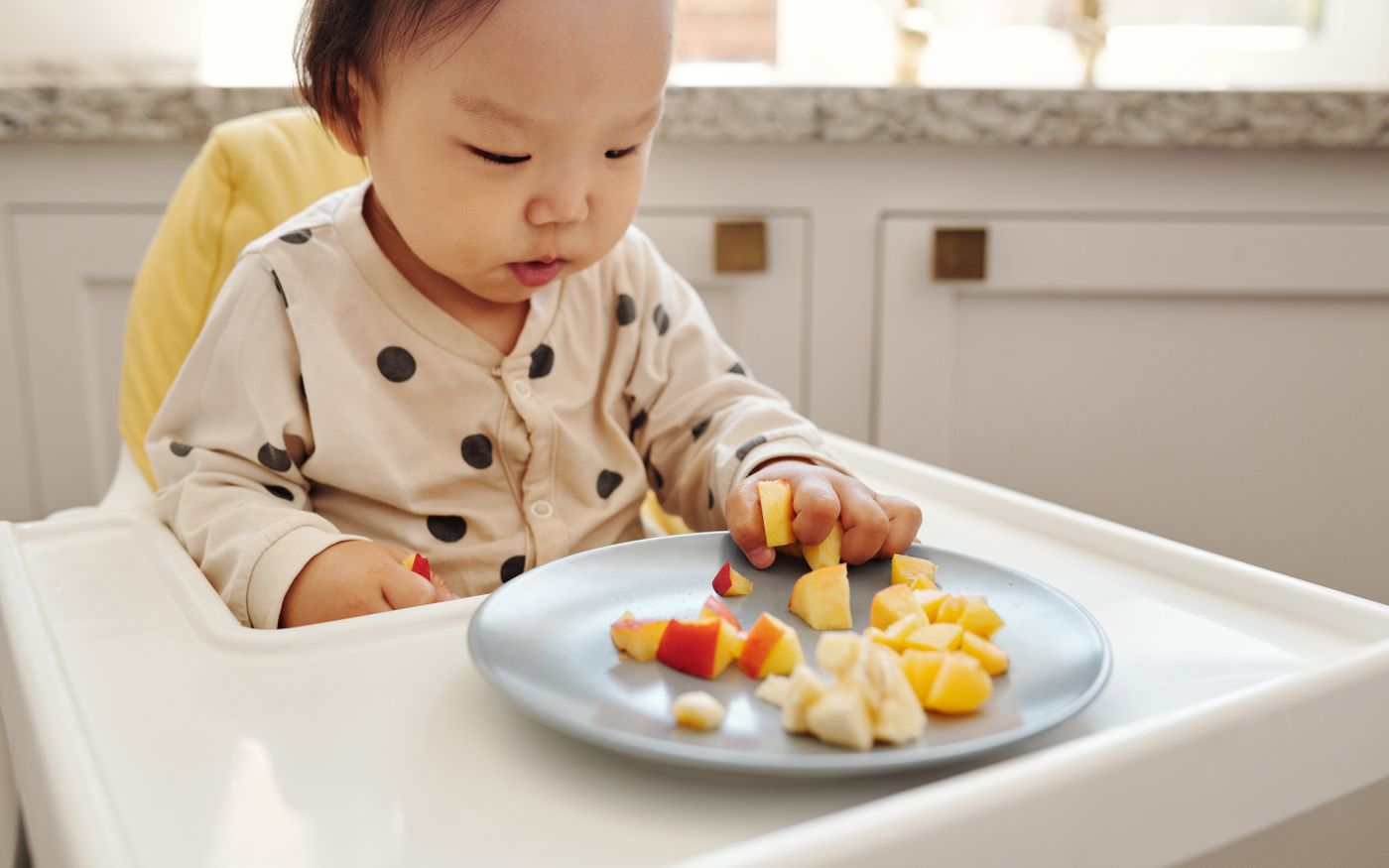
Think in textures and iron, not a rigid menu
Once you’ve confirmed readiness and begun those first tastes—see starting solids and signs of readiness—the question becomes what to offer as the months go by. You do not need a 30-food spreadsheet. You need iron-rich foods most days, textures that match the skills they have now, and a slow widen toward family food. Milk still leads in the first year. The plate is practice, nutrients, and the habit of sitting down.
Ages below are ranges, not tests. A six-month-old who loves soft strips and a nine-month-old who still wants a mash can both be doing fine. Move by what they can sit, grab, and move around in their mouth, and check with your pediatrician if you’re unsure. For peanut, egg, and other common allergens, follow introducing allergens to babies rather than delaying them “until later foods.”
Around six months: first tastes that earn their place
Start with soft, iron-rich foods: thinned iron-fortified cereal, mashed lentils or beans, finely shredded meat or poultry in a moist sauce, mashed tofu, or egg in a form you’ve already planned with your clinician. Add soft fruit and vegetables as partners, not as the whole plan: ripe banana, avocado, cooked sweet potato, stewed apple or pear, well-cooked carrot mashed or in a thick spear. Everything should smash easily between your fingers.
Offer a little, not a flight of six new foods at once. A strip they can hold or a thin mash on a spoon is enough. You can do spoon, fingers, or both. Keep salt and added sugar out. No honey under one. No cow’s milk as a drink yet; yogurt and cheese can appear in foods if your clinician agrees. Sit with them for every bite, and keep hard, round, and sticky foods off the tray: whole nuts, whole grapes, popcorn, thick nut butter, raw hard chunks, and coin-shaped hot dogs.
If a food bombs, it can come back later in a slightly different texture. First foods are a rotation, not a verdict. A calm chair and a short meal will do more than a new gadget. The high chair setup and a simple contained tray—see keeping food off the floor—matter more than a color-coded meal plan.
Seven to nine months: more meals, more texture
Many babies move toward two, then three small solid meals, still with milk in the lead. Textures can go from smooth to mashed-with-soft-lumps, then to small, soft, squishable pieces. Think moist minced meat, soft flaked fish (bones out) if that’s in your family’s diet, scrambled egg, soft pasta, well-cooked vegetable pieces, ripe fruit cut safely, and soft cheese. Let them practice a pincer grasp on pea-size soft bits when that skill shows up—more on that in self-feeding milestones.
Combine foods they already know: cereal with mashed fruit, beans with soft sweet potato, shredded chicken with a little broth and soft rice. Water in a small open cup or a simple straw cup can start at meals, in sips, not as a replacement for milk. Keep offering iron most days. If meat is a stretch, beans, lentils, tofu, eggs, and fortified cereal still count, especially with a vitamin-C food like fruit or tomato on the same plate.
Gagging can still happen as lumps appear. Stay close, stay calm, and don’t jump straight back to only silky puree unless feeding has become stressful or your clinician has asked you to. If they stall on texture for weeks, or meals are regularly upsetting, that’s a pediatric or feeding-specialist question, not something to fix with a tougher cracker.
Nine to twelve months: family food, modified
The goal by the end of the first year is usually “what the family is eating, made soft and safe,” not a second menu you cook after yours. Cut, mash, or moisten your dinner: soft taco filling without hard chips, small pasta, flaked fish, tender meat, cooked vegetables, fruit, yogurt, eggs. Watch the sodium in very processed foods and still skip honey. Cow’s milk as a drink typically waits until around twelve months; ask your pediatrician about the timing in your house.
Portions will still look small from an adult chair. Offer, sit together, and let appetite do some of the work. A baby who loved puree and now throws everything may be practicing a new skill, not rejecting food as a life choice. Keep the meal short, contain the mess, and end before everyone is furious. Our mess-free BLW guide is useful even if you never called your method BLW.
Build a short, repeatable roster rather than a new cuisine every night. Iron food plus a fruit or vegetable plus a soft starch is a complete baby plate most days. Leftovers from your lunch, recut, count. Store-bought pouches can be a travel backup, not the whole diet: squeeze them onto a spoon or a tray so they still practice chewing and self-feeding, and watch added sugar.
After the first birthday, the map shifts again toward toddler portions, milk-as-a-drink decisions, and a wider family table. You’ll want iron-rich foods for toddlers on that side of the year. Until then, keep the first-year plate simple: iron most days, textures that match their mouth, family food made soft, and a grown-up sitting there.
Once you know what textures they’re ready for, a small batch can keep those foods on hand. See batch-prepping baby food.
On a sore-gum day, stay with softer versions of foods they already know. See teething and eating.
Wash market produce at home before it hits a baby plate. See a farmers’ market with kids.
This guide is part of our baby feeding guides, where related pieces are grouped in one place.
Quick FAQ
Do we have to follow a strict food-by-food schedule?
No. Think in textures and iron, not a rigid menu. Offer soft, iron-rich foods first, then gradually thicker and lumpier textures as they handle them.
When can they eat what we eat?
Often by nine to twelve months, with modifications for size, softness, and salt. Family food that is plain enough is simpler than a second cuisine. See signs of readiness if you are still at the very beginning.
What if they gag on a new texture?
Gagging is common while they learn. Stay close, avoid stuffing the spoon, and slow down rather than dropping back to only purees forever. Choking is different from gagging—if you are unsure, review infant CPR and talk with your pediatrician.
The bottom line
First foods work as a texture ladder and an iron habit, not as a rigid menu. Soft, iron-rich tastes around six months, more lumps and meals by seven to nine, and modified family food by nine to twelve will cover most babies. Stay with them, skip honey and choking hazards, and let milk stay in the lead until the pediatrician says otherwise.