
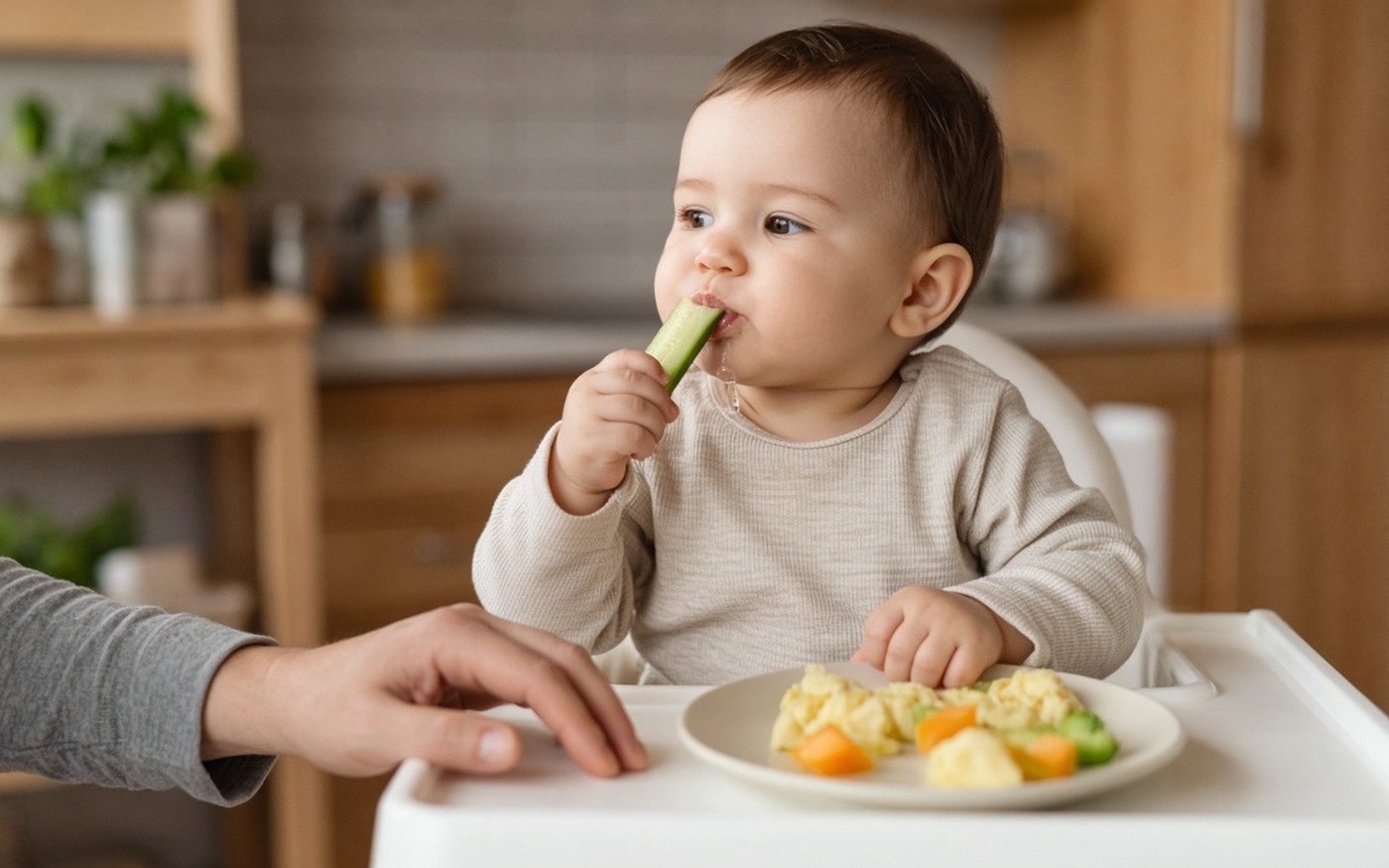
Teething can shrink a meal without ending solids
A baby who was interested in food last week may suddenly nibble, drool, and push the tray away when a tooth is working. That is common, and it is usually temporary. Milk can still do a lot of the nutrition job in the first year, and a few lighter days of solids are not automatically a crisis. The work is to keep meals short, keep textures comfortable, and not turn a sore mouth into a new food war.
This is not a medical guide to teething itself, and it is not a first-foods primer—that’s starting solids and first foods by age. It’s about the table while gums are sore: what to offer, how long to sit, and when a dip in eating needs a closer look. Drool on a bib is messy and normal. A washable setup still helps; see our mess-free BLW guide if the tray is especially wet this week.
Make the food easier to chew, not more exciting
Offer familiar foods in a softer, cooler, or wetter form: mashed instead of a firmer lump, a slightly chilled yogurt or puree, a soft fruit that’s already a favorite. Some babies like a clean, cold, age-safe teether or a large, soft, held food before the meal, then a few bites after. Stay with them. Hard, small, or raw chunks are a poor teething plan; a whole raw carrot or a hard cracker can break off. If you offer a cold spear, it should be a size and texture you would already consider safe, and you should be sitting there.
Keep portions small. A sore mouth may only want a few tastes. That’s a complete meal on a hard day. You can offer again at the next regular time instead of lingering until everyone is upset. If they refuse, end kindly and try later. Don’t introduce a brand-new, challenging texture in the same week you’re already seeing a teething dip, unless you have a reason (like a planned allergen) and they’re still willing.
Iron-rich foods can still appear in a softer form: a moist mashed lentil, a soft egg, a thinned fortified cereal. If solids are very light for several days, mention it at a checkup, especially if you’re also watching iron later in toddlerhood. In the first year, milk remains the main backup. Don’t prop a bottle or turn all meals into unending milk to “make up for it” without a plan.
Keep the meal short, and watch for what isn’t teething
A shorter sit, a calmer room, and a bib you’re willing to change mid-meal will do more than a new gadget. Some babies want to chew more than they want to swallow; that’s practice, not a failure. Wipe drool so the skin doesn’t stay wet and sore, then move on. You do not need a teething menu with a dozen special products.
Call the pediatrician if pain seems severe, if there’s a fever you’re worried about, if they stop drinking well, if they’re unusually lethargic, or if eating pain lasts in a way that doesn’t look like a few rough days of gums. Teething gets blamed for a lot of things it doesn’t cause. Trust your sense that this is “more than gums” when you have it. This is everyday mealtime advice, not a diagnosis.
Appetite that stays very low after the tooth is through, or a new refusal of textures they already handled, is worth a mention at the next visit. Temporary pickiness during teething is common; a long stall might need the same patient approach you already use in picky eating, plus a clinician if you’re concerned. Don’t start numbing gels or medicines because a meal went badly. Use only what your pediatrician has already okayed, and keep those products away from the food on the tray.
Partners, sitters, and the week around a tooth
Tell other caregivers the plan in one line: shorter meals, softer familiar foods, stay sitting, no hard teething objects that can break, and call you if they’re not drinking. A grandparent who wants to “get something in them” can offer the soft food you already prepared, then stop. A small batch of a known mash is useful this week, because you may not want to cook from scratch at every dip.
Expect more laundry and more night waking in some babies, which makes dinner later and shorter. That’s a reason to keep the meal simple, not a reason to skip sitting down altogether. When the tooth is through, return to the usual textures instead of staying in only-mush mode out of habit. The sore-mouth week is a detour, not a new diet.
This guide is part of our baby feeding guides, where related pieces are grouped in one place.
Quick FAQ
Should we pause solids while a tooth is coming in?
Usually no. Offer softer, cooler foods and keep the meal short. Milk remains the backup, but teething is not a reason to drop solids for weeks.
What foods are easier during a teething week?
Softer textures they already know: yogurt, ripe fruit, well-cooked vegetables, scrambled eggs, or slightly warm oatmeal. Skip hard, crusty, or very chewy foods until they feel better.
How do I tell teething from illness?
A tooth can fuss and drool. Fever, a rash, diarrhea, or a baby who will not drink needs a closer look. If you are unsure, call your pediatrician rather than blaming every symptom on a tooth.
The bottom line
Teething can shrink appetite for a few days without ending solids. Offer softer, familiar foods, keep the sit short, stay with them, and use milk as the first-year backup if needed. Call the pediatrician if pain, fever, or drinking worries you, and go back to usual textures when the gums calm down.