
Why dishwasher-safe is a parenting feature
Hand-washing one spoon is fine. Hand-washing every cup, valve, bowl, lid, mat, and bib after three meals is how burnout sneaks in. Dishwasher-safe gear is not laziness—it is how consistent hygiene happens when you are short on sleep.
“Dishwasher-safe” still has footnotes: top rack versus bottom, heat-dry settings, and manufacturer limits. Read the tiny care icons. Then build a kit that matches your machine’s reality.
Worth buying: silicone placemat with raised edges
A food-grade silicone placemat that can go in the dishwasher removes the most annoying tray scrub of the day. Shake crumbs, rinse big blobs, then rack it. Raised edges and a spill tray mean less food reaches chair hinges in the first place—so the dishwasher is finishing work, not compensating for a bad setup.
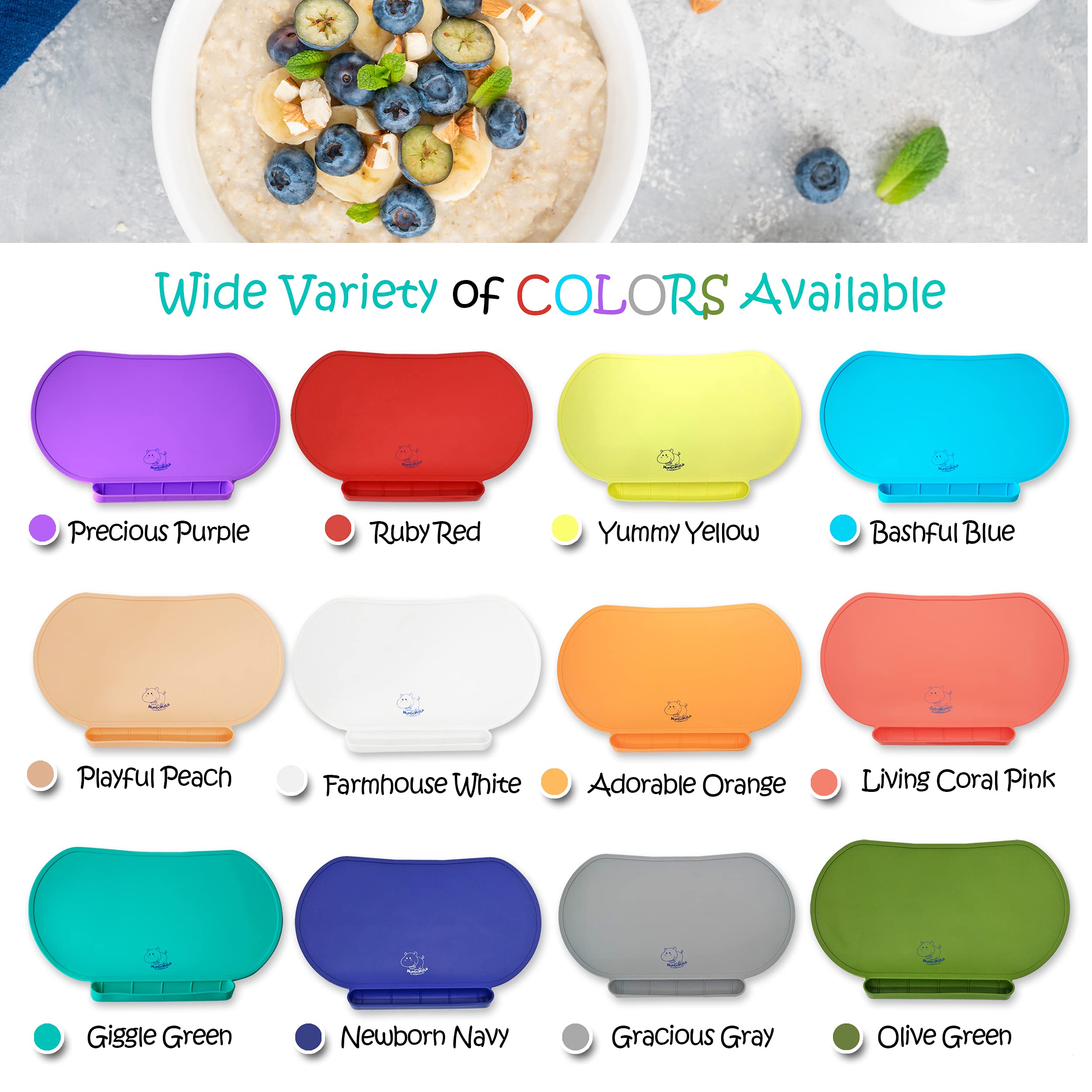
Mumbo Mats are designed for this loop: silicone body, spill-proof accident tray, dishwasher-safe care. Compare materials in silicone vs plastic placemats and features in placemat features parents need.
Worth buying: simple silicone or polypropylene spoons
Soft-tipped spoons without painted decorations that chip are ideal. One-piece silicone spoons avoid hinged gunk traps. Buy a few so the dishwasher can run while backups live in a drawer.
Skip elaborate multi-part trainers until your child clearly uses them. Extra valves mean extra scrubbing.
Worth buying: bowls and plates that do not need a lid maze
Suction bowls help some families and frustrate others when toddlers break the seal on purpose. If you use them, choose dishwasher-safe bases and keep the design simple. For BLW, an open silicone mat zone often replaces a plate entirely in the early months.
Avoid metallic trim and glued embellishments that dislike heat cycles.
Worth buying: cups with minimal parts
Open cups and simple straw cups with few components clean better than complex spout systems. If you love a certain transitional cup, budget time to open every valve—or accept that it will smell like yesterday’s milk.
Place small parts in a mesh dishwasher bag so you are not fishing straws out of the filter.
Sometimes worth it: sleeved bibs labeled dishwasher- or wipe-clean
Some silicone bibs are dishwasher-safe and catch a lot. Fabric bibs usually need laundry. A mix works: silicone for yogurt days, cloth for low-mess snacks. Never assume a fabric bib is dishwasher-safe unless explicitly rated—and even then, laundry is often kinder to fibers.
High chair parts: know what can go in
Removable trays that are dishwasher-safe are gold. Seat pads vary—many foam covers are wipe-only or machine-wash cold, not dishwasher. Harnesses often need spot cleaning. Check your model’s manual before you melt something expensive.
A good mat reduces how often you deep-clean non-dishwasher parts. Pair with the BLW high chair setup checklist.
What to skip (or buy sparingly)
- Electronics at the table (lights, music trays) that cannot sanitize easily
- Porous wood utensils that need hand care only—unless you enjoy that ritual
- Giant multi-compartment formula gadgets if you are done with bottles
- Anything with stickers under a clear coat that peels in heat
Care tips that keep gear lasting
- Rinse starch-heavy foods sooner so they do not bake on in a hot dry cycle.
- Prefer top rack for silicone and plastics unless the brand says otherwise.
- Avoid harsh abrasive pads that scratch and harbor residue.
- Air-dry fully before stacking to reduce trapped moisture smells.
- Retire cracked plastic and torn silicone—crevices are hard to sanitize.
- Occasional baking soda paste can help deodorize silicone; rinse thoroughly.
Build a small “daily dishwasher kit”
- 2 silicone placemats (one in use, one clean)
- 4–6 spoons
- 2 simple cups
- 2 bowls or reliance on the mat as the plate
- 2 silicone bibs if that is your style
Duplicates are what make dishwasher timing work. Without backups, you hand-wash at lunch anyway.
Travel note
Pack the same dishwasher-safe mat you use at home for restaurants. Wipe on the go, then dishwasher at home. That bridge between public meals and home sanitizing is covered in restaurant dining with a toddler.
Hygiene mindset without obsession
Baby gear should be clean; your kitchen does not need to be sterile like an OR. Consistent washing, prompt rinsing, and retiring damaged items matter more than exotic sanitizing sprays on already dishwasher-clean silicone.
Follow pediatric guidance for immunocompromised situations or special medical needs—this article is general parenting logistics, not clinical infection control.
The bottom line
Buy feeding gear that matches how you actually clean: dishwasher-safe silicone mats with real containment, simple spoons and cups, removable trays when possible, and enough duplicates to keep the cycle moving. That kit supports mess-free BLW habits without growing a sink mountain.
If you want a placemat built for spills and the dishwasher, explore the Mumbo Mat or shop on Amazon.
How to read dishwasher labels without guessing
Look for explicit “dishwasher-safe” language, not just “easy clean.” Top-rack-only marks matter if your bottom rack sits near a heating element. Avoid heat-dry if a brand warns against it—air-dry finishes the job with less warping risk for some plastics.
When labels conflict with online reviews, trust the label and your own test: run one cycle and inspect for warping, sticky residue, or clouding. Return products that deform; do not keep gear that no longer seals or sits flat.
Sink triage when the dishwasher is full
Rinse and stage dirty silicone in a bowl of warm soapy water so oatmeal does not cement. Prioritize bottles/cups with milk residue first, then mats, then spoons. A two-minute rinse now beats a thirty-minute scrub later.
If you are traveling without a dishwasher, the same silicone mat still helps: wipe thoroughly, bag it, and deep-clean at home. Portability plus dishwasher recovery is the combination that keeps restaurant days from creating a weekend chore mountain.
A note on “sterilize” marketing
Many households do not need hospital-grade sterilization for every spoon after early infancy—regular hot dishwasher cycles or thorough hot soapy washing suffice for typical use. Follow your pediatrician’s advice for newborns, immune concerns, or special medical situations. For everyday toddler meals, consistent cleaning beats occasional extreme sanitizing of gear that sits sticky between uses.
Starter shopping list (dishwasher-first)
If you are building from zero, start here: one quality silicone placemat with raised edges and a spill tray, four soft spoons, two simple cups, two sleeved or silicone bibs, and a mesh bag for small parts. Add a second mat once the first lives permanently in your rotation. That short list covers most meals without filling an entire cabinet.
Resist bundle deals full of single-purpose gadgets. Every extra hinge is another thing to clean. Dishwasher-safe should mean your weekday evenings get shorter—not that you own more plastic.