
Why “best” should mean useful, not trendy
A silicone baby placemat is not fashion. It is a containment tool. If it slides, peels at the corners, stains permanently, or leaves a sticky residue on your high chair tray, it fails the only test that matters: does cleanup get shorter and less miserable?
Parents researching the best silicone baby placemat usually want three outcomes: less food on the floor, a surface that wipes clean in under a minute, and gear that survives the dishwasher without warping. Everything else—neon prints, cartoon characters, novelty suction cups—is optional.
This article walks through the features worth prioritizing, the ones you can skip, and how a spill-catching design changes the daily rhythm of meals. For a deeper look at materials, see our comparison of silicone vs plastic baby placemats.
Feature 1: Food-grade silicone (and why the label matters)
Look for food-grade silicone that is free from BPA, PVC, lead, phthalates, and latex. Silicone is generally inert, heat-tolerant, and flexible, which is why it shows up in bakeware and baby gear. Still, not every soft rubbery mat sold online is the same quality.
Practical checks: the mat should not smell strongly of chemicals out of the box (a faint silicone scent that fades after a wash is common; a harsh solvent smell is a red flag). It should feel dense enough that thin liquids do not leave a greasy film that never rinses away. And care instructions should clearly allow hot water or dishwasher use.
If you are using the mat for baby-led weaning, food contact is constant—hands, mouths, and mashed fruit all meet the surface. Material quality is non-negotiable.
Feature 2: Raised edges that actually contain spills
A flat sheet of silicone is better than a fabric placemat, but raised edges are what turn a mat into a tray. Yogurt, thin soups, and tipped water cups need a perimeter wall—not a decorative lip that liquids climb over.
When you evaluate raised edges, notice height and continuity. Gaps at corners defeat the purpose. Edges that are too soft and floppy collapse when a toddler leans forward. A firm but flexible rim keeps liquids in the zone long enough for you to intervene.
This single feature does more for “mess-free” marketing claims than almost anything else on the product page.
Feature 3: A front spill tray or accident catch
Most food does not escape sideways—it travels forward, off the high chair tray edge, and onto the floor (or into a lap). A built-in spill tray at the front edge catches crumbs, drips, and the dramatic spoon drop before gravity wins.
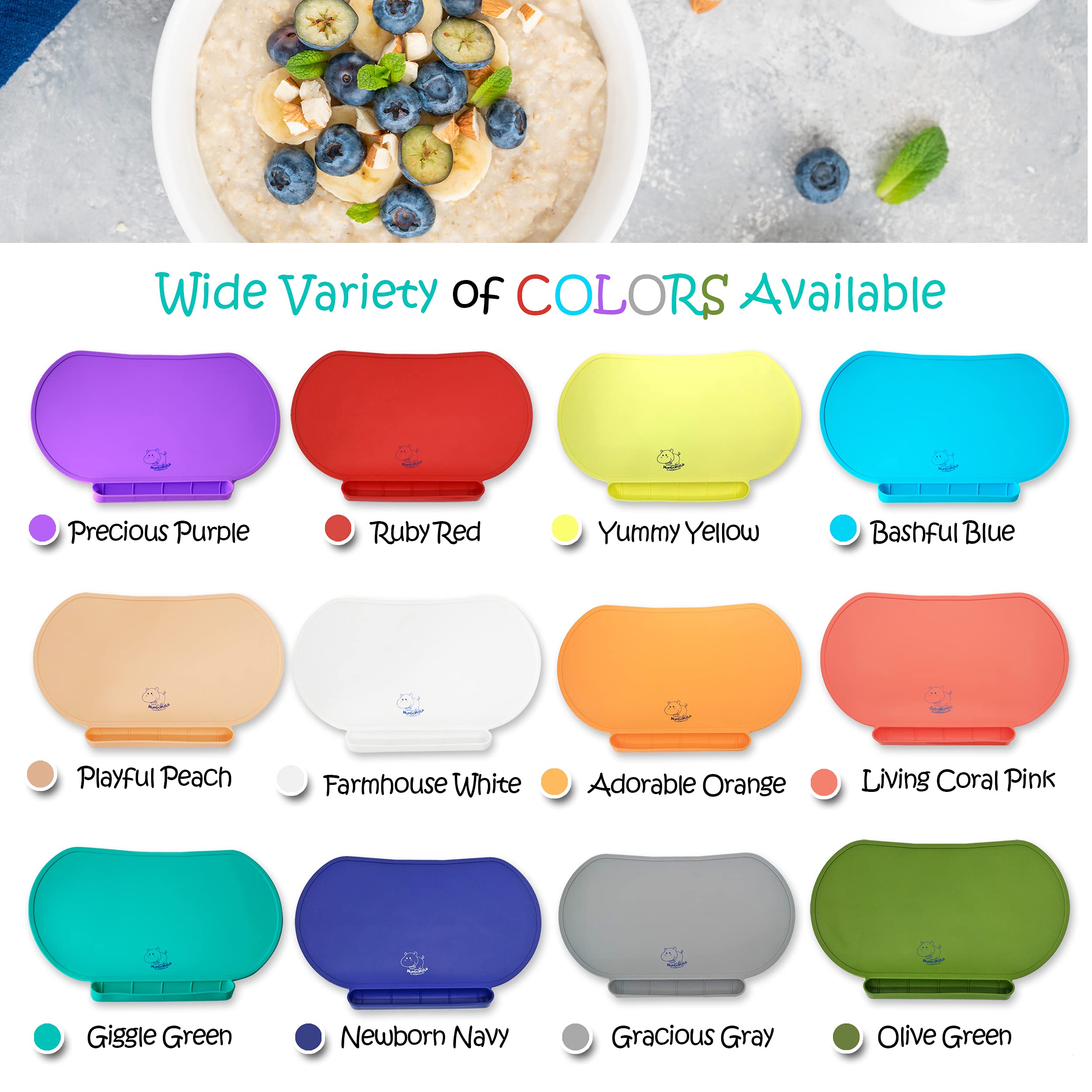
Mumbo Mats are designed around this idea: a silicone placemat with raised edges plus a spill-proof accident tray that sits where food most often falls. It is not a miracle floor protector, but it cuts the volume of cleanup in the highest-traffic drop zone. Pair it with a simple under-chair floor mat and you have a workable system—more on that in how to stop baby food from hitting the floor.
Feature 4: Size that fits real high chairs and tables
Measure your high chair tray before you buy. Many mats claim “universal fit” while overhanging dangerously or leaving bare tray corners where food collects in hinges.
A practical size for many trays and restaurant tables is roughly 17 inches by 10.5 inches—large enough to create a full meal zone, compact enough to roll into a diaper bag. Too small and food lives on the unprotected tray. Too large and the mat bunches, slides, or hangs into the child’s lap.
Also consider thickness. Ultra-thin mats feel elegant until they wrinkle under a plate. A moderate thickness resists wrinkling and still rolls for travel.
Feature 5: Grip without aggressive suction cups
Suction cups sound perfect until they fail on textured trays, leave sticky rings, or pull off mid-meal when a toddler yanks the corner. Many parents prefer silicone that naturally grips smooth surfaces without mechanical cups.
Test grip on a clean, dry tray. Wipe the tray first—crumbs and oil under the mat cause sliding more often than “bad silicone.” If your chair has a heavily patterned plastic tray, a slightly larger mat with raised edges still helps even if grip is imperfect.
Feature 6: Dishwasher-safe, stain-tolerant care
If it is not easy to sanitize, you will stop using it. Dishwasher-safe silicone that withstands the top rack (and ideally more) is a daily quality-of-life upgrade. Tomato sauce and turmeric will tint many light colors over time; that is normal. Choose colors you can live with as they age, or rotate darker shades for saucy meals.
Quick wipe with a warm cloth should handle most meals. For a full gear stack that survives hot cycles, see dishwasher-safe baby feeding gear worth buying.
Feature 7: Portability for restaurants and grandparents’ houses
The best home mat is also the one you will actually pack. Soft silicone that rolls or folds without permanent creases earns its keep on travel days. Pair it with a wet bag so a yogurt-coated mat does not perfume the entire diaper bag.
Restaurant high chairs vary wildly in cleanliness. Laying down your own mat is both a hygiene move and a containment move. Deep dive: restaurant dining with a toddler without the cleanup nightmare.
Features you can usually skip
- Built-in toy attachments that turn mealtime into playtime mid-bite
- Complicated multi-piece systems with parts you will lose
- Ultra-busy printed surfaces that hide crumbs (harder to spot what needs wiping)
- Rigid plastic frames marketed as “silicone mats” that are mostly hard plastic
Simplicity wins. One piece, wipeable, raised edges, optional spill tray, dishwasher-safe.
How to use a silicone placemat so features actually help
- Wipe the tray dry before placing the mat—moisture kills grip.
- Serve smaller portions; refill instead of loading a buffet that invites tossing.
- Keep cups toward the back of the mat, not hanging off the front edge.
- After eating, tip crumbs into the trash, wipe, or run the dishwasher cycle.
- Store flat or rolled—avoid sharp folds that stress the silicone over years.
Connecting features to baby-led weaning
BLW multiplies contact between food and surface. Soft sticks of roasted sweet potato, avocado spears, and oatmeal blobs all benefit from a contained zone. A strong mat does not replace supervision or safe food preparation, but it supports the learning process without turning your floor into the primary plate. For the broader setup, read our mess-free baby-led weaning guide and the BLW high chair setup checklist.
A simple buyer’s checklist
- Food-grade silicone, clearly labeled
- Continuous raised edges with useful height
- Front spill catch or accident tray
- Dimensions that match your tray (measure first)
- Reliable grip without fragile suction cups
- Dishwasher-safe care
- Rolls for travel
If a product hits those marks, you are looking at something closer to “best for real parents” than a viral unboxing clip.
The bottom line
The best silicone baby placemat features are boring in the best way: safe material, raised edges, a spill tray where food actually falls, the right size, easy cleaning, and packability. Choose those, and mealtime gear stops being clutter and starts being infrastructure.
When you are ready to see how a spill-tray design looks in practice, explore the Mumbo Mat on BabyMumbo or shop the Mumbo Mat on Amazon.