
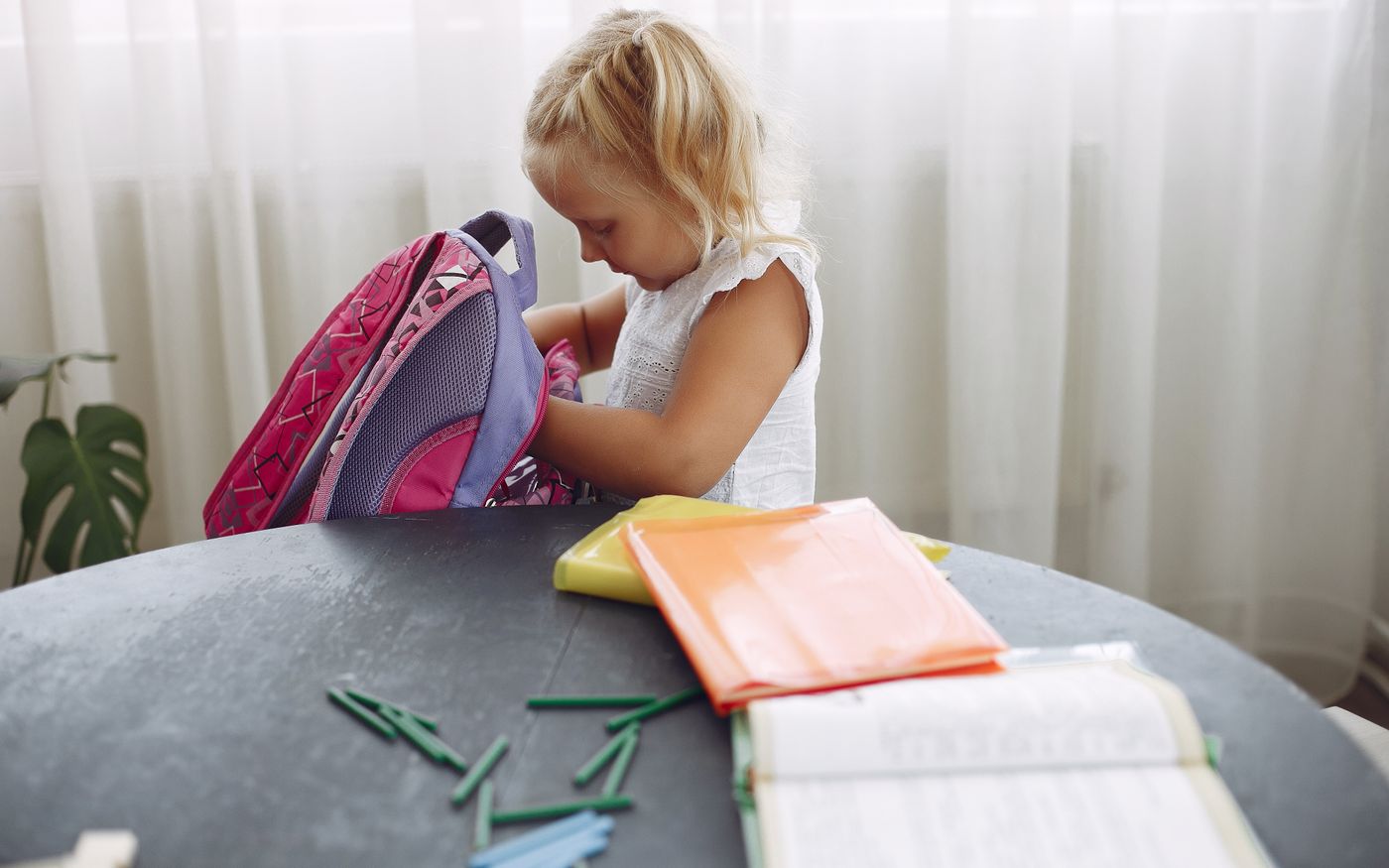
The backpack is packed the night before, not at the door
A backpack that is packed in the morning is a backpack that will be missing a library book, a water bottle, or a permission slip. The habit that works is a short evening reset: empty the lunch box, look at the folder, put in tomorrow’s things, and set the bag on its hook. Morning is for coats, shoes, and leaving.
This is one piece of a calmer school morning and a smoother after-school routine. The child can do more of it than you think, if the bag has a place and the steps are the same every day.
Give the bag a home, and keep it light enough
A hook or a low cubby by the door is better than the middle of the floor. A backpack that is too big, too heavy, or stuffed with last month’s papers will be dragged, forgotten, or complained about. Keep the daily load to what they need: folder or binder, lunch or snack, water, a sweater if the classroom is cold, and whatever the school actually requires. Toys and extra books stay home unless there’s a reason.
Check the fit: straps on both shoulders, the bag sitting on the back and not sagging at the hips. If it’s routinely heavy with textbooks, talk with the teacher about what can stay at school. A heavy bag is a comfort problem and a posture problem, not a character one.
A simple packing checklist they can run
Write a short list and stick it inside the door or on the hook:
- Folder or homework (see our homework habits guide for the afternoon side of this).
- Lunch box and water bottle, packed from the same lunch plan you already use.
- Library book on library day.
- Show-and-tell, sports clothes, or an instrument only on the days they’re needed.
- A backup shirt if they need one.
They check the list; you spot-check until it’s a habit. For younger kids, pictures work better than words. Empty the lunch box as soon as you’re home so morning-you is not meeting Friday’s apple. Refill the water bottle in the evening too.
What to say when they stall or forget
- “Backpack on the hook after snack. We pack it after homework.”
- “You check the list. I’ll look at the folder with you.”
- “The toy stays home today. The bag is for school things.”
If they forget something, let the natural consequence happen when it’s safe and small: a missed show-and-tell, a borrowed pencil. Don’t do a daily rescue drive if you can help it; it teaches the bag is your job. Do help them put a system in place the next evening rather than only lecturing in the car.
After school, weekends, and the Sunday reset
Unpacking is part of packing. The folder comes out, papers go in a parent pile, trash goes in the bin, and the bag goes back to the hook, empty enough to pack again. A Sunday-night look-ahead—library day, gym, a field trip—prevents a Monday surprise. If two houses or two caregivers share the week, a duplicate hook and a short shared list matter more than a perfect memory.
Preschool bags are simpler (a change of clothes, a lunch, a comfort item if the school allows it) but the same hook-and-checklist idea works. Don’t wait until they’re in third grade to make it their job. A four-year-old can put a water bottle in a bag if the hook is low enough.
If the bag is a daily battle, shrink the job: you pack the lunch, they pack the folder and the bottle. Add a piece when the first one sticks. Independence is a sequence, not a speech on Sunday night.
Label the bag, the lunch box, and the water bottle. A lost-and-found bin at school is full of unlabeled black coats and identical bottles. Put a small distinctive keychain or a strip of colorful tape on the zipper so they can spot their bag in a pile.
For field trips and after-school pickup changes, put the note or printed permission slip in the front pocket the night before and tell them it’s there. A pocket they check every morning is more reliable than a paper at the bottom of the bag.
If they have two bags—a school backpack and a sports duffel—pack the sports bag right after practice or the night before the game, not in the parking lot. One hook, one list, one bag at a time keeps the system from turning into a pile by the door.
A backup shirt in the bag helps, and so does a dressing habit that doesn’t start at the door. See teaching kids to get dressed.
A small bag they can open is worth practicing before the first week. For whether this is the right season to start, see when to start preschool.
A small bag they helped pack makes a new room feel more familiar. See overnight at grandparents.
Label everything, and add a first-day extra only if the teacher allows it. See the first day of kindergarten.
A small pack of tissues in the bag makes the school-day habit possible. See teaching kids to blow their nose.
The knot has to hold at school, not only on the living-room practice shoe. See teaching kids to tie their shoes.
A label they can eventually write themselves starts with a wobbly name at home. See teaching kids to write their name.
The bag should already be packed so the stop isn’t a scavenger hunt. See a school-bus routine for kids.
A school backpack is a nightly habit; a trip suitcase is a short project with a list. See packing a suitcase with kids.
This guide is also listed in our routines and behavior guides.
Quick FAQ
When should the backpack be packed?
The night before, in the same short reset as lunch and clothes. A doorstep pack is how folders and water bottles get left behind.
How do we keep the bag from getting too heavy?
A home for the bag, a weekly clean-out, and a rule about what does not need to commute. If the bag is still heavy, talk with the teacher about what can stay at school.
What if they stall or “forget” every morning?
A short checklist they run, then you close the routine. You can check the bag without taking the job back. See the morning checklist for the larger sequence.
This guide is also listed in our school-day guides.
The bottom line
Give the backpack a hook, pack it at night from a short list, and unpack it when you walk in. A bag that’s ready by bedtime is one less thing to invent at the door in the morning.