
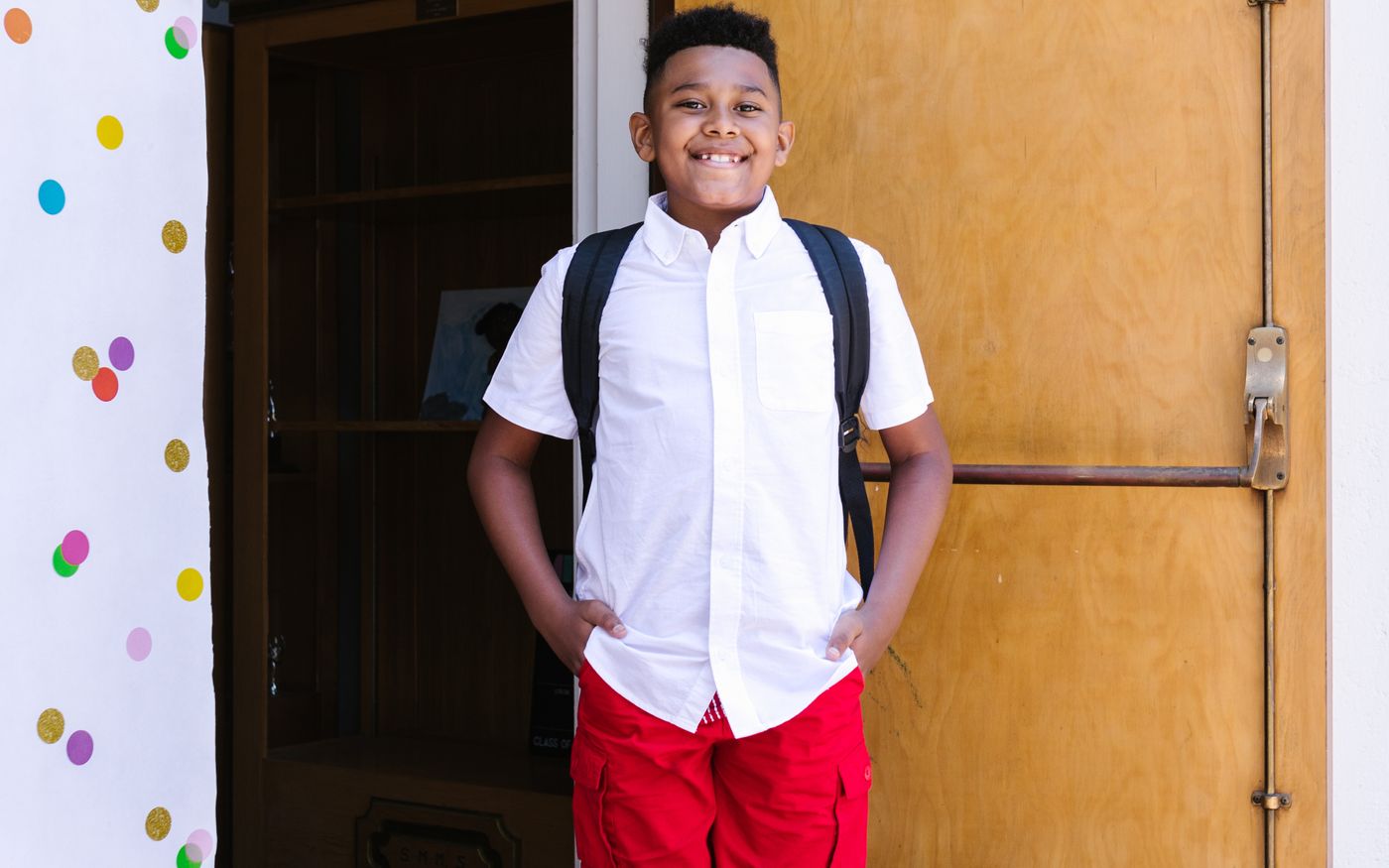
The first day is a week of firsts, not a single drop-off
The first day of kindergarten is its own moment, even if your child already went to preschool. The building is bigger, the day is longer, and the grown-ups are new. This is not the same question as when to start preschool, and it is not only a school morning checklist. It is the week that starts a new rhythm: drop-off or bus, lunch, a pickup story, and a tired afternoon.
Visit the school if you can, walk the route, and find the classroom door or the bus stop before the first morning. If there is an open house or a “meet the teacher” hour, go. A familiar doorway does more for first-day nerves than a long pep talk in the car.
What to pack, label, and leave at home
Label the backpack, lunch box, water bottle, jacket, and anything that will be taken off. Use a packing list the night before so the morning isn’t a hunt. Our guide to packing a backpack covers the daily reset; on the first day, add a comfort object only if the teacher allows it, and a labeled extra set of clothes if your child still has accidents.
Leave the new, stiff shoes for another day if they blister. Pack a lunch they already like, not an experimental one—see packing school lunches. Tell them, in simple terms, who will pick them up and where. If they take a bus, practice the stop and the “stay seated” rule, and have a backup adult in case the first-day timing is messy.
The night before, lay out clothes, pack the bag, and keep bedtime close to the new school bedtime, even if they’re buzzing. A late first-day eve makes a hard first morning harder. Our bedtime routines still apply, just a little earlier if the start time is earlier than preschool was.
The goodbye, and the first afternoon
Keep the goodbye short and specific: “I’ll be here at 3:00 at this door. Have a good day.” Don’t sneak out, and don’t keep restarting it. If they cry, that’s ordinary, and it is closer to preschool drop-off than a sign they aren’t ready. A teacher who can take a hand and walk them in is doing their job; you can go.
The first afternoon is often a crash: hungry, tired, and not ready to talk. Offer a snack and some quiet before you ask for a report. “What was fun?” or “Who sat near you?” is enough. If they say nothing, try again later. Plan a low-demand evening the first few days, not a new activity right after pickup.
Some kids are fine on day one and wobble on day three, when the newness wears off and the length of the day lands. That’s still the first week. Keep the morning routine the same, and don’t un-enroll them in your mind because Wednesday was tearful.
When the first week is rougher than you hoped
If drop-off is a daily crisis after two weeks, talk to the teacher, not only to other parents. Ask what they see after you leave. Some kids settle in ten minutes; some need a shorter goodbye and a consistent adult at the door. If lunch or toileting is the hard part, fix the practical pieces (a lunch they can open, clothes they can manage) before you assume it’s only anxiety.
Stay home for the first sick day if they’re truly sick—see when to keep kids home—but don’t treat ordinary first-week tiredness as a reason to skip. Sleep, food, and a predictable pickup matter more than a souvenir photo every morning. You can still take the picture. Then go.
If they ride a bus, do a dry run the week before if you can, and be at the stop early the first few afternoons. A child who can’t find you once will remember it. Give the school your current numbers, a backup pickup person, and any allergy or medication plan on paper, not only in a portal you filled out in July.
You don’t have to make the first day magical. A backpack they can open, a lunch they will eat, a goodbye you can finish, and a pickup you can keep is a good first day. The rest of the year is built on the ordinary mornings after this one.
A first week of school often asks for an earlier night more than the old nap. See transitioning off naps.
Label the bag either way; the writing can still be new. See teaching kids to write their name.
The first morning is one day; the bus still needs a weekday routine after that. See a school-bus routine for kids.
This guide is also listed in our routines and behavior guides.
Quick FAQ
What should we pack for the first day?
The labeled must-haves the school asked for, a simple lunch or snack, and a comfort item only if the school allows it. Leave extra toys at home. A night-before pack beats a morning search.
How should we handle the goodbye?
Short, warm, and the same as you practiced. A long lingering at the door usually makes the first drop-off harder. Teachers are used to the first-week tears.
What if the first week is rougher than we hoped?
Keep the morning and pickup routine steady, and give it more than one day. Talk with the teacher if eating, toileting, or distress is not easing. Our drop-off scripts can still help at kindergarten.
This guide is also listed in our school-day guides.
The bottom line
Treat the first day of kindergarten as a short week of firsts: a seen classroom or bus stop, a labeled bag, a lunch they already like, and a goodbye you don’t restart. Plan a quiet afternoon, expect a midweek wobble, and talk to the teacher if drop-off is still a crisis after two weeks. The day you can repeat is the one that counts.