
Pack the bag with them, the night before, not at the door
Packing a suitcase with kids works when the bag has a home, the list is short, and they have a real job—not a last-minute raid of the dresser while the car is running. This is different from packing a school backpack, which is a nightly school habit, and it is more than the car tote on a road trip. It is the weekend or trip bag: clothes, a comfort item, and the few things they’ll actually use.
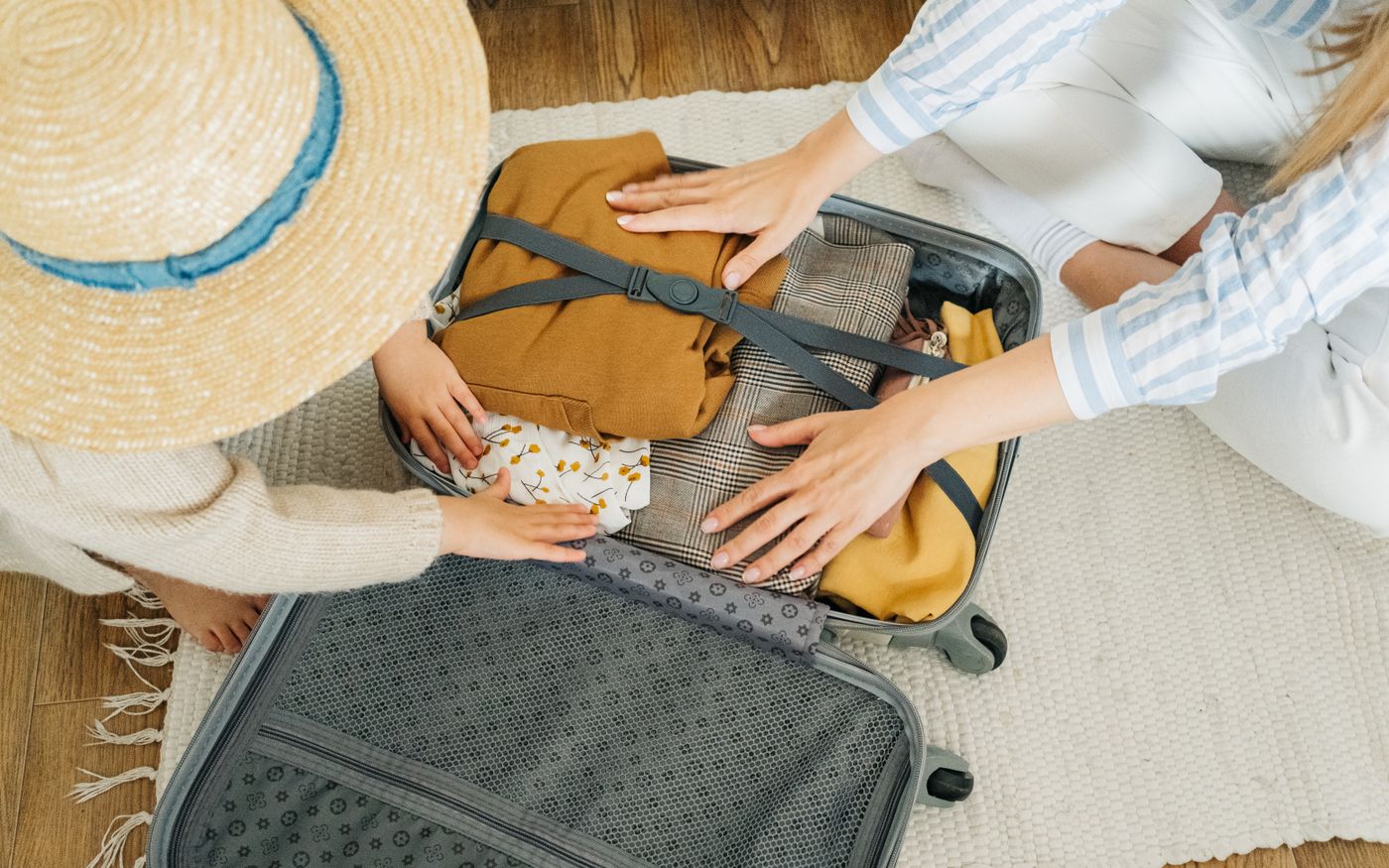
Open the suitcase on the floor or the bed the afternoon or night before you leave. Give them a job they can finish: one pile of shirts, one pile of pants, the stuffed animal that is actually coming. You pack toiletries, medicines, and anything that spills or breaks. A child who “helps” by stuffing twelve dresses into a carry-on is not packing; they’re shopping in their own closet. Limit the choices first, then let them put the chosen things in.
A short list beats a maybe pile
Count days, then add one extra outfit, not a spare of everything you own. Underwear and socks for each day plus one, sleepwear, a layer, shoes they already walk in, and clothes that can get dirty. If you’ll do laundry, pack even less. Special-event clothes, if you need them, go in a known pocket so they don’t wrinkle under the sneakers. A packing cube or a one-bag-per-child rule keeps a family pile from turning into a mystery at the hotel.
Let them pick a small set of comfort and play: one stuffed animal, one small toy, a book, maybe headphones if that’s already your family rule. Not a suitcase of maybe-toys. If they lobby for more, the rule can be “it has to fit in this pouch.” That is a better lesson than a speech about minimalism. For air travel, the same pouch can live in a personal item they can reach—see flying with toddlers—so the checked bag isn’t holding the only comfort object.
Toiletries stay simple: toothbrush, a familiar paste, any cream they actually use, and your kit for shampoo and medicines. Don’t pack a full bathroom “just in case” if the hotel or host has soap. Put medicines in your bag, not theirs, and keep the list of doses in your phone. A spare zip bag for a wet swimsuit or a dirty shirt will matter more than a second hair accessory set.
What to leave out, and how to close the bag
Leave out “someday” clothes, toys that need a pile of pieces, and the outfit they’ll wear in the car or on the plane—that one stays out. Charge devices before they’re buried. If two kids share a bag, label sides or cubes so unpacking isn’t a fight. Check the weather once, not five times, and add the layer you already decided on.
Let them help zip, or sit on the bag if that’s the family comedy and it still closes without a struggle. If it won’t close, take out extras with them watching so they see the trade, not a bag that magically gets bigger. Weigh or lift it if you’re flying. Then put the suitcase in a set place by the door, next to shoes and the everyday bag if you’re also taking one, so morning is carrying, not repacking.
Unpacking is part of the skill. At a hotel stay, or at a grandparent’s house, open the bag, put pajamas where they’ll sleep, and keep a dirty-clothes bag going from the first night. A suitcase that stays exploded on the only bed will make the room feel smaller than it is. Five minutes of unpacking is enough. You do not need dresser drawers for a two-night trip unless it actually helps.
When they refuse, forget, or overpack
If they refuse to pack, you can still give a small job and do the rest: “You put the pajamas in. I’ll do the rest so we can eat.” Don’t turn it into a standoff that makes you late. If they forget something important, notice whether it was truly essential. A missing favorite shirt is usually survivable. A missing medicine or comfort object is not, which is why those have a set place.
Overpacking is often anxiety in disguise—theirs or yours. A short list on a card, reused for the next trip, calms both. If a child has strong clothing needs, pack the familiar fabrics and skip the new “vacation outfit” that will sit unused. The goal is a bag they can live out of, not a wardrobe reveal.
After you’re home, unpack the same day if you can: dirty clothes to the wash, comfort item back to the bed, suitcase back to its shelf. That’s the close of the loop, and it makes the next trip smaller. The bag you can pack again in twenty minutes is the system.
Add a sleep-stuff pouch you can find in the dark, then pack the clothes as usual. See camping with kids.
Pack the big bag as usual, and keep a reach bag for the ride. See train travel with kids.
Label the list the camp sent, and pack the comfort item on top. See first sleepaway camp.
This guide is part of our travel and outings guides, where related pieces are grouped in one place.
Quick FAQ
When should we pack for a trip?
The night before, with a short list, not at the door. Let them put in the clothes and comfort items that made the list, then you add the essentials they will forget.
How do I stop them from overpacking?
A small bag and a visible “this many outfits” rule work better than arguing about each toy. Extra maybes stay home. You can close the bag even if they are disappointed.
What if they refuse to pack?
You pack the must-haves, offer one or two choices they can still make, and move on. The suitcase is a job, not a referendum on the trip.
The bottom line
Pack a kid’s suitcase the night before, from a short list, with a job they can actually finish. Limit the maybe pile, keep medicines and spillables in your bag, leave the travel outfit out, and unpack enough at the other end that the room can be slept in. The bag that closes without a fight is the one worth repeating.