
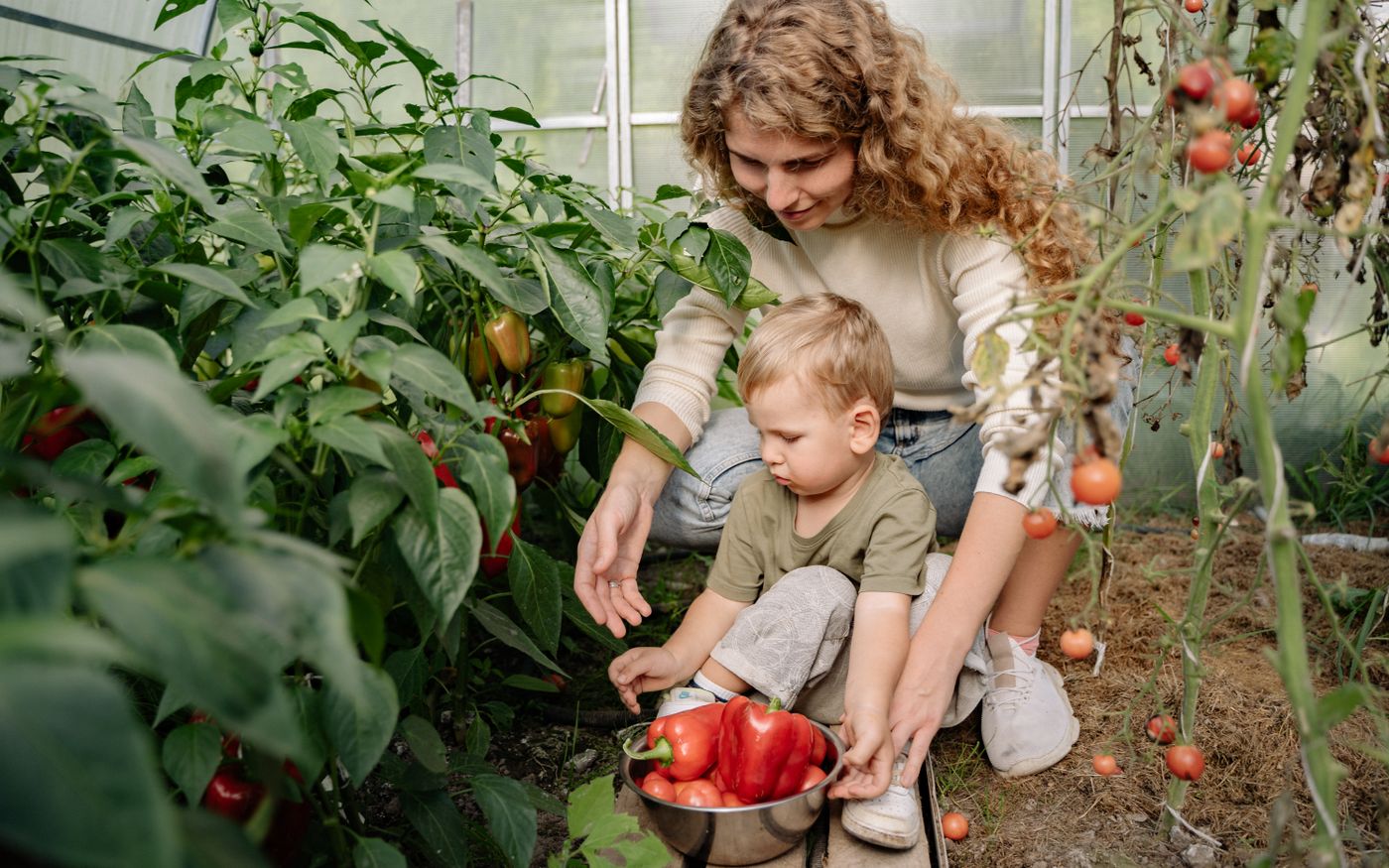
A pot of something they can eat is a complete garden
Growing food with kids does not require a yard, a greenhouse, or a perfect harvest. A pot of cherry tomatoes, a window herb, or a few radishes in a tub is enough. The point is something they planted, watered, and eventually ate—or at least tasted—so the garden is connected to the table, not only to a science project.
This is different from a general outdoor play burst, and it sits next to cooking with toddlers: real jobs, a little mess, and a grown-up in charge of tools and anything sharp. It can also help a cautious eater see a food before it hits the plate—see picky eaters—without a guarantee they’ll love it.
Pick plants that finish while they still care
Choose fast, sturdy, edible plants: radishes, lettuce, herbs, peas, bush beans, cherry tomatoes, strawberries if you have sun. Avoid a crop that takes all season and then fails in a heat wave as their first try. One or two plants they can water is better than a raised bed you resent. A grocery-store herb pot you keep alive still counts.
Give them a job they can repeat: water when the soil is dry, pick the red ones, put the harvest in a bowl. You do the digging that needs a real shovel, any fertilizer you use, and the trellis. If you have no yard, a sunny step or a window is enough. Don’t start ten pots because a list looked nice.
Wash hands after soil, and wash the food before anyone eats it, the same way you would with grocery produce. A tomato eaten warm off the plant, after a rinse, is the whole lesson for some kids. Others will only try it later, cut up at dinner. Either is a win.
Bring the harvest to an ordinary meal
Use what you pick in a meal you already make: herbs on pasta night, tomatoes next to a sandwich, lettuce in a bowl, peppers on a taco night bar. Don’t invent a new recipe for three radishes. Put them on the table and name who picked them. If they refuse to eat the harvest, they still grew it, and you can try again another night without a speech.
A short garden-to-table moment is enough: rinse, cut (you), taste, sit down. Our weekly meal plan can simply say “whatever is ripe.” If nothing is ripe yet, water the pot and cook the usual dinner. The garden is a slow habit, not a nightly show.
Failures are part of it. A plant that bolts, a squirrel that gets there first, or a forgotten watering is a real lesson if you keep it light. Plant again if you want, or stop at one pot. You do not have to become a homesteader because you bought basil.
Safety, weather, and when to skip
Keep unknown plants, garden chemicals, and tools with blades out of reach. Don’t let a toddler eat soil or unripe, inedible parts. In heat, water in the morning and keep sessions short. In winter, a window herb or a pause until spring is honest. A snow day is not a gardening day, and that’s fine.
If you have no sun and no interest, skip the project. A farmers’ market or a grocery trip where they choose a new fruit is a related, lower-lift way to talk about food. The garden is worth it only if you can keep a small plant alive without resentment. One living pot on the step is the version that works.
When you do harvest, let them carry the bowl to the sink and help rinse. Then dinner is ordinary. That’s the habit: grow a little, wash it, eat what you can, try again next week.
If they want to grow something inedible too—a sunflower, a flower box—that can live next to the food pot. Keep at least one plant you plan to eat, or the project drifts into decoration and never reaches the table. A single ripe strawberry they picked is a better first harvest than a decorative bed they aren’t allowed to touch.
Share the watering so it doesn’t become your secret second job. A cup on the step and a “check the soil” reminder after breakfast is enough most weeks. If you go on a trip, move pots into a slightly shadier spot and ask a neighbor, or use a simple self-water trick you already trust, rather than coming home to a dead first garden.
If you have no garden, choosing produce at a stall is a related way to get food to the table. See a farmers’ market with kids.
This guide is part of our mealtime guides, where related pieces are grouped in one place.
Growing food is about planting something you might eat; raking and watering can be a shorter outdoor chore. See yard work with kids.
Quick FAQ
Do we need a backyard garden?
No. One pot of something they can eat—herbs, tomatoes, lettuce, or strawberries—is a complete project. A raised bed is optional.
What plants finish while kids still care?
Fast, edible ones: radishes, lettuce, herbs, or a cherry tomato. A crop that takes all season without a harvest will lose them.
Is this the same as yard work?
No. Growing food is a harvest project. Yard work with kids is a short outdoor chore you can finish in a sitting.
The bottom line
Growing food with kids works when the project is small, the plant actually finishes, and the harvest shows up at an ordinary meal. One pot, a repeatable watering job, a rinse, and a taste will beat a garden you can’t keep up. The pot you can water again next week is the one that counts.