
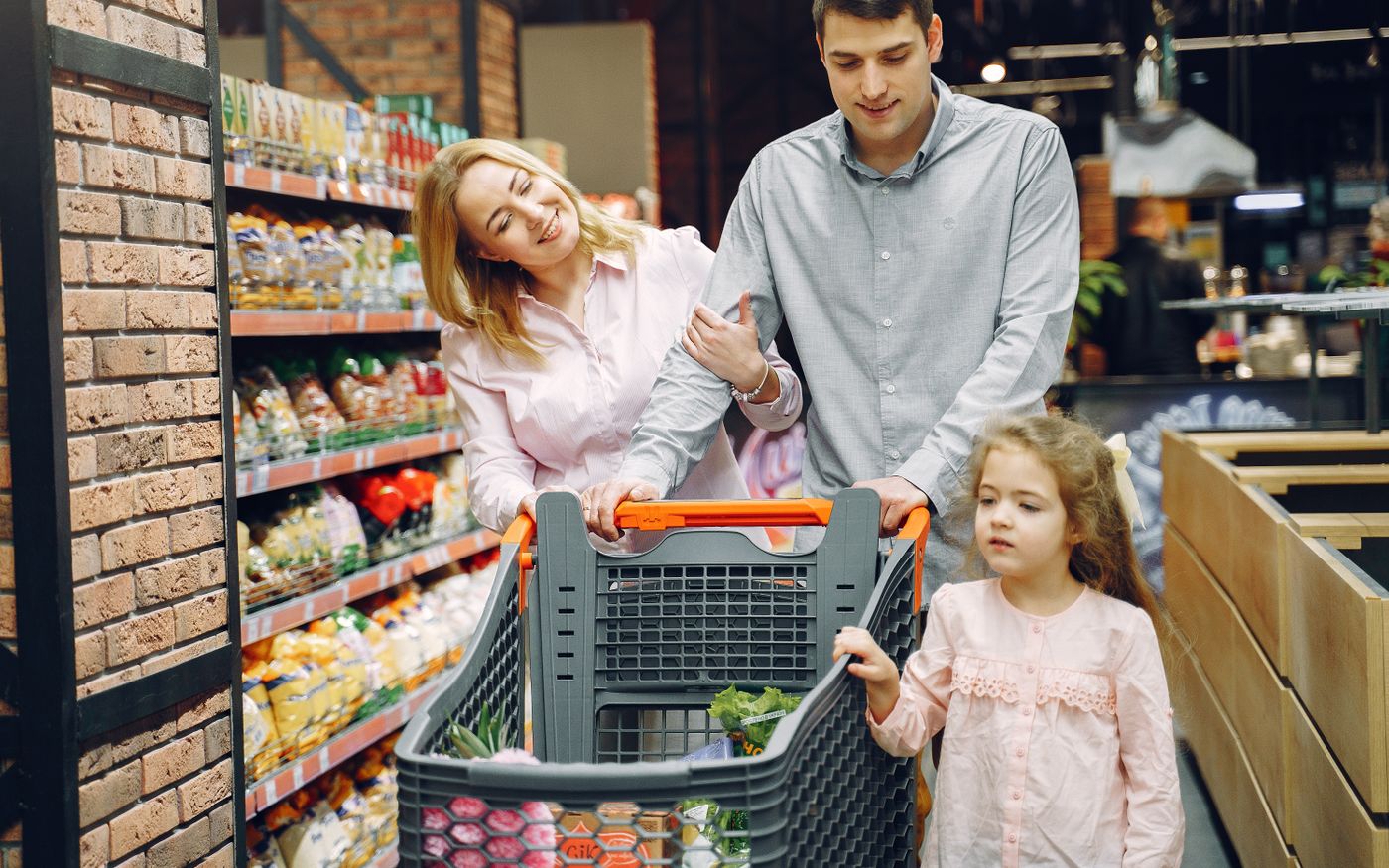
Why the store unravels so fast
A grocery store is a lot to ask of a toddler: bright lights, snacks at eye level, a cart they can’t get out of, and a trip that always lasts longer than you planned. Most “store meltdowns” are not a manners problem. They’re hunger, boredom, and a child who has been told “no” twelve times before you reach the milk.
You don’t need a perfect shopper. You need a 30-minute plan that gets dinner food home with as few negotiations as possible. Some weeks, the plan is a pickup order. That’s a valid strategy, not a failure.
Go with a plan, not a wander
Write the list before you leave, grouped by aisle if you can: produce, dairy, pantry, frozen, then done. If you already use a weekly family meal plan, the list is almost written for you. One extra stop for “I might need something” is how a 20-minute trip becomes 50.
Shop the edges first if that’s where your staples are, and save the middle aisles with the loudest packaging for last—or skip them. If you need a treat, decide what it is in the car so you’re not inventing it in front of the candy rack.
Timing and fuel
Go when your child is usually at their best: after a nap, after a snack, not at 5:15 p.m. on an empty stomach. Before you unbuckle in the parking lot, offer a small snack and water. A protein-plus-carb bite (cheese and crackers, a banana, a pouch plus a few pretzels) buys you more aisle time than a cookie that spikes and crashes by checkout.
If you can, pick a quieter hour—weekday mid-morning, or the first 30 minutes after the store opens. Fewer carts means a faster loop and fewer “but that kid has a donut” moments.
Jobs for little hands
A toddler who has a job stays in the trip longer than a toddler who is only along for the ride. Keep the jobs real and short:
- Hold the list or a crayon to “check off” items (a few big pictures work for pre-readers).
- Put the bananas in the bag, or hand you the yogurt from a low shelf.
- Choose between two things you already need: red apples or green, this bread or that one.
- Be the “bag helper” who drops boxed items into the cart.
Two choices you can live with are better than an open “what do you want?” A child who picked the apples is less likely to campaign for the cookies two aisles later. If they want to walk, use a cart with a buckle when the store is crowded, and save walking for a short, clear stretch: “You can walk to the end of this aisle, then you sit.”
The checkout line is the real test
Checkout is designed to wear adults down, and it works even better on tired kids. Before you get in line, say what’s about to happen: “We’re paying, then we go to the car. The candy is staying on the shelf.” Hand them a job—putting a divider on the belt, holding a receipt envelope, or playing a tiny “I spy” with colors on the conveyor.
If you use a checkout treat, make it a rule you can repeat: “We buy a banana at the register,” or “We don’t buy candy in this line.” Changing the rule because the line is long teaches them that protest works when you’re tired. For what to say if a tantrum starts anyway, the scripts in our guide to toddler tantrums in public work in aisle seven and at the card reader.
Scripts for “I want that”
- “That’s not on our list today.” Short and boring is the point.
- “You can pick the apples. The cookies are staying here.”
- “I hear you want it. The answer is no.” Then stop talking. A long explanation invites a debate.
You don’t have to narrate every “no.” If they’re reaching, move the cart and keep your voice flat. If they’re already past the point of conversation, get to a quieter spot, get low, and wait it out the way you would in any other public place. Then finish the list or leave with what you already have.
When to leave—and when to skip the trip
Leaving mid-shop is not a dramatic failure. If they are overheated, hungry, or past it, pay for what’s in the cart and go. The store will be there tomorrow, and a 15-minute recovery at home is cheaper than a 20-minute standoff by the freezer case.
Build in a skip option for hard weeks: a pickup or delivery order for the heavy staples, and a short in-store trip only for produce or the one thing you need to see. Kids can still practice store skills on a 15-item run. You don’t owe anyone a full weekly shop with a toddler in the cart.
The checkout line is a waiting lab. Pair the job-and-snack ideas here with the short-timer scripts in teaching kids to wait.
The parking lot is one of the best places to practice “we hold hands and we stop at the edge.” See teaching kids to cross the street.
If a garden isn’t possible, letting them choose produce is a related, lower-lift habit. See growing food with kids.
The weekly indoor shop is a different errand than a short outdoor market loop. See a farmers’ market with kids.
A grocery run is easier when they already know what to do if you get split up in an aisle. See if you get separated in public.
This guide is part of our mealtime guides, where related pieces are grouped in one place.
Getting through the aisles is one skill; writing the list at home is the one that makes the store shorter. See teaching kids to write a grocery list.
Quick FAQ
How long should a grocery trip with a toddler take?
Aim for about 30 minutes with a short list, not an open-ended wander. A longer restock is easier without a tired toddler, or with a second adult.
What job can they do in the cart?
Holding a list, finding a familiar item, or placing a safe, light thing in the cart. One job is enough. Checkout is not the time to add a second project.
What do I say when they want something off the list?
A calm “it’s not on our list today” plus a predefined maybe-item, if you use one, is enough. A long speech in the aisle usually loses. Leave if you need to.
The bottom line
Go with a list, go after a snack, give them a real job, decide the treat before you walk in, and keep “no” short. A 30-minute grocery trip with a toddler isn’t pretty every time—but a plan beats hoping they’ll be patient in a building designed to tempt them.