
Iron matters more once milk is no longer the whole diet
Toddlers grow fast, and iron is one of the nutrients that can run short, especially if milk sips crowd out meals or if the plate is mostly pale carbs and fruit. You don’t need a perfect menu or a nutrition lecture at every lunch. You need iron-rich foods in the regular rotation, served in a form they can actually eat, and a sense of when to ask the pediatrician. This is everyday food planning, not a diagnosis, and it does not replace screening or advice from your child’s clinician.
This is a different job from picky eating strategies, which are about pressure, exposure, and safe foods. It’s also not a first-foods primer—that’s first foods for babies by age. Here the eaters are mostly one to three, sitting at a table, and often very sure about what they will not touch. Your move is to keep iron in the mix without turning dinner into a debate.
What “iron-rich” looks like on a toddler plate
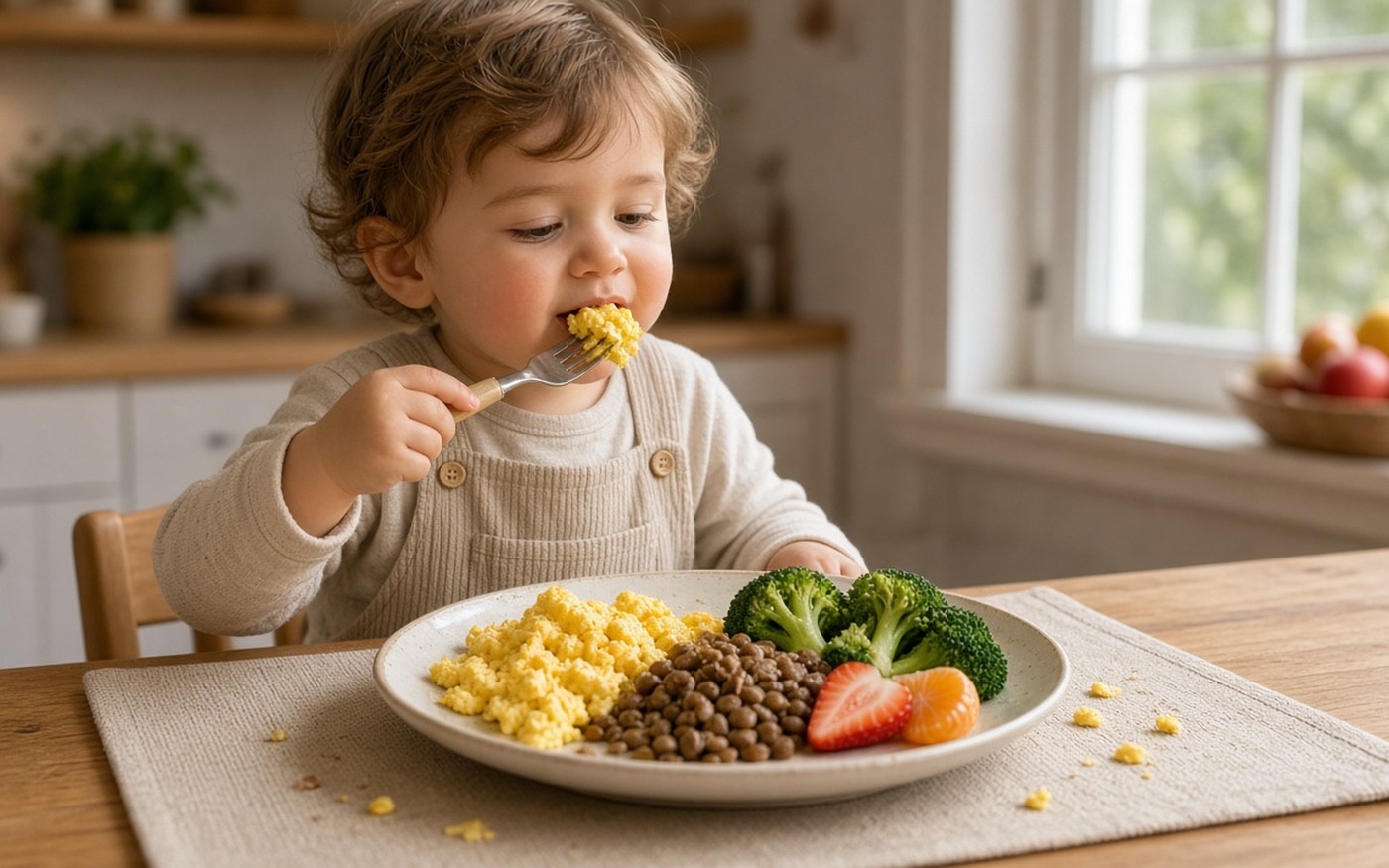
Foods that often help: meat, poultry, and fish in soft, small pieces; eggs; beans and lentils; tofu; iron-fortified cereals or oats; and, in smaller supporting roles, dark leafy greens and dried fruit that’s been cooked or chopped safely. The iron in meat, poultry, and fish is generally easier for the body to use. Plant iron still counts, and it does better with a vitamin-C food on the same plate: berries, orange, kiwi, tomato, or bell pepper next to beans, eggs, or fortified cereal.
You do not need a special “iron meal.” Fold these into food you already cook: lentils in a pasta sauce, beans on taco night, eggs at breakfast, shredded chicken in a soup, hummus with soft pita, chili with beans, or a fortified cereal you actually see them eat. Our busy-morning breakfast ideas and easy toddler snacks are natural places to add an egg, bean dip, or fortified cereal instead of only crackers and fruit.
Too much milk can quietly push iron foods off the day. Many toddlers do well with water at and between meals and a modest milk amount at meals, not a bottle or sippy of milk all afternoon. Water in an open cup at meals, and milk as a modest drink rather than an all-afternoon sip, usually leaves more room for food. If they’re already off a bottle, don’t reintroduce one “just for milk.”
Serving it so it actually gets eaten
Cut and cook for safety and for small hands: soft beans, moist shredded meat, scrambled eggs, thin strips, or mash. Pair a familiar food with a small iron food so the plate isn’t a pile of something new. If they only eat the egg and ignore the lentils, they still had an iron food. Offer again another day without a speech. A weekly meal plan that names one iron food at most meals is enough structure.
Avoid using dessert as a bribe to “get the meat down.” It turns iron foods into a punishment and sweets into the prize. Keep the division of responsibility you already use for picky phases: you choose what’s offered and when, they choose whether and how much. If the only iron food they’ll accept this week is fortified cereal or peanut-butter toast (spread thinly, age-safe), that can be the bridge while you keep other foods in sight.
Tea and large amounts of dairy right with a plant-iron meal can make that iron a little harder to use, so you don’t need a cup of milk drowning a bean bowl. A normal sip with a meal is not a crisis. The bigger problem is a toddler who drinks most of their calories and then isn’t hungry for food. Water in a cup, meals at the table, and snacks that don’t run all afternoon will help the iron foods get a chance.
When to ask for help, and what not to DIY
Do not start an iron supplement, a drop, or a “just in case” powder because a blog made you nervous. If you’re worried about diet, energy, growth, very pale skin, or a very restricted menu, call the pediatrician. They can decide whether a blood test or a dietitian is the next step. Vegetarian and vegan households can meet iron needs, but they usually need a more deliberate plan, and that’s worth a professional conversation, not a guess.
Keep choking hazards in mind when you “boost” a plate: whole nuts, thick globs of nut butter, tough steak, and sticky dried fruit need age-safe forms. Sit with them. A nutrient is not useful on the floor or in a rushed car seat snack that’s hard to chew.
If family members have different food rules, agree on the iron basics: an iron food most days, not too much milk, fruit or a vitamin-C food alongside plant sources, and no supplement without a clinician. Grandparents can help by serving the eggs and beans you already use, not by offering a second lunch of only milk and cookies.
A toddler who ate a wide baby diet and now refuses meat is common. Keep meat in the family rotation if you eat it, keep plant iron on the table, and don’t turn one rejected meatball into a story about their personality. Appetite and preference shift. The habit is the regular offer, not a perfect daily tally.
Iron foods only help if they have room on a plate that isn’t crowded by all-day sipping or grazing. See how much toddlers should eat.
Too much milk is one of the quieter ways iron foods get crowded out. See toddler drinks: milk, water, and juice.
Beans, eggs, or chicken on a bowl bar are an easy iron habit. See build-your-own bowl night.
This guide is part of our mealtime guides, where related pieces are grouped in one place.
Quick FAQ
Which everyday foods actually help with iron?
Meat, beans, lentils, tofu, eggs, fortified cereal, and dark leafy greens in a form they will eat. Pair plant sources with a vitamin C food, like fruit, when you can.
Does more milk crowd out iron?
It can, if milk fills them up all afternoon. Keep milk in its mealtime lane and offer iron-rich foods at meals. See toddler drinks for the milk, water, and juice split.
Should we start an iron supplement on our own?
No. Food first, then ask your pediatrician if you are worried about intake or a test result. Do not dose a supplement without a recommendation.
The bottom line
Iron-rich foods for toddlers work when they show up in ordinary meals, not as a special treatment. Rotate eggs, beans, lentils, meat or fish if you eat them, tofu, and fortified cereals; add a vitamin-C food with plant sources; and watch that milk doesn’t crowd the plate. Ask the pediatrician about screening or supplements instead of guessing.