
A small batch is a complete system
Batch-prepping baby food does not mean a Sunday of industrial puree and a freezer you can’t close. It means cooking a little extra of something soft, portioning it, and having two or three days of tastes ready so every meal isn’t a new project. This sits next to first foods by age and a weekly family meal plan. It is not a replacement for starting solids, and it is not a requirement. Some families never blend anything and do fine. This is for the nights you want a known soft food without starting from a raw sweet potato at 5:40.
Use what you’re already cooking when you can: extra steamed carrots, a scoop of unsalted, soft lentils, a mashed potato from your plate, a ripe pear. Family food, softened and unseasoned or lightly seasoned in a way that’s safe for your baby, beats a separate “baby menu” you resent. Pouches and jars can still be a backup. The point of a batch is optionality, not purity.
Cook, portion, and label without a new hobby
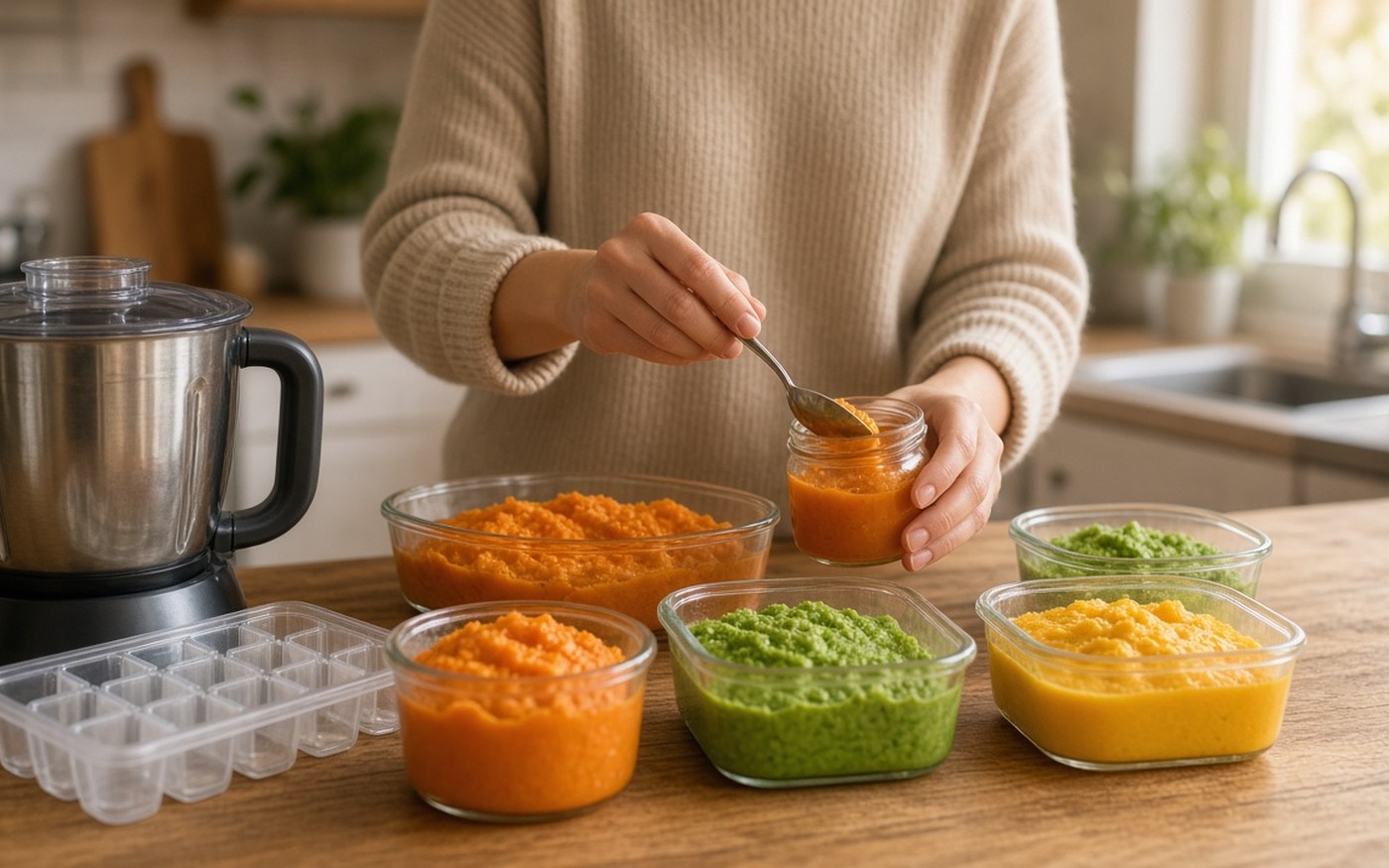
Pick one or two foods, not eight. Wash, cook until soft, mash or blend to the texture they can handle now, and cool quickly. Portion into ice-cube trays, small containers, or a silicone tray you already own. Once firm, pop cubes into a labeled bag or keep lids on small jars. Write the food and the date. Future-you will not remember which green cube is pea and which is zucchini.
Keep batches small enough that you’ll use them. A few days in the fridge, or a modest freezer stash, is plenty. If a cube sits for months, you will stop trusting it, and the project dies. Rotate: new batch in, older cubes used first. Thaw in the fridge, or warm a portion in a small bowl, and stir well. Don’t leave food sitting out on the counter all afternoon, and don’t put leftover food from the tray back into the freezer batch.
Hygiene is ordinary, not theatrical: clean hands, clean board, food cooked thoroughly, cooled and stored promptly. If you’re including common allergens, follow the plan in introducing allergens to babies first, then you can include those foods in later batches once they’re already in the diet. Don’t hide a first peanut taste in a mixed freezer cube you can’t keep track of.
Serve it like a meal, not like a science experiment
Thaw only what you’ll offer, plus a little refill. Put it on a spoon or a tray they can touch. A cube of sweet potato next to a strip of soft fruit is a meal, especially with an iron-rich food in the rotation. Warm it until it’s comfortable, not hot; stir and test. Frozen-then-thawed food can look less pretty. That’s fine if the texture is still right for their mouth.
If you’ve moved toward family food, the “batch” might be leftover pasta with a softer sauce, shredded chicken in a little broth, or beans you mashed on Sunday. You do not have to stay in puree-land because you bought trays. Match the texture to the grasp and chewing they have now. A freezer of only silky puree can stall you if they’re ready for lumps.
Travel portions can be a couple of cubes in a small container, or a pouch as a backup, served onto a spoon so they still practice. A weekend at a grandparent’s house is easier with a known food in the freezer bag, plus whatever the house is already eating, made soft.
When to skip the project
If you hate extra dishes, don’t build a system you’ll abandon in a week. Cook once, offer some now, store a little, and stop. Store-bought food is a valid plan. So is eating what you eat, modified. The batch is a tool for leftover peace, not a moral category.
Watch for spoilage, freezer burn, and dates you no longer trust. When in doubt, throw it out. If your baby is sick, or you’re unsure about reheating, use a fresh portion. This is practical kitchen advice, not a medical protocol. For food safety questions specific to your child, ask your pediatrician or a local health resource you trust.
Share the system in one sentence with anyone else who feeds them: “Cubes in the door, label is the food and date, thaw a little, don’t put tray leftovers back.” That’s enough for a partner or a sitter. Then dinner is ordinary again, which was the whole point.
A ready mash is handy when a tooth shows up and you don’t want a long cook. See teething and eating.
This guide is part of our baby feeding guides, where related pieces are grouped in one place.
Quick FAQ
How much should I cook at once?
A small batch you will use in a few days, or freeze in small portions, is a complete system. A Sunday marathon is optional and often unsustainable.
How long does homemade baby food keep?
Follow basic food-safety rules: refrigerate promptly, use within a few days, and freeze portions you will not serve soon. Label dates. When in doubt, throw it out.
Do we have to make everything from scratch?
No. A mix of simple homemade food and plain store-bought options is fine. The goal is regular meals, not a perfect pantry.
The bottom line
Batch-prep baby food in small amounts: cook a little extra, portion, label, and use it while you still trust it. Family food made soft counts. Thaw only what you’ll serve, keep allergen firsts separate and planned, and skip the project if it just adds dishes. A few ready portions is a complete system.