
Why the dark suddenly feels scary
Fear of the dark is one of the most common nighttime fears between about age 2 and 6. Imagination is growing faster than a child’s ability to tell a shadow from a story, and bedtime is when the house gets quiet enough for that imagination to run. A new bed, a move, a scary scene in a show, or a holiday stay in a strange room can all flip the switch. It is not a sign you’re doing bedtime wrong.
You don’t have to prove there are no monsters. You do need a calm setup, a short script, and a limit so 2 a.m. doesn’t become a second evening.
Don’t try to logic it away
Long explanations (“See? It’s just a coat”) help some kids once, and then become a ritual you have to repeat every night. A better first move is to name the feeling and stay matter-of-fact: “The dark feels scary. You’re safe in your bed. I’m right down the hall.” Our guide to talking to kids about feelings has more language for naming fear without inflating it.
Skip monster spray if it turns into a 15-minute performance you then have to do forever. A single, boring comfort object and a predictable routine beat a new trick every week.
A calm bedtime setup
Keep the same wind-down you already use—bath or wash-up, pajamas, teeth, books, song, lights out. See our bedtime routines guide if that sequence has gotten wobbly. Then add three dark-specific pieces:
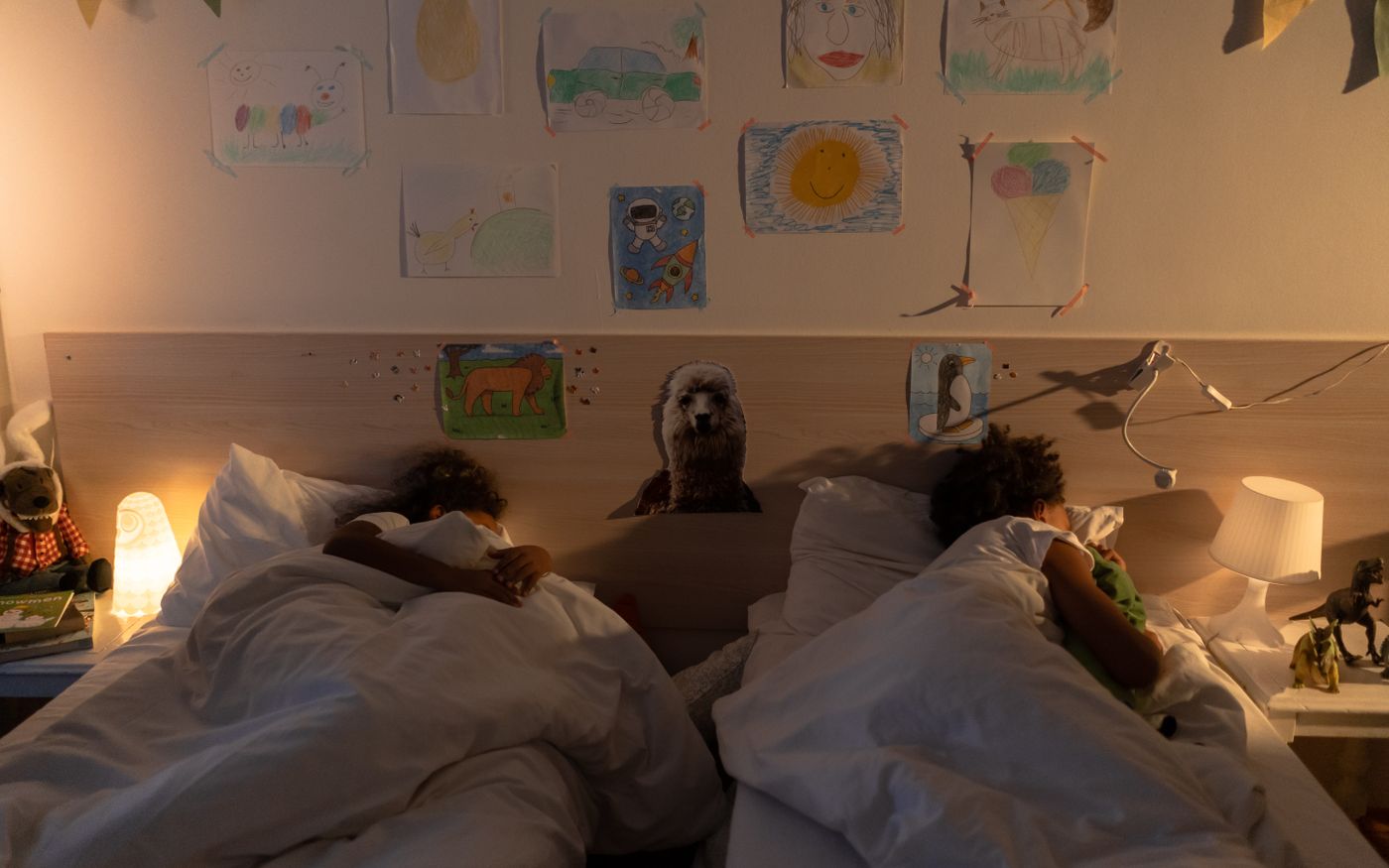
- A small night light in a warm, low glow, not a bright overhead lamp. Place it so the room is dimly visible, not lit like daytime.
- A familiar object in the bed they already love—one stuffed animal or blanket, not a pile.
- A clear “I’ll check on you” plan if they need one: “I’ll come back in a few minutes to see that you’re cozy.” Then actually come back once, briefly, and leave again.
If you’ve just moved from a crib to a bed, the new freedom to get up can collide with the fear. Keep the walk-back plan from our crib to toddler bed guide, and add the night light before the first hard night if you can.
Scripts that help at 2 a.m.
- “You’re safe. It’s sleep time. I’ll see you in the morning.” Then lights stay low and the conversation stays short.
- “I believe you feel scared. The room is safe. Back to bed.”
- “I’ll sit in the hall for one song, then I go.” If you sit, sit farther from the bed each night—not closer—so the skill is falling asleep without you in the room.
Avoid climbing into their bed as a new every-night habit if that’s not already your family’s plan. A week of “just this once” is how a fear of the dark becomes a sleep association that’s hard to unwind. If they appear at your bedside, walk them back with the same short line. Dim hall lights. No snacks, no show, no debate about the closet.
Daytime habits that shrink nighttime fear
A little daylight practice helps some kids: look at the room together in the afternoon, point out the same chair and curtains they’ll see at night, and let them turn the night light on and off. Limit scary or intense shows, especially in the hour before bed. On travel nights, pack the night light and the same lovey; a strange dark room is a predictable trigger. Our holiday visits sleep guide has a packing list that still helps here.
When to get more help
Talk with your pediatrician if the fear is growing after a few consistent weeks, if your child is not sleeping enough to function during the day, or if nightmares, panic, or refusals are spreading into naps and evenings. Most kids move through this with a boring, kind plan. A few need extra support, and that’s not a failure of the night light.
What usually doesn’t help
Checking the closet five times, turning on every light in the house, or letting a show “just until they fall asleep” all teach the same lesson: the dark is a problem you have to fix together every night. One check is plenty. A tablet in the bed also makes it harder to notice that the room is actually safe. If they want a door open, that’s fine—open a consistent amount, not a new negotiation at 2 a.m.
Brothers and sisters in the same room can help or hurt. A calm older sibling is a comfort. A younger one who starts a midnight chat is not. If they share, agree on a whisper rule and a night light both can live with, and put the lighter sleeper through the routine last.
A first night in a new room is harder if the dark is already a stretch at home. Take the night-light plan with you, and see kids first sleepover for the rest of the night-away plan.
A power outage is just the dark in a new place in the house. Show them where the flashlight lives, and see a family emergency plan for the rest of the short plan.
A night light they already use should go in the bag. See overnight at grandparents for the full plan.
An earlier bedtime can bring the dark sooner than they’re used to. See transitioning off naps for the nap side of that shift.
This guide is also listed in our routines and behavior guides.
Quick FAQ
Should I leave a light on?
A dim, consistent night light is fine. A fully lit room or a parent staying all night usually makes the dark feel more dangerous, not less.
What do I say when they wake at 2 a.m.?
A short, calm script: you are safe, it is still night, I am nearby, and it is time to sleep. Then leave. A long conversation at 2 a.m. teaches them to start one.
When is fear of the dark more than a phase?
If it lasts for months, they cannot sleep at all, or daytime anxiety is large, talk with your pediatrician. Ordinary nighttime fear is common; you still do not have to logic it away at midnight.
This guide is also listed in our sleep guides.
The bottom line
Name the fear, keep the bedtime routine the same, add a dim night light, and use a short, repeatable script when they call out. Your job is not to make the dark interesting. It’s to make bedtime feel safe and a little bit dull.