
The short answer
For most families doing daily high chair meals and baby-led weaning, food-grade silicone is easier to live with than thin plastic placemats: more flexible, often better grip, more heat tolerant, and happier in the dishwasher. Plastic can be cheap and lightweight, but it cracks, slides, and can feel less reassuring for long food contact.
“Safer and easier” still depends on the specific product. A poorly made silicone mat beats nothing, and a well-made plastic tray insert can outperform a gimmicky silicone toy-mat hybrid. Use the criteria below—not just the material buzzword on the package.
Safety and materials: what parents should verify
Silicone
Food-grade silicone is widely used in bakeware and infant products because it is generally stable across a wide temperature range and does not require plasticizers the way some soft plastics do. Look for clear claims: BPA-free, PVC-free, lead-free, phthalate-free, latex-free. Strong chemical odors that persist after washing are a reason to stop using a product.
Plastic
“Plastic” covers many resins. Some placemats are polypropylene or similar hard plastics; others are soft PVC-like materials. Hard polypropylene can be durable and dishwasher-safe. Soft plastics vary more. Always check for BPA-free labeling and avoid anything that smells strongly of vinyl.
Neither material replaces common-sense habits: wash before first use, wash regularly, discard gear that is damaged or sticky with degraded coatings, and follow manufacturer care limits.
Cleanup and stain reality
Silicone usually wipes clean quickly. Tomato and turmeric can tint lighter colors; that is cosmetic more than hygienic if you wash properly. Plastic hard sheets wipe well too when flat, but food creeps under them if they warp or curl at the edges—then you are cleaning the tray and the underside.
Fabric-coated “wipeable” mats are a third category: they often absorb oils over time and join the laundry pile. If your goal is fewer steps, avoid absorbent cores.
Dishwasher fit matters. Silicone mats that survive hot cycles earn daily use. Compare care notes in dishwasher-safe baby feeding gear.
Grip, slide, and high chair physics
Smooth silicone often grips smooth trays without suction cups. Plastic sheets frequently slide unless they have rubberized backs or you add a towel underneath (which defeats the elegant look and can bunch).
Suction cups on either material fail on textured trays and can leave residue. Many parents prefer a mat that sits flat and grips lightly over cups that pop off mid-meal when a toddler lifts a corner.
Edges, containment, and BLW mess
Flat plastic placemats rarely contain liquids. Silicone mats with raised edges create a shallow tray. Add a front spill catch and you intercept the main drop path to the floor. That design difference often matters more than silicone-versus-plastic branding.
If containment is your priority, read features parents actually need and the floor-focused setup in how to stop baby food from hitting the floor.
Heat, cold, and durability
Silicone generally tolerates heat better—useful near warm foods and dishwasher elements (within product guidelines). Plastic can warp in high heat or become brittle in cold cars during winter travel.
Over months, thin plastic may crack or develop sharp edges. Silicone can tear if abused with knives or pointed tools—treat it as a placemat, not a cutting board. Both last longer when you avoid abrasive scrubbers that scratch and trap residue.
Travel and packing
Soft silicone rolls into a diaper bag. Rigid plastic needs a flat slot and can crack if bent. For restaurants, rollable wins. Pair with a wet bag after saucy meals so the rest of your bag stays pleasant.
Travel tactics continue in restaurant dining with a toddler.
Environmental and longevity notes
A mat you use for years beats three cheap replacements that crack. Longevity is a practical sustainability win. When a mat is truly worn out, check local recycling guidance—silicone and mixed plastics are not equally accepted everywhere.
Side-by-side comparison
- Food contact comfort: Food-grade silicone usually preferred for frequent mouthing and warm foods
- Containment: Silicone with raised edges beats flat plastic sheets
- Cleanup: Both wipe; silicone with edges reduces underside mess
- Dishwasher: Check labels; many silicones handle it well
- Grip: Silicone often grips; plastic often slides
- Travel: Soft silicone packs smaller
- Price: Plastic sheets can be cheaper upfront; cost-per-month favors durable silicone
When plastic might still make sense
A hard plastic tray insert designed specifically for your high chair model can be excellent if it snaps securely and cleans well. Disposable paper placemats for one-off travel days can reduce stress even if they are not eco-ideal. The point is choosing the right tool for the day—not winning an internet materials debate.
How BabyMumbo approaches the choice
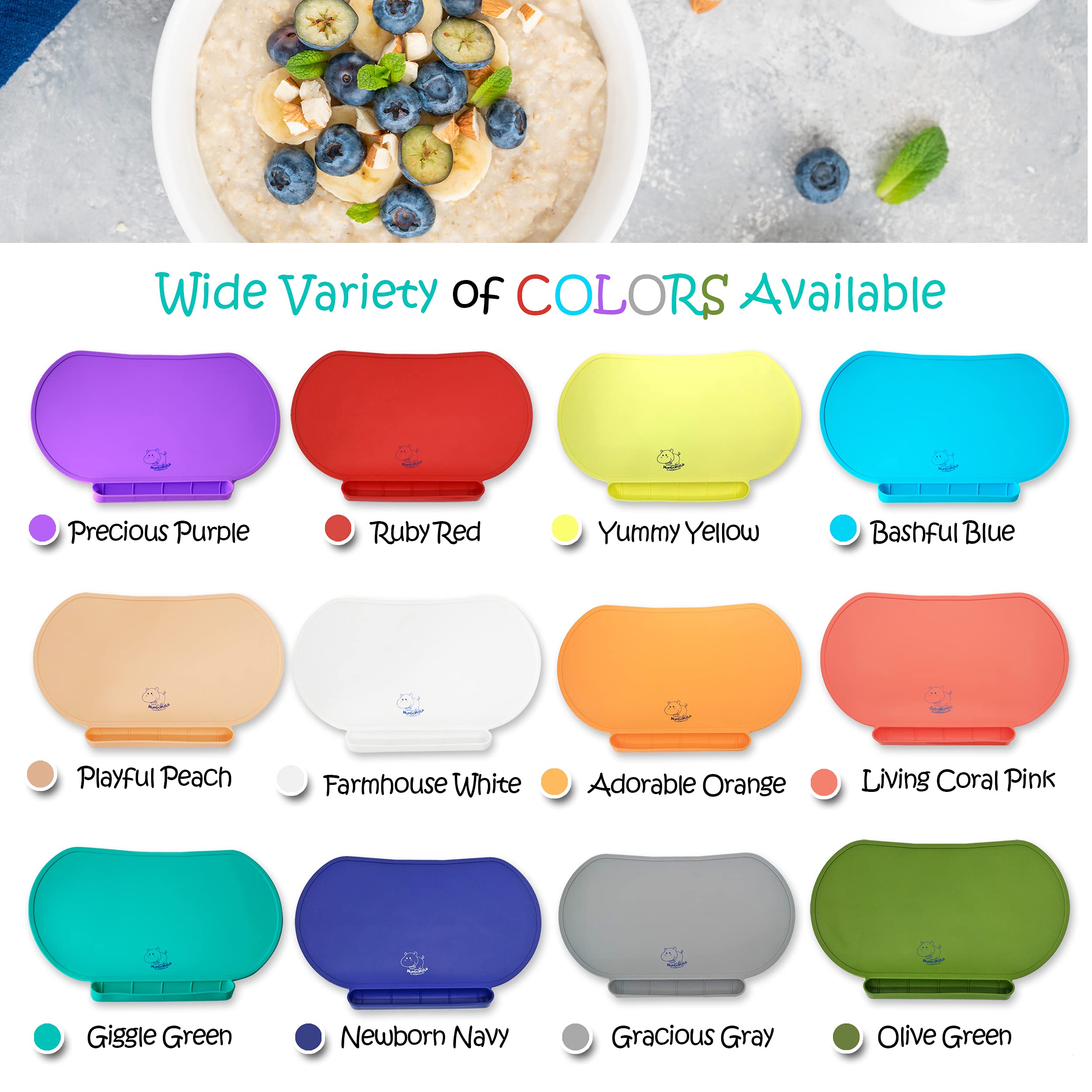
Mumbo Mats are 100% food-grade silicone with raised edges and a spill-proof accident tray—built for the containment problem parents actually have. They are sized about 17" × 10.5", dishwasher-safe, and meant to move from high chair to restaurant table without a rigid case.
That is one product philosophy: silicone chosen for flexibility and cleaning, shaped for spills. Compare it against your chair measurements and your dishwasher habits before buying anything.
Decision guide
- Measure your tray.
- Decide if you need raised edges (most BLW families do).
- Confirm food-grade claims and care instructions.
- Prefer dishwasher-safe if you hate sink piles.
- Test grip on your actual tray texture after purchase—return if it fails your setup.
Still exploring weaning logistics? The mess-free BLW guide and high chair setup checklist round out the system.
Ready to see silicone with a spill tray in action? View the Mumbo Mat or shop on Amazon.
Real kitchen scenarios: which material wins?
Yogurt breakfast: Silicone with raised edges usually wins—liquids stay put long enough to wipe. Flat plastic lets thin yogurt race to the tray hinge.
Toast and scrambled egg: Either works if the surface is wipeable. Silicone still helps when a drink tips beside the toast.
Spaghetti night: Expect staining on light silicone; choose darker colors or accept patina. Plastic may stain less visually but still needs underside cleaning if noodles migrate under curled corners.
Grandparents’ house: Soft silicone packs easier and doubles as a hygiene layer on unknown trays. Rigid plastic needs luggage space and can crack in a packed tote.
Questions to ask before you click “add to cart”
- Is the material explicitly food-grade (silicone) or a named food-safe plastic?
- Are edges raised continuously, or is the “lip” mostly decorative?
- Will it fit my measured tray without dangerous overhang?
- Can it go in my dishwasher on the rack I actually use?
- Does it roll for travel without permanent creases?
- Can I return it if grip fails on my specific high chair texture?
Answering those six questions filters marketing noise faster than reading fifty near-identical reviews.